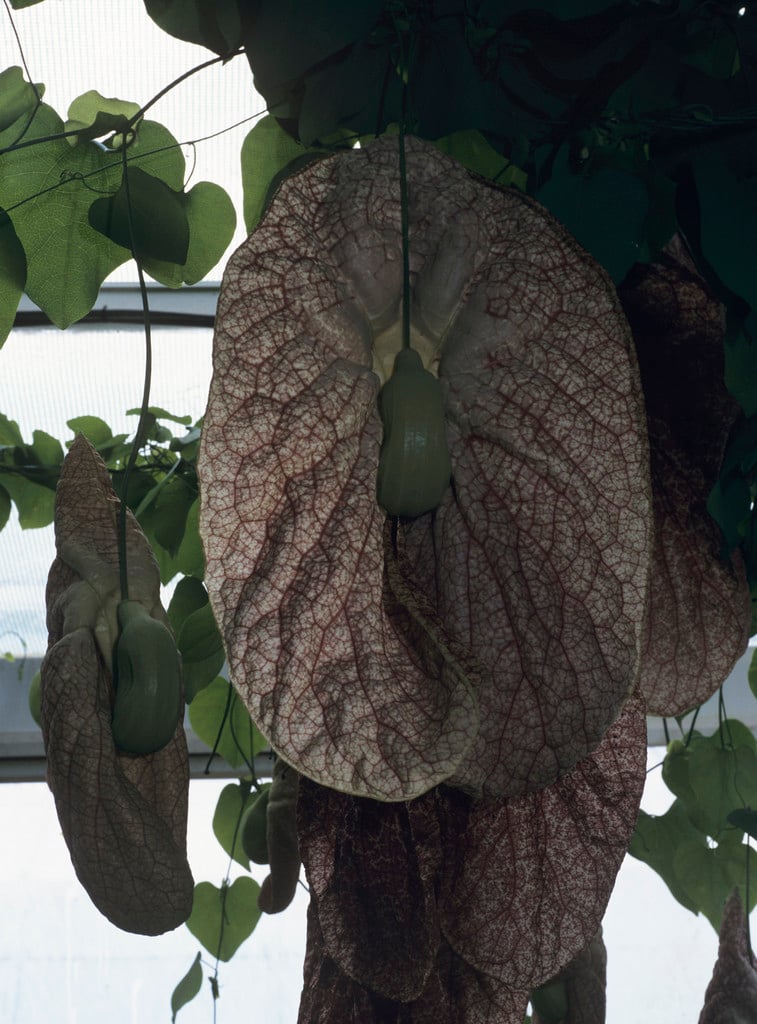
Aristolochia gigantea

RHS Plant Profile
giant Dutchman's pipe
giant Dutchman's pipe RHS

Synonyms

Aristolochia clypetala

Climber Wall Shrub Conservatory Greenhouse

A vigorous, evergreen twining climber with heart-shaped leaves 5-10cm long. The flowers are up to 30 cm deep, a dark, reddish-purple with intricate cream mottling, and an unpleasant smell

Position

Full sun, Partial shade

Soil Types

Loam

Max Height

8-12 metres

Max Spread

wider than 8 metres

Size

Time to Maturity
5–10 years
Max Spread
wider than 8 metres
Max Height
8-12 metres

Growing Conditions

Loam
Moisture
Moist but well–drained
pH
Neutral

Position

Full sun Partial shade
Aspect
North–facing or West–facing or East–facing
Exposure
Sheltered
Hardiness
H1B

Colour & Scent

Season Stem Flower Foliage Fruit
Spring
Summer
Autumn
Winter

Botanical Details

Family
Aristolochiaceae
Native to GB/Ireland
No
Foliage
Evergreen
Habit
Climbing
Potentially harmful
TOXIC if eaten. Wear gloves and other protective equipment when handling Pets (dogs): TOXIC if eaten - see the HTA guide to potentially harmful plants for further information and useful contact numbers
Genus
Aristolochia can be shrubs or herbaceous perennials, many climbing, usually with heart-shaped or ovate leaves. Distinctive flowers have an S-shaped calyx tube and no petals, and are may be white, yellow, brown or maroon, often mottled
Name Status
Correct
Plant Range
Brazil

How to Grow

Cultivation

Under glass grow in peat-free potting compost in bright filtered light. During the growing season water freely and apply a balanced liquid fertiliser monthly; water more sparingly in winter. Requires strong support

Propagation

Root softwood cuttings in early spring. Propagate by seed at 21-24°C (70-75°F) as soon as ripe or in spring

Suggested planting locations and garden types

  • Sub-tropical

Pests

Generally pest-free

Diseases

May be susceptible to honey fungus in gardens where it is present but insufficient data to determine degree of susceptibility