Getting Started
Coriander, also sometimes known as cilantro, is an annual herb that produces tangy leaves and aromatic seeds, widely used in many dishes, especially in Mexican and Asian cuisines.
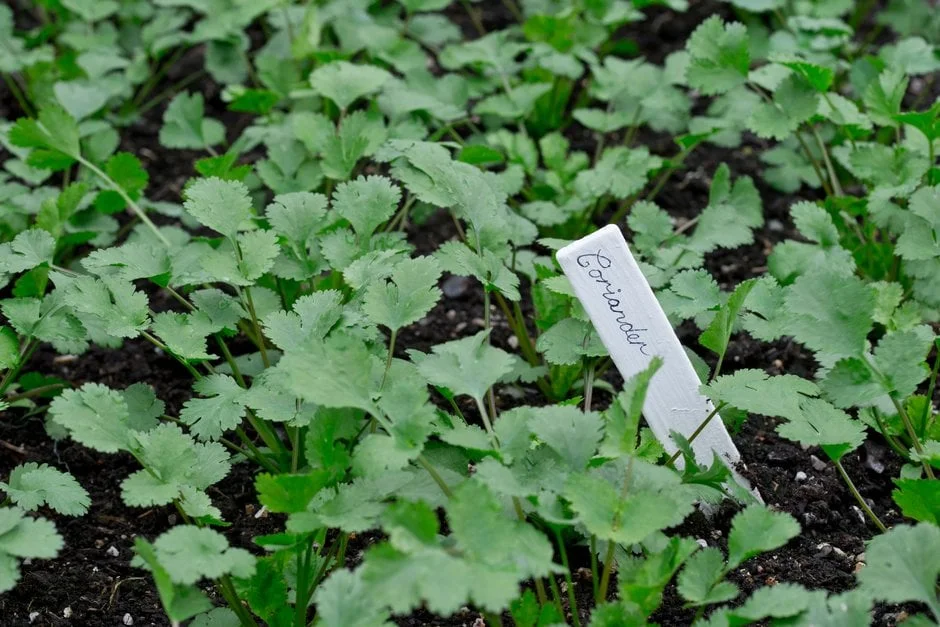
Coriander is easy to grow from seed sown outdoors, in the ground or in containers, from spring onwards. Plants are compact, so make ideal gap-fillers on the veg plot. If you grow it purely for leaves, then treat it like a short-term salad crop and sow small batches every month or so, to provide continual leafy harvests from mid-summer to early autumn.
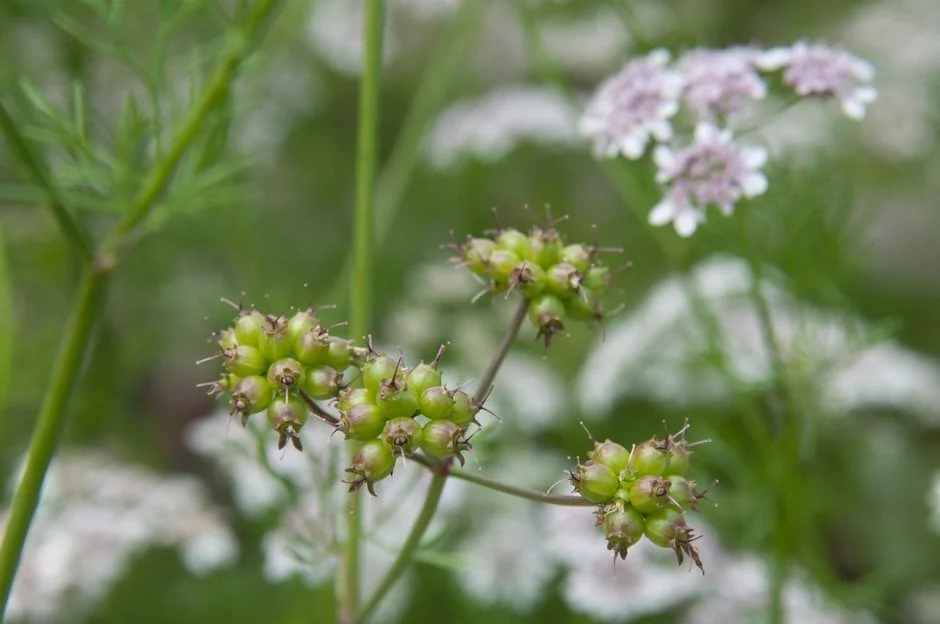
Each sowing should give you several harvests before the plants start to flower. This will happen sooner in hot, dry weather and plants will then stop producing leaves to concentrate on setting seed. If you don’t want to harvest the edible flowers or seeds, remove the flower stems as soon as they appear, to prolong the leafy harvests. It’s worth leaving a few plants to go to seed though, to provide you with some to sow next year. As coriander is an annual, plants will die after setting seed.
If you mainly want to harvest the seeds, make your sowings in spring or early summer, to allow plenty of time for the seeds to ripen. Unripe, green coriander seeds can be used in cookery too though, and have a milder flavour.
Jobs to do now
Sow
Thin seedlings
Water as needed
Harvest leaves, flowers and seeds
Month by Month
Sow
Plant
Harvest


Choosing What To Grow
Coriander (Coriandrum sativum) is widely available as seed. There are also several varieties that have been bred for longer leafy harvests (as they are slower to flower), although you can still harvest edible seeds from these too. When choosing varieties, look for those with an RHS Recommended: Award of Garden Merit (AGM), which shows they performed well in our trials and make reliable choices –see our list of AGM fruit,veg and herbs (135kB pdf) and our Recommended Varieties below. You’ll also find a wide range of culinary and medicinal herbs, including coriander, in the RHS gardens, so do visit to compare varieties and pick up growing tips.
What and where to buy
Coriander seeds are widely available in garden centres and from online retailers. Potted plants may also be available from garden centres in late spring and summer.
Many supermarkets also sell pots of coriander plants but these are designed for short-term harvesting – the pots usually contain lots of thin, overcrowded that tend to succumb to fungal diseases or soon start flowering, although they may survive if divided up and repotted promptly. To minimise risks, supermarket-bought coriander plants should be grown indoors in containers.
Recommended Varieties


Sowing
Coriander dislikes being and can become leggy if kept indoors for a prolonged period, so sowing your crop directly outdoors is the best option. However, you can grow coriander indoors as pots of windowsill herbs or as microgreens for short-term harvests if you don't have space outside.
Sowing indoors
For easy harvesting, sow coriander seeds into pots or small trays of peat-free from February onwards and keep on a warm, sunny windowsill. takes two to three weeks. Keep evenly moist and thin to 5cm (2in) once large enough to handle.
Coriander doesn't last long as a windowsill herb, becoming pale in low light and if it gets too hot or dry. To ensure a continuous crop, sow in succession throughout spring and summer and grow plants on in a bright but reasonably cool spot. Bear in mind that coriander can produce an unpleasant odour in enclosed spaces.
Sowing microgreens
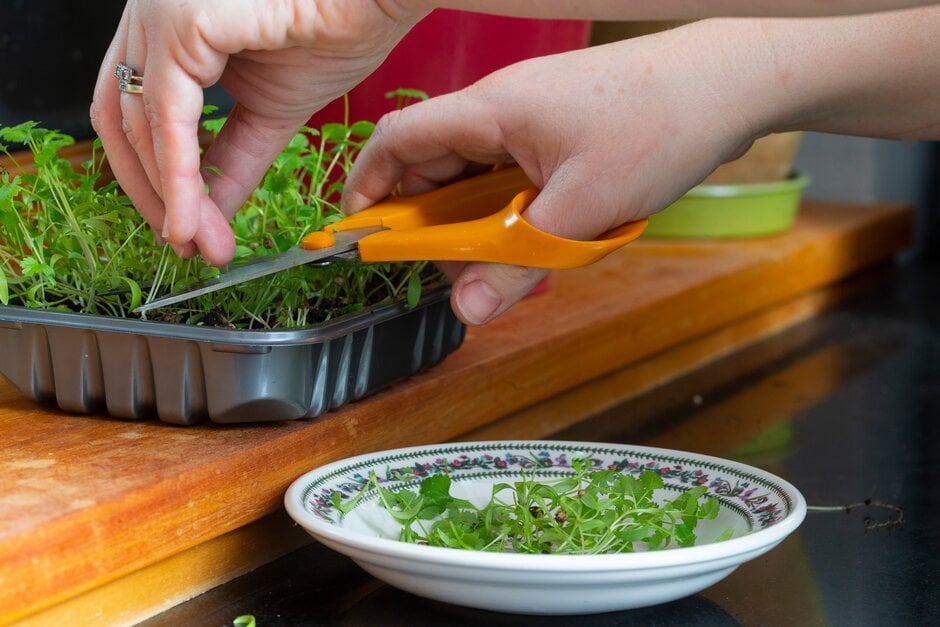
Another quick and easy option is to grow coriander as microgreens on a sunny windowsill, harvesting whole seedlings after only a couple of weeks. See our video guide below for details:
Sowing outdoors
Sow coriander seeds from spring to autumn in a sunny or lightly shaded spot with free-draining soil, or in pots of peat-free multi-purpose . Coriander grows particularly well in containers, as it likes the free-draining conditions. In summer, sow in a cooler spot, shaded from midday sun, if you’re growing it for the leaves.
Coriander’s large seeds are easy to sow individually, so aim to space them about 5cm (2in) apart, in a shallow or on the surface of firmed compost in containers or growing bags. Cover with a little soil or compost, then water gently. takes one to three weeks, depending on outdoor temperatures.
- When growing for leaves – sow small batches every few weeks (known as successional sowing) for continual harvests from mid-summer onwards. To extend your leafy harvests into early winter, sow in autumn under cloches or in a greenhouse
- When growing for seeds – sow in full sun in spring or early summer to ensure the seeds have time to ripen. Thin out the to 20cm (8in) apart to give plants space to mature
Planting
Plant out young, shop-bought coriander plants from spring onwards, into the ground or in containers. Harden them off first, to gradually acclimatise them to outdoor conditions – this is especially important if the plants were kept in a greenhouse or polytunnel at the garden centre. Provide protection from slugs and snails, particularly in damp weather, and cover with cloches or biodegradable fleece if the weather is still cold.
Plant Care
Coriander is a short-term crop that grows quickly and needs little maintenance.
Watering
Coriander growing in the ground shouldn't need routine watering apart from in long, dry spells, when some additional water can help to prevent and prolong leafy harvests.
Plants growing in containers dry out more rapidly than those in the ground, so check plants daily and water as needed, aiming to keep the just moist. Take care not to overwater, as coriander dislikes soggy conditions.
Try to water early in the morning or in the evening to minimise moisture loss from the soil/compost, ideally using stored rainwater.
Removing flowers
If you are growing coriander for its leaves, remove any flower stems as soon as they start to develop. This is key for ensuring continued harvests, as plants will otherwise put all of their energy into flowering and setting seed, rather than producing new leaves.
Harvesting
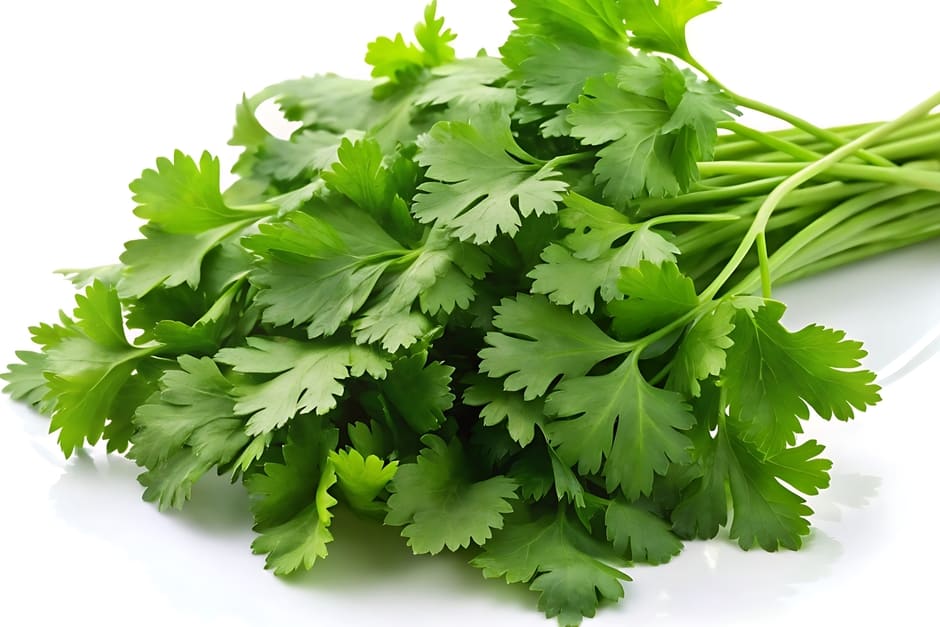
Coriander leaves, flowers and seeds are all edible:
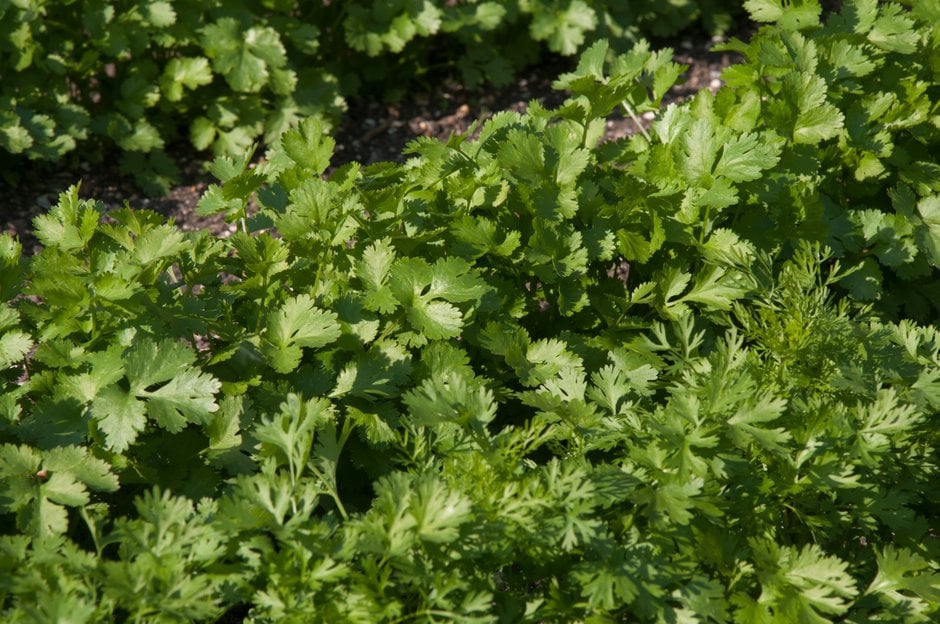
- Leaves – these are best harvested as a cut-and-come-again crop – take only a few from each plant along the row, then allow them to recover for a couple of weeks, before making another harvest. Start when plants are 10–15cm (4–6in) tall, and you should be able to take several pickings before they start to flower. Regular harvesting encourages more leaves to sprout. Coriander leaves can also be harvested as microgreens after just a couple of weeks
- Flowers – when coriander plants flower, which they inevitably will, either pick the blooms to add to salads or leave them to form seeds
- Seeds – coriander seeds can be used green and unripe for a milder flavour, or more commonly when fully ripe and brown. When harvesting , it’s easiest to cut entire stems and put them inside a paper bag, so you don’t lose any. Use the seeds straight away or dry them fully for storage – simply lay them out on a sheet of paper in a warm room for a week or so. Store in an airtight container for use in the kitchen, or put them in a labelled envelope ready for sowing next year
Problem Solving
Coriander is generally easy to grow and trouble free. Just be sure to protect the from slugs and snails. Plants tend to bolt in hot, dry weather, so if you’re growing coriander for its leaves in summer, sow in a cooler location out of midday sun and water in dry spells to delay flowering. This applies particularly when growing in containers, as the dries out rapidly in warm weather. See Common problems, below, for more on these issues.
Common Problems

Bolting in vegetables
Bolting is the term applied to vegetable crops when they prematurely run to seed, usually making them unusable. A cold spell or changes in day length...


Slugs and snails
Slugs and snails are common garden animals, and they are well suited to the damp, mild climate of the UK. A few species feed on garden plants, but mos...
