Getting Started
Dill is a popular culinary herb, mainly grown for its feathery leaves, which have a fresh flavour with just a subtle hint of aniseed. The flowers and seeds are also edible.
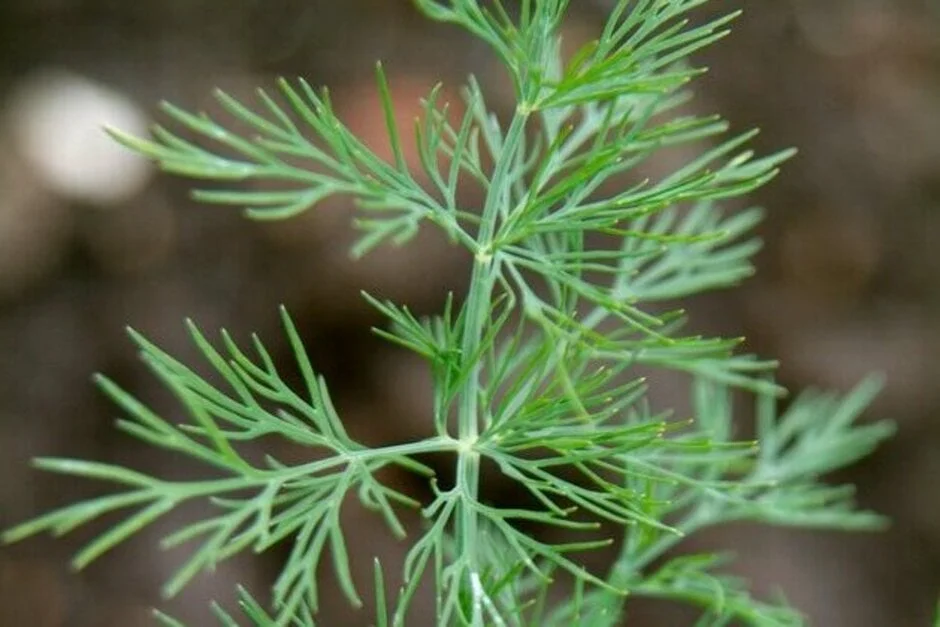
This annual herb, also known as ‘dill weed’, makes an attractive plant with finely divided foliage and clusters of tiny yellow flowers. Plants can grow up to 1.5m (5ft) tall but are more likely to flower and stop growing at about 90cm (3ft), depending on the growing conditions and variety. Dill is pretty enough to grace flower borders as well as herb beds and veg plots, and the -rich flowers attract pollinators.
Dill produces leafy harvests for several weeks until it starts to flower. Sow it outdoors from mid-spring in a sunny, sheltered spot, and you can start harvesting leaves in as little as six weeks. If you sow several small batches from spring to mid-summer, you’ll have fresh dill leaves to enjoy throughout summer and into autumn.
Dill leaves are traditionally used to flavour chicken, fish and egg dishes, as well as dill pickles. They can also be chopped into soups and salads. If you leave some plants to flower and set seed you can harvest the aromatic seeds, which can be used in baking, pickling and many other dishes.
Jobs to do now
Harvest
Collect seed
Month by Month
Sow
Plant
Harvest


Choosing What To Grow
The standard species (Anethum graveolens) is commonly grown. There are also several varieties available, such as compact 'Domino' and 'Diana', bushy and slow to bolt 'Tetra', and vigorous 'Dukat'. A wide range of herbs, including dill, are grown in the RHS Gardens, so do visit to see how they’re grown, compare different varieties and pick up tips and inspiration.
What and where to buy
Dill seeds are widely available in garden centres and online from seed suppliers and herb nurseries. You can also buy young plants in spring and summer from similar stockists.

Sowing
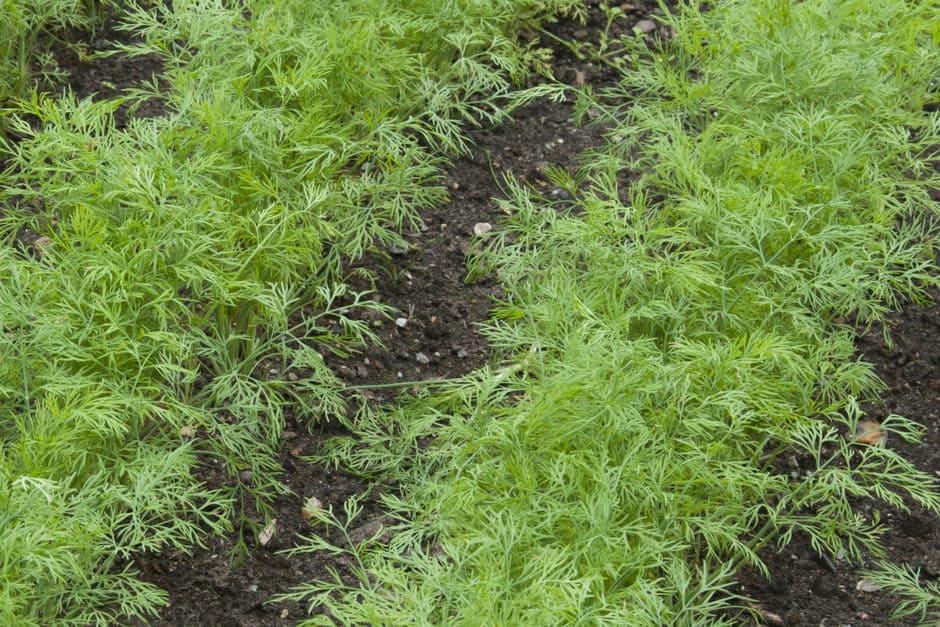
Dill is usually sown direct outdoors, from mid-spring to mid-summer. It can also be sown indoors in , but dislikes having its roots disturbed during transplanting – so direct sowing into the ground is generally the best method. Sowing small batches of seeds every few weeks (successional sowing) will give you a constant supply of young leaves through to autumn.
Sowing indoors
Dill can be sown indoors year-round if you intend to keep the plants on a sunny windowsill or in a warm greenhouse, although you'll have better, bushier plants when light levels are higher. If you plan to transplant outdoors, it's best to sow in spring.
To start dill off indoors, fill a modular tray with peat-free , then sow one seed per module. Keep somewhere warm, ideally no cooler than 15°C (60°F). Seeds should germinate in one to two weeks. Keep the seedlings in a bright spot and water regularly until ready to transplant outdoors – see Planting below.
Sowing outdoors
Sow dill seeds outdoors in small batches from mid-spring, once the soil has warmed, through to mid-summer. Choose a warm, sunny, sheltered position with fertile, free-draining soil. Dill dislikes cold, soggy conditions.
Before sowing in the ground, weed the ground thoroughly then fork it over to break up any hard lumps. Remove any stones and rake to a fine texture. Alternatively, if you’re practising no-dig, the surface with a layer of well-rotted, fine organic matter and sow directly into the mulch.
Make a shallow about 1cm (½in) deep, water along the base then sow the seeds thinly and cover with soil. Allow 30cm (12in) between rows. Thin out the to about 20cm (8in) apart.
Sowing in containers
Dill can be sown directly into containers outside, which is ideal if you have limited ground space. Varieties with a compact growth habit, such as 'Domino' and 'Diana', are suitable for container growing. Use a container at least 30cm (12in) deep and wide and fill with peat-free multi-purpose . Sow thinly and cover the seeds with about 1cm (½in) of compost.
Planting
Plant indoor-sown dill and bought plants into their final growing position from mid-spring onwards. should be transplanted about four weeks after sowing, before they form long tap roots. If you're planting out indoor-grown dill in spring or early summer, be sure to acclimatise them to outdoor conditions by hardening them off.
Choose a sheltered planting site in full sun with well-drained soil. No soil preparation is generally needed before planting. However, if your soil is particularly poor, mix some well-rotted organic matter, such as garden compost, into the soil you remove from the planting holes and use this to backfill after planting. This minimises soil disturbance and will help your plants get off to a strong start.
Water the young dill plants before transplanting, then gently lift them from their module or pot and plant straight away without disturbing the roots. Position them at the depth they were previously growing and space them about 20cm (8in) apart, then water in well. Alternatively, you can plant several young plants of compact varieties in a large container, at least 30cm (12in) wide and deep, filled with peat-free multi-purpose . Firm them in gently, then water well.
Plant Care
Dill doesn't need much regular maintenance, but it does need watering during dry spells. Protect and young plants from slugs and snails, and keep plants bushy and productive with regular harvesting.
Watering
In hot, dry conditions, dill tends to flower prematurely (bolt), which limits further leaf growth, so additional watering is required during dry spells. Plants in containers need particular attention, as the can dry out very quickly in warm weather. For water-wise tips, see our guides below.
Flowering
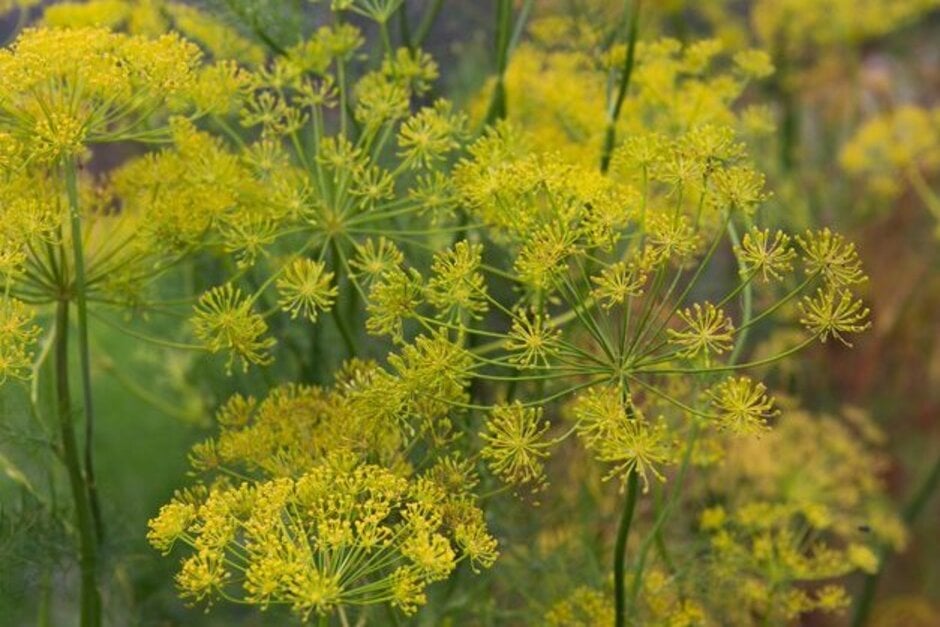
If you only want to harvest dill leaves, and don’t want the flowers or seeds, cut back any flower stems that start to form, so plants put all their energy into producing fresh new leaves for as long as possible. Also harvest shoot tips regularly, or just pinch them out, to encourage bushy, leafy growth.
If you can spare the space, it's worth allowing at least a few plants to flower, as they attract pollinators and will produce seeds that you can collect for sowing next year, see Propagating below.
Propagating
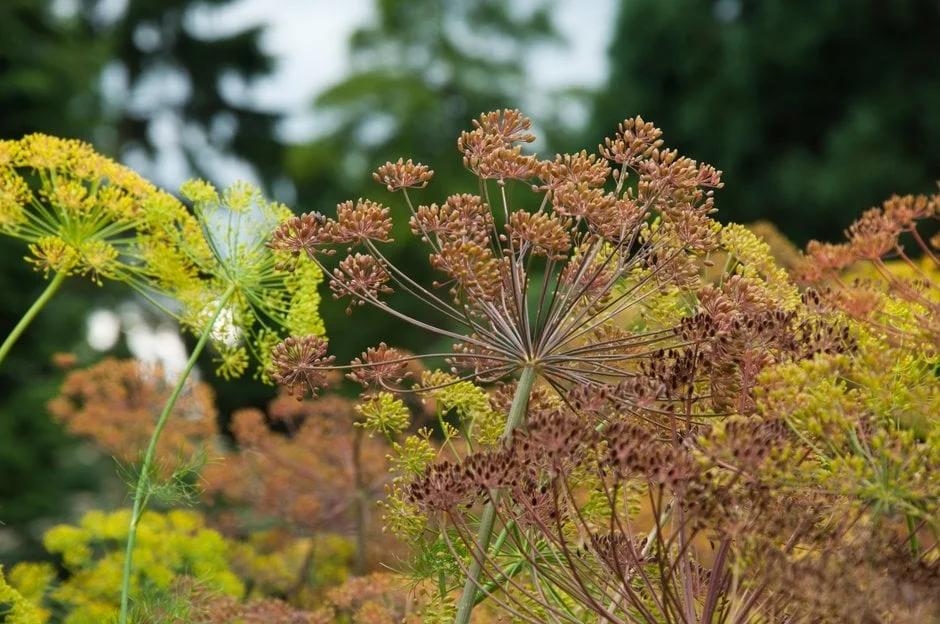
Collect ripe dill seeds when they are dry and brown, in late summer or autumn. Alternatively, leave the seeds on spent flower heads and they will drop and germinate to provide new plants. You can dig these up and move them to a suitable growing site if necessary, but do this when they’re still young, before they form a tap root – see Planting above.
Harvesting
The leaves, flowers and seeds of dill are all edible, and with repeated sowings you should be able to harvest them from early summer through to autumn. You can start harvesting leaves about six weeks after sowing. Snip just a few from young plants and always keep at least one-third of the plant in place to continue growing. Picking leaves regularly encourages plants to produce more, stay bushy and delay flowering.
Use the leaves as soon as possible after harvesting, as they soon wilt, even if kept in the fridge. Dill leaves go particularly well with fish, potatoes, eggs and cucumbers. You can add chopped leaves to salads, dressings and dips. You can also dry dill leaves for future use by hanging up sprigs in a dark, well-ventilated place for a few weeks. When fully dried, strip the leaves from the stems and store in an air-tight jar.
Dill’s tiny yellow flowers can be sprinkled in salads or used to flavour dill pickles. Whole flower stems also look great in floral arrangements.
Dill seeds can be harvested in late summer and autumn when they ripen and turn brown – cut whole stems and put the seedhead in a paper bag, then hang the stems upside down until the seeds dry and drop. Remove any bits of stem, then store the seeds in an air-tight container. Dill seeds have a stronger flavour than the leaves and can be used whole or ground, cooked in soups and vegetable dishes, or baked in breads and biscuits.
Problem Solving
Dill is prone to (premature flowering) in hot, dry weather, so if you’re growing it for the leaves, you'll need to water during dry spells. The delicate foliage is vulnerable to slugs, snails and aphids – see Common problems below.
Common Problems

Bolting in vegetables
Bolting is the term applied to vegetable crops when they prematurely run to seed, usually making them unusable. A cold spell or changes in day length...


Slugs and snails
Slugs and snails are common garden animals, and they are well suited to the damp, mild climate of the UK. A few species feed on garden plants, but mos...
