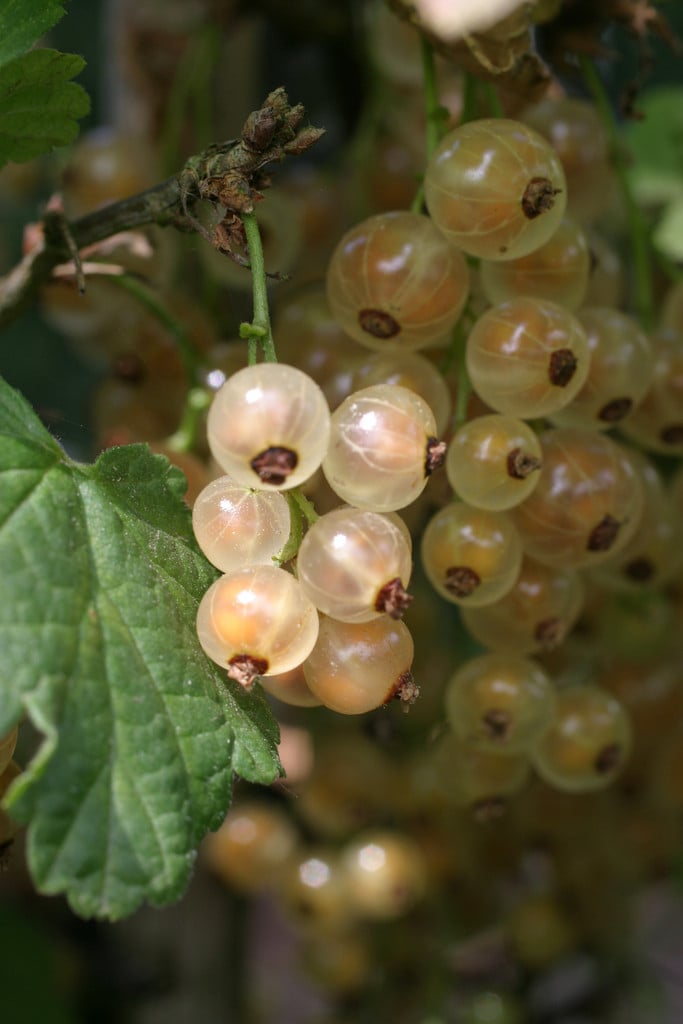
Ribes rubrum 'Versailles Blanche' (W/C)

RHS Plant Profile
whitecurrant 'Versailles Blanche'
whitecurrant 'Versailles Blanche' RHS

Synonyms

Ribes viburnifolium 'White Versailles'
Ribes rubrum 'White Versailles'
Ribes rubrum White Versailles

Plants for pollinators
Shrubs Fruit Edible

A vigorous, upright, deciduous, fruiting shrub to 1.5m in height with arching stems and serrated, 3-lobed green leaves from spring to autumn. Pale green flowers in spring are followed by heavy crops of pale yellow-white, sweet fruit that are ripe in mid- to late-summer

Position

Full sun, Partial shade

Soil Types

Clay, Loam, Sand

Max Height

1-1.5 metres

Max Spread

1-1.5 metres

Size

Time to Maturity
5–10 years
Max Spread
1-1.5 metres
Max Height
1-1.5 metres

Growing Conditions

Clay Loam Sand
Moisture
Moist but well–drained or Well–drained
pH
Neutral

Position

Full sun Partial shade
Aspect
South–facing or East–facing or West–facing
Exposure
Sheltered
Hardiness
H6

Colour & Scent

Season Stem Flower Foliage Fruit
Spring
Summer
Autumn
Winter

Botanical Details

Family
Grossulariaceae
Native to GB/Ireland
No
Foliage
Deciduous
Habit
Bushy
Genus
Ribes can be deciduous or evergreen shrubs, sometimes spiny, with simple, usually palmately lobed leaves and small tubular or bell-shaped, solitary or racemose flowers borne in spring or summer, followed by juicy, sometimes edible berries
Name Status
Unresolved
Horticultural Group
This genus produces whitecurrants

How to Grow

Cultivation

Grow as a permanent framework as a bush, standard, cordon or fan. Keep area around clear of other plants. Mulch with well rotted compost, manure or bark particularly on dry soils. See gooseberry cultivation

Propagation

Propagate by hardwood cuttings in autumn

Suggested planting locations and garden types

  • Cottage and informal garden
  • Wildlife gardens
  • Wall side borders
  • Edible fruit

Pruning

Main pruning in dormant season; also summer pruning of vigorous laterals

Pests

May be susceptible to aphids, scale insects and gooseberry sawfly

Diseases

May be susceptible to a leaf spot, powdery mildews, coral spot and sometimes honey fungus