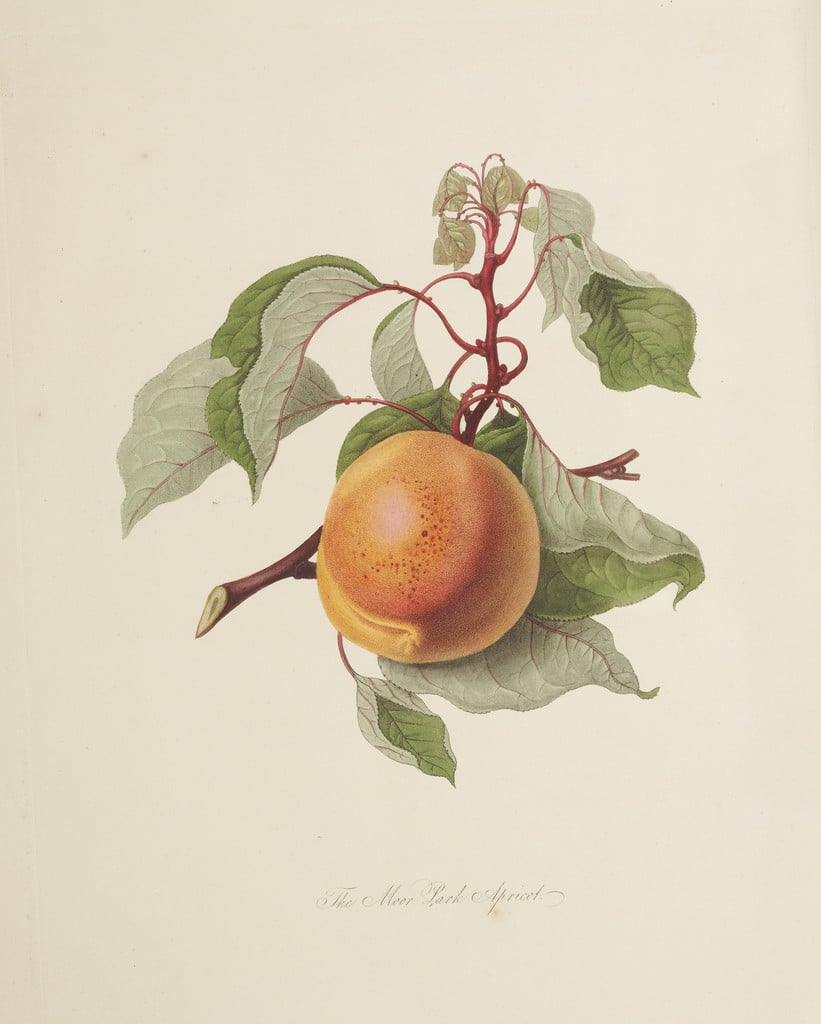
Prunus armeniaca 'Moorpark' (F)

RHS Plant Profile
apricot 'Moorpark'
apricot 'Moorpark' RHS
Plants for pollinators
Fruit Edible Trees

A small, deciduous tree with broadly oval, pointed leaves. Pink-tinged white blossom in early spring is followed by flavoursome, yellow-orange fruit with a red flush, ripening in mid- to late August. A reliable, self-fertile variety

Position

Full sun

Soil Types

Loam

Max Height

2.5-4 metres

Max Spread

1.5-2.5 metres

Size

Time to Maturity
5–10 years
Max Spread
1.5-2.5 metres
Max Height
2.5-4 metres

Growing Conditions

Loam
Moisture
Moist but well–drained
pH
Alkaline or Neutral

Position

Full sun
Aspect
South–facing or West–facing
Exposure
Sheltered
Hardiness
H4

Colour & Scent

Season Stem Flower Foliage Fruit
Spring
Summer
Autumn
Winter

Botanical Details

Family
Rosaceae
Native to GB/Ireland
No
Foliage
Deciduous
Habit
Bushy
Potentially harmful
Seed kernels harmful if eatenwear gloves and other protective equipment when handling Pets (dogs, rabbits, rodents): Harmful if eaten - for further information and contact numbers regarding pets, see the HTA guide to potentially harmful plantside the kernels of the fruit are harmful if eaten
Genus
Prunus can be deciduous or evergreen trees or shrubs with showy flowers in spring, and often good autumn foliage colour. Some have edible fruit in autumn, and a few species have ornamental bark
Name Status
Accepted
Horticultural Group
This genus produces fruit, but not necessarily edible fruit

How to Grow

Cultivation

Apricots flourish on deep, moisture-retentive, well-drained, ideally slightly alkaline soils and struggle in poor, shallow soils. Although fully hardy, they bloom early, and the flowers are vulnerable to frost, so trees need a warm, sheltered position. Protect blossom from frost at night, and hand pollinate if insects are scarce. See apricot cultivation for further advice

Propagation

Propagate by grafting. Seed-raised plants are likely to be inferior to the parent

Suggested planting locations and garden types

  • City and courtyard gardens
  • Cottage and informal garden
  • Mediterranean climate plants
  • Wildlife gardens
  • Wall side borders

Pruning

May be trained as a fan on a warm wall, or as a free-standing bush in milder areas. Prune only in spring as the sap is rising, or between the end of July and the end of August. See apricot cultivation. Thin heavy crops when the size of hazelnuts. See fruit thinning

Pests

Vulnerable to glasshouse red spider mite. Birds and squirrels may damage fruit

Diseases

May be susceptible to peach leaf curl, silver leaf, bacterial canker, blossom wilt and honey fungus