Getting Started
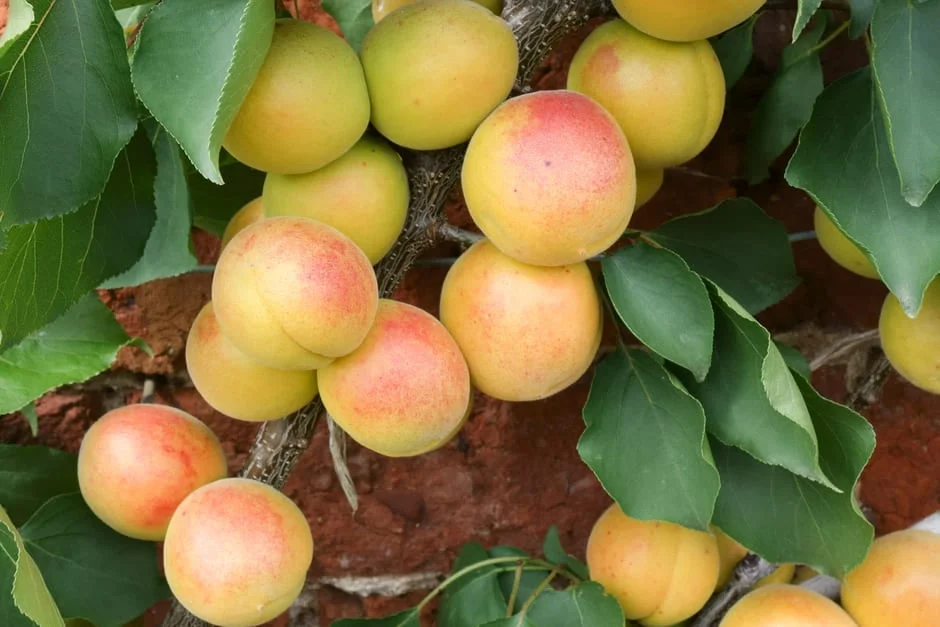
Apricots are not the tender treasures you might imagine – many modern varieties crop reliably in a sunny, sheltered garden or even in a pot. Packed with sweet juice and delicate flavours, home-grown apricots are more delicious than any you can buy in a shop.
Apricots (Prunus armeniaca) are sun-lovers, so grow them in a warm site where they can soak up the rays and ripen their sweet, juicy fruits. They are grown in a similar way to peaches and nectarines (which are close relatives), fruiting best when trained against a sunny wall. They can also be grown as free-standing trees, either in the ground or in a container. Apricots do need some regular attention during the to crop well, but these attractive small trees should then reward you with blossom in early spring, followed by tasty apricots in summer.
Month by Month
Plant
Harvest


Choosing What To Grow
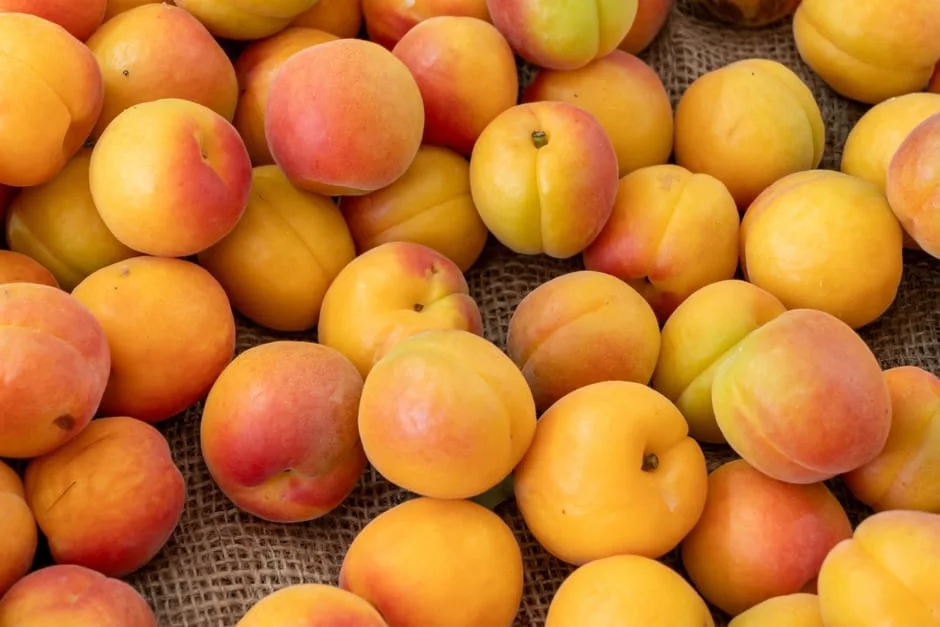
There are several varieties of apricot to choose from, ripening at different times from mid- to late summer. Some offer a more reliable or more abundant crop, or larger, sweeter fruits, in various shades of yellow, orange and red. Some are more suited to cooler locations, while others need a particularly warm site. There are also dwarf varieties, such as ‘Garden Aprigold’, that are ideal in pots.
Apricots are naturally vigorous trees, so are usually grafted onto a rootstock to limit their size. The main rootstock choices are:
- ‘Torinel’ – semi-dwarfing and tolerant of poor soil. Free-standing trees reach 3–3.5m (10–11ft) tall
- ‘Krymsk 86’ – semi-vigorous and tolerant of heavy, damp soil. Free-standing trees reach 3.5–4m (11–13ft) tall
- ‘St Julian A’ – semi-vigorous, widely used and suitable for most soils. Free-standing trees reach 4.5–5m (15–16ft) tall
Training apricot trees as fans will keep them more compact – up to 2m (6½ft) tall and 4m (13ft) wide – and they will naturally stay smaller if grown in a pot.
If you visit any of the RHS gardens, you’ll find many fruit trees, including apricots, grown in various ways, so you can easily compare different varieties and pick up useful growing tips.
What and where to buy
Apricot trees are sold either or in pots. Bare-root trees are often cheaper, but are only available from late autumn to early spring, usually from specialist suppliers. Container-grown trees are sold all year round and are more widely available.
As apricot trees crop well when grown as a fan, you may prefer to buy a partially trained two- or three-year-old fan, rather than a younger tree that you need to train from scratch. Pre-trained trees are more expensive and are usually only available from specialist fruit nurseries.
While it is possible to grow your own apricot tree from seed, it may not be suitable for the UK climate and may not fruit reliably. There are also risks associated with growing from the seed of supermarket-bought fruit, so this should be avoided.
Recommended Varieties


Planting
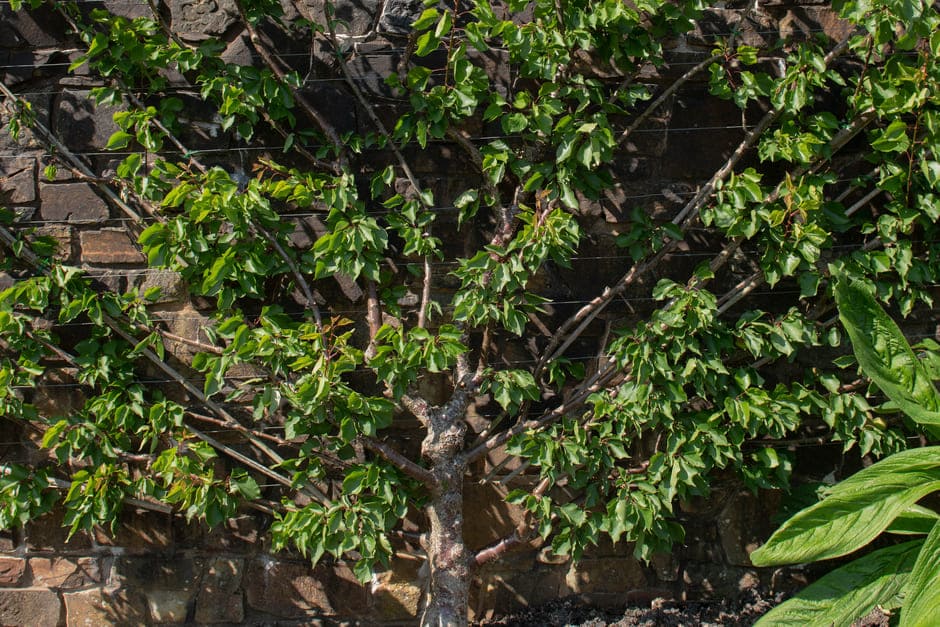
Apricot trees are best planted against a south, south-west or west-facing wall or fence, where they can be fan trained, soaking up maximum heat and sunshine. As they flower early in spring, choose a site that isn’t prone to heavy frosts, which can damage the blossom and reduce cropping.
In milder regions and/or very warm, sheltered, sunny locations, apricots may also crop successfully as free-standing trees – just make sure they are supported with sturdy tree stakes. In very cold regions, they’re best grown in an unheated greenhouse or polytunnel.
Apricots like deep, fertile, moisture-retentive but well-drained soil. Avoid planting in poorly drained soil, which can cause the roots to rot. If your soil is shallow, sandy or nutrient-poor, dig a bucketful of organic matter, such as garden compost or well-rotted manure, into the soil you remove from your planting hole and use this to backfill after planting. This minimises soil disturbance and helps get your tree off to a strong start.
The best time to plant an apricot tree is in autumn, when the soil is warm and damp, but any time between November and March, when the tree is dormant, is also fine. Container-grown trees can be planted at other times of year, but may not settle in as readily.
If planting your apricot against a wall, position the roots around 30cm (1ft) from the base and angle the tree slightly towards it. As fan-trained trees can eventually reach a width of 3.5–5m (11–16ft), make sure there is plenty of room on either side.
For advice on how to plant your apricot tree, see our handy guides below:
Planting in a container
Apricot trees can be grown in large pots, at least 45cm (18in) in diameter. Fill with a good quality, loam-based , such as peat-free John Innes No. 3, and position in a warm, sunny, sheltered spot, such as on a south or west-facing patio.
Dwarf varieties make the best choices for containers, as they need minimal pruning to keep them compact. Bear in mind that they will need regular watering and feeding to stay healthy and productive, see Plant Care below.
Plant Care
Newly planted apricot trees and those growing in containers need some regular attention to ensure they establish well and produce a good crop. Once established, trees in the ground need little ongoing maintenance other than annual pruning.
Watering
- Newly planted trees – should be watered regularly during dry spells for the first couple of years after planting
- Fan-trained trees – may require additional watering, as the soil is often dry at the base of a wall or fence
- Trees in pots – need a steady supply of moisture throughout the , so water regularly in dry spells, aiming to keep the evenly moist
- Apricots in a greenhouse – need watering regularly, especially in summer
- Established free-standing trees – shouldn't need watering
A good supply of moisture is particularly important in early to mid-summer when fruits are swelling. Try to water early in the morning or late in the evening to minimise moisture loss from the soil, ideally using stored rainwater.
Ensure container-grown trees are planted in pots with good drainage, and that water continues to drain out easily as the plant grows, as roots will rot in cold, soggy compost, especially in winter.
Mulching
apricot trees growing in the ground each spring, spreading a thick layer of mulch, such as home-made compost or well-rotted manure, on the soil around the base of the trees. This helps to suppress weeds and hold moisture in the soil.
Feeding
Apricot trees growing in regularly mulched soil shouldn't need any additional feeding. However, if harvests are particularly poor, or your tree is showing signs of nutrient deficiency, apply a granular fertiliser to the soil in early spring. Use our page on nutrient deficiencies to work out what is lacking and apply the recommended feed, following instructions on the packet.
Apricots growing in containers benefit from regular feeding. Either apply an organic, high potassium liquid fertiliser every fortnight during the , or sprinkle a handful of a granular, general-purpose fertiliser onto the each spring.
Repotting
To keep container-grown trees healthy and productive, repot every few years in spring. Choose a slightly larger container filled with a good quality, peat-free compost. Once it becomes impractical to move the tree to a larger pot, repot into the same one, removing and replacing any loose compost and lightly trimming the roots. In the years between repotting, topdress by removing the top layer of compost and replacing with fresh.
Protecting blossom from frost
It is important to protect apricot blossom from frost, otherwise you may not get any fruit. If frost is forecast during flowering, cover the tree overnight with , hessian or an old bedsheet, supported on bamboo canes so it doesn’t touch the flowers. Uncover the tree during the day to let in sunlight and pollinating insects. Alternatively, apricot trees in pots can be moved into a greenhouse, porch or other sheltered spot during flowering, and by hand (see below).
Protecting the blossom is only really practical with fan-trained or container-grown trees, so only grow apricots as free-standing trees in really warm, sheltered locations where spring frosts are unlikely.
Improving your crop
Apricots are self-fertile, but they flower early in spring when few pollinating insects are around, so it is a good idea to hand-pollinate them to ensure a good crop. This is a very easy process and is best done over several days, ideally around noon in dry, sunny weather. Take a small paint brush and dab it gently into the centre of every flower in turn, transferring pollen from one bloom to the next. To ensure the pollen sticks, you can then lightly mist the tree with water, but allow plenty of time for the flowers to dry before dark. Trees grown in a greenhouse should always be hand- .
isn’t usually required, except if your tree produces a particularly large number of . In this case, removing some of them will help the rest to develop well. When the fruitlets reach cherry size, in late spring, thin out pairs and clusters so that those left are spaced 5–8cm (2–3in) apart. Cut unwanted fruitlets in half with secateurs – they will then drop off with no damage to the shoot. Start with any mis-shapen fruitlets and those growing in an awkward or shaded position, such as near the wall on a fan-trained tree.
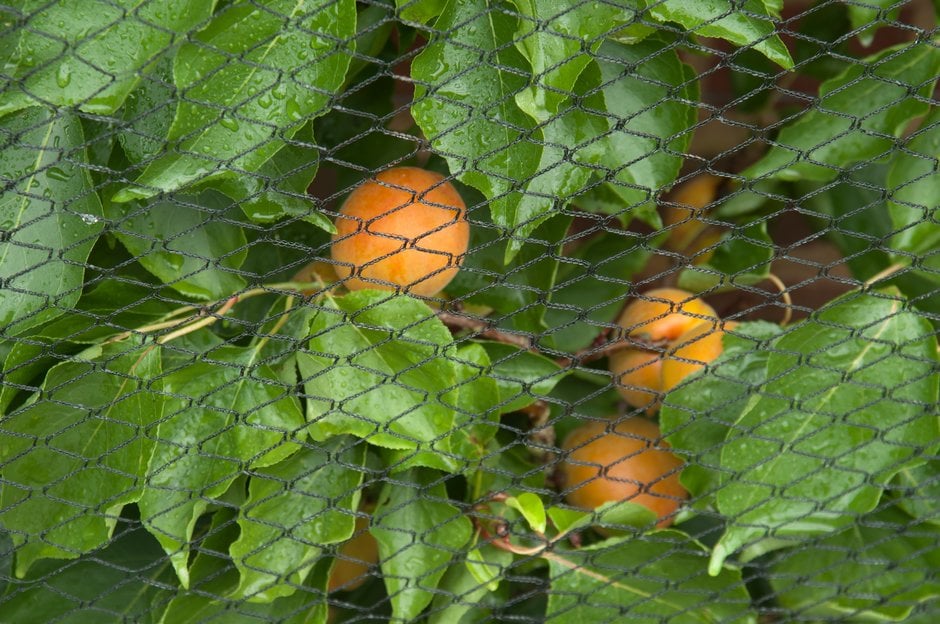
Before the fruits start to colour up, they will need protection from birds and squirrels, usually with fruit sleeves or with plastic-free or reused netting supported on a wooden frame or canes. Move potted plants into a greenhouse or other enclosed space. Apricot trees can also be grown in a fruit cage.
Overwintering
Dwarf varieties, often sold as patio fruit trees for growing in pots, are less cold-tolerant than larger trees planted in the ground. In colder areas, move containers to a sheltered position or an unheated greenhouse for winter protection.
Pruning And Training
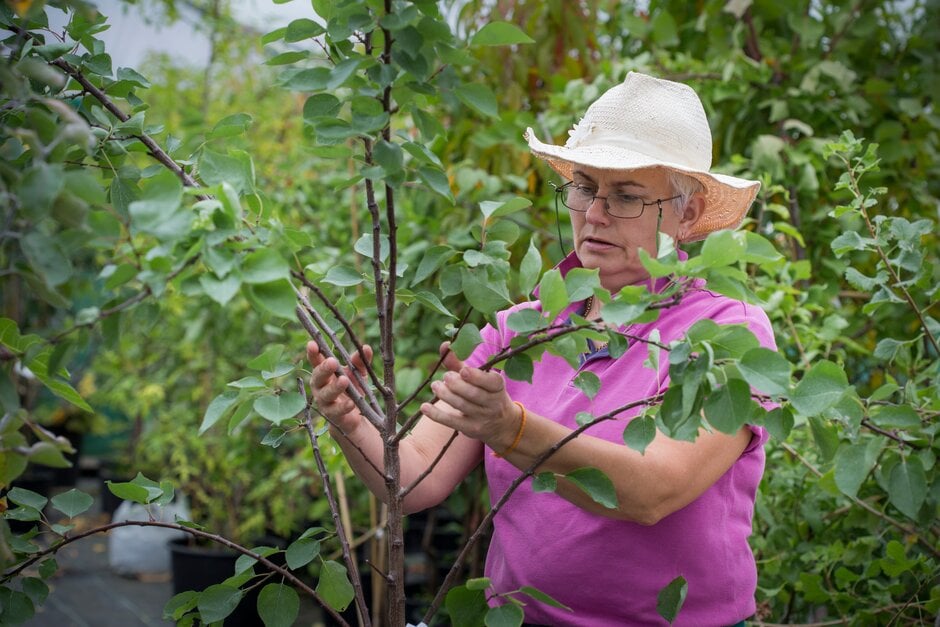
Most apricots should be pruned annually to keep them healthy, productive and in good shape, though some naturally compact varieties, such as ‘Garden Aprigold’, need little or no pruning. Like all stone fruits, apricots should only be pruned in spring or summer, to minimise the risk of infection by silver leaf disease and bacterial canker. Prune on a dry day, when dry weather is forecast for at least the next two days. Prune established trees after fruiting, and newly planted trees in early spring.
Apricot trees are usually trained as a fan against a sunny wall or fence, to improve fruiting and ripening – they are too vigorous to be trained as cordons or espaliers. Fans have a short trunk topped with a flat fan of radiating branches, making an attractive feature. They are also useful if space is limited, as they take up little ground space and can be kept to just 1.8m (6ft) tall (the height of a fence panel) and 3.5–5m (11–16ft) wide. This makes them easier to hand-pollinate and harvest than free-standing trees, and easier to protect from frost and animals. However, they do need careful pruning and training – see our guides below.
In warm locations, apricots can also be grown as open-centred bush trees or as pyramid trees – see our guide to pruning plums, as the methods are the same for apricots.
Harvesting
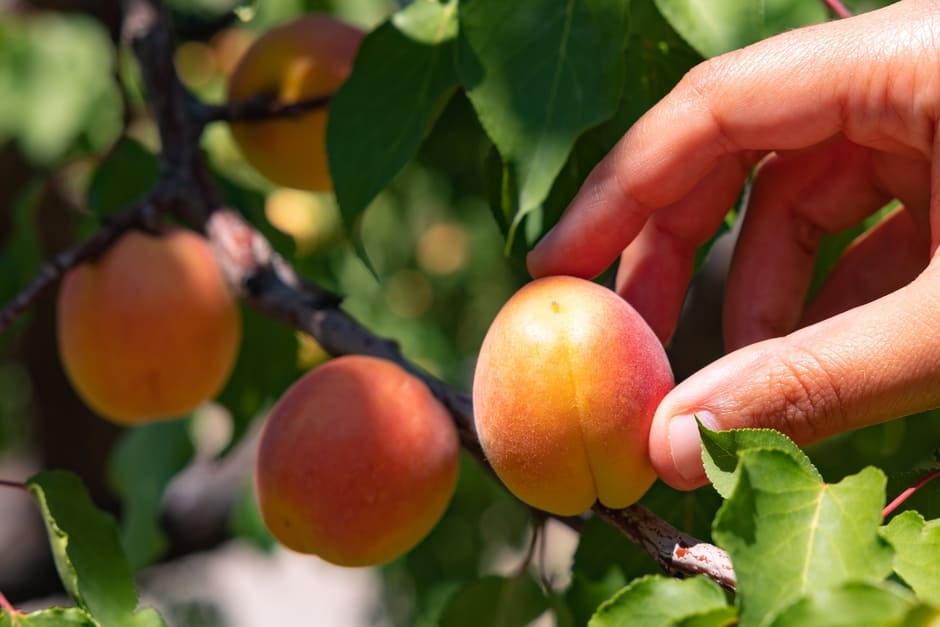
Apricots are ready to pick from late July to August – ripe fruits are soft, rich in colour and come away easily from the tree.
Apricots are best eaten straight away, and can only be stored for a few days. They can, however, be dried or made into preserves.
Problem Solving
To fruit well in the UK, apricot trees need a warm, sheltered location and lots of sunshine. Potential fruiting problems include:
- Lack of fruit – may be due to frost during flowering and/or poor , so protect blossom from frost and cold winds, and hand-pollinate with a small paintbrush. For more information, see our guide on unproductive fruit trees
- Failure to ripen – may be due to cool weather and lack of sun. Training trees against a sunny wall will help to ripen the fruits. In colder regions, consider growing in a greenhouse or polytunnel
- Loss of ripening fruit – protect apricots from birds and squirrels by covering trees with netting or sleeves before the fruits start to colour up. Alternatively, grow trees in a fruit cage or move container-grown trees indoors once the fruits start to swell
- Damaged fruits and leaves – may be caused by winter moth caterpillars
Apricots can be affected by several diseases (see below), but on the bright side, peach leaf curl (which can affect apricot relatives) is seldom a problem.
Common Problems

Bacterial canker
Bacterial canker is a disease of the stems and leaves of Prunus, especially plums and cherries, but also apricots, peaches and ornamental Prunus speci...

Blossom wilt
Blossom wilt is a fungal disease of apples, pears, plums, cherries and related ornamental trees. It kills blossoms, spurs and small branches. The prob...

Honey fungus
Honey fungus is the common name for several different species of the fungus Armillaria that attack and kill the roots of many woody and perennial plan...