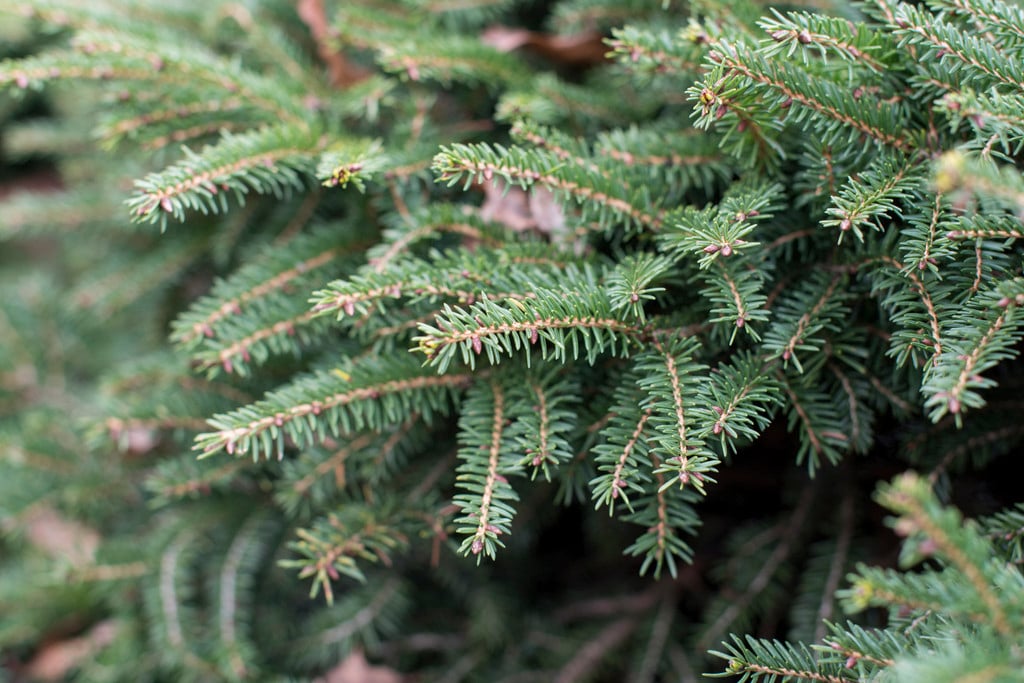
Picea abies

RHS Plant Profile
Norway spruce
Norway spruce RHS

Other common names

Baltic whitewood, Burgundy pitch tree, common spruce, spruce fir, white deal

Synonyms

Picea abies 'Excelsa'
Picea rubra A. Dietr.
Pinus excelsa Lamb.

Conifers Trees

A fast-growing, dense conifer, to 30m tall, narrowly-conical when young becoming broader with age. Dark green, glossy, needle-like leaves, to 2.5cm long, cover the upper side of the branchlets. The light brown cones taper at the top, reaching up to 15cm long and 5cm wide

Position

Full sun

Soil Types

Clay, Loam, Sand

Max Height

Higher than 12 metres

Max Spread

wider than 8 metres

Size

Time to Maturity
20–50 years
Max Spread
wider than 8 metres
Max Height
Higher than 12 metres

Growing Conditions

Clay Loam Sand
Moisture
Moist but well–drained
pH
Acid or Neutral

Position

Full sun
Aspect
South–facing or North–facing or West–facing or East–facing
Exposure
Exposed or Sheltered
Hardiness
H7

Colour & Scent

Season Stem Flower Foliage Fruit
Spring
Summer
Autumn
Winter

Botanical Details

Family
Pinaceae
Native to GB/Ireland
No
Foliage
Evergreen
Habit
Columnar upright
Genus
Picea are evergreen trees with rigid, needle-like leaves arranged singly all round the shoots, and narrow, leathery-scaled cones borne near the ends of the shoots
Name Status
Correct
Plant Range
Europe

How to Grow

Cultivation

Grow in moist but well-drained, acid or neutral soil. See conifer cultivation for more advice

Propagation

Propagate by seed or by semi-hardwood cuttings

Suggested planting locations and garden types

  • Low Maintenance

Pruning

No pruning required

Pests

May be susceptible to adelgids, red spider mite and conifer aphid

Diseases

May be susceptible to honey fungus