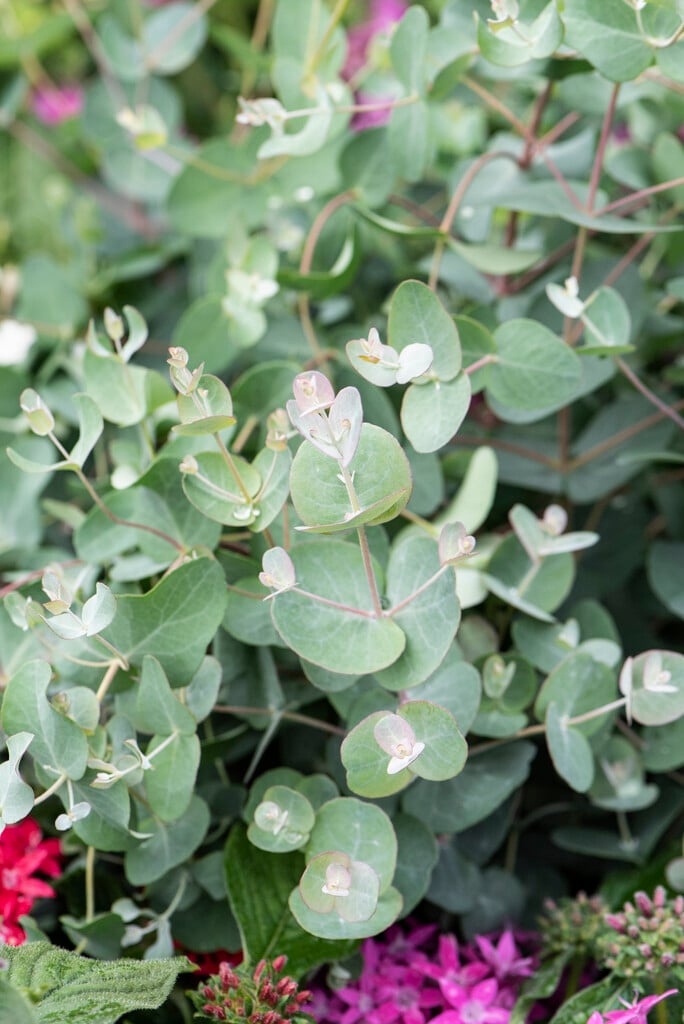
Eucalyptus pulverulenta 'Baby Blue'

RHS Plant Profile
silver-leaved mountain gum 'Baby Blue'

Synonyms

Eucalyptus 'Baby Blue'

Trees

A slow-growing, compact evergreen tree, growing to 3-4m (10-13ft) in height, making it more suitable to grow in smaller gardens, than many other eucalypts. Both the juvenile and adult foliage is round and an intense silver blue. It is one of the most widely used eucalypts in flower arranging. The foliage and stems have a very strong eucalyptus aroma. Flowers are white and appear in winter and spring.

Position

Full sun

Soil Types

Chalk, Clay, Loam, Sand

Max Height

2.5-4 metres

Max Spread

1.5-2.5 metres

Size

Time to Maturity
10–20 years
Max Spread
1.5-2.5 metres
Max Height
2.5-4 metres

Growing Conditions

Chalk Clay Loam Sand
Moisture
Moist but well–drained or Well–drained
pH
Acid or Alkaline or Neutral

Position

Full sun
Aspect
South–facing or West–facing or East–facing
Exposure
Sheltered
Hardiness
H5

Colour & Scent

Fragrance Foliage
Season Stem Flower Foliage Fruit
Spring
Summer
Autumn
Winter

Botanical Details

Family
Myrtaceae
Native to GB/Ireland
No
Foliage
Evergreen
Habit
Bushy
Genus
Eucalyptus are evergreen trees or large shrubs, often fast-growing, some with attractive bark, most with aromatic foliage, and clusters of small, white, yellow or red flowers
Name Status
Accepted

How to Grow

Cultivation

Grows best in full sun and a mildly acidic to neutral soil that is moist but well-drained, but will also tolerate mildly alkaline soil. Able to withstand cold temperatures when mature, but shelter from cold, drying winds especially when young. See eucalyptus cultivation

Propagation

Propagate by seed at 13-18°C in spring and summer

Suggested planting locations and garden types

  • Architectural
  • City and courtyard gardens
  • Cottage and informal garden
  • Mediterranean climate plants
  • Patio and container plants
  • Flower borders and beds

Pruning

Pruning group 1 or, for best juvenile foliage, pruning group 7 For more information see Eucalyptus: pruning

Pests

May be susceptible to eucalyptus gall wasp and eucalyptus sucker

Diseases

May be susceptible to silver leaf, oedema and honey fungus
