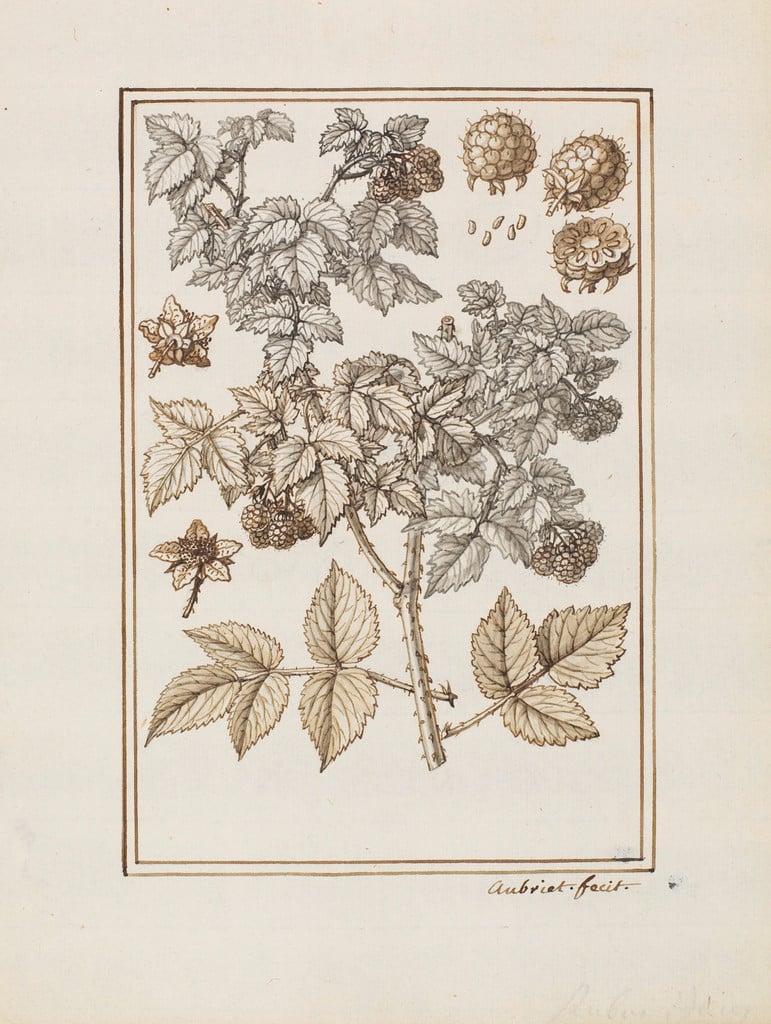
Rubus idaeus

RHS Plant Profile
common raspberry
common raspberry RHS

Other common names

European raspberry, frambois, framboise, framboys, garden raspberry, hindberry, hineberry, red raspberry, wild raspberry

Plants for pollinators
Fruit Edible Shrubs

A vigorous, deciduous shrub producing erect, biennial stems to 2.5m tall with or without prickles. Leaves are divided into 3-5 or 7 leaflets, each of which is coarsely-toothed and covered with a white felt on the underside. Clusters of white flowers borne on year-old stems in summer are followed by red, edible fruits. This is a parent of all cultivated raspberries. The cultivars vary in cropping season, size and fruit colour

Position

Full sun

Soil Types

Loam, Sand

Max Height

1.5-2.5 metres

Max Spread

0.5-1 metres

Size

Time to Maturity
2–5 years
Max Spread
0.5-1 metres
Max Height
1.5-2.5 metres

Growing Conditions

Loam Sand
Moisture
Moist but well–drained or Well–drained
pH
Acid or Neutral

Position

Full sun
Aspect
South–facing or West–facing or East–facing
Exposure
Sheltered
Hardiness
H6

Colour & Scent

Season Stem Flower Foliage Fruit
Spring
Summer
Autumn
Winter

Botanical Details

Family
Rosaceae
Native to GB/Ireland
Yes
Foliage
Deciduous
Habit
Suckering
Genus
Rubus can be deciduous or evergreen shrubs, often scrambling with bristly or prickly stems bearing simple, lobed, palmate or pinnate leaves and 5-petalled flowers followed by juicy, sometimes edible fruits
Name Status
Correct
Plant Range
Europe, N Asia

How to Grow

Cultivation

Grow in an acidic or neutral soil and mulch with acidic material such as composted bark. May have the potential to become a nuisance if not managed well. See raspberry cultivation

Propagation

Choose disease-free stock for propagation. Propagate by softwood cuttings or semi-ripe cuttings from spring to midsummer, hardwood cuttings in winter, root cuttings in autumn and winter, leaf bud cuttings in mid to late summer, division from autumn to early spring and layering from late summer to early spring

Suggested planting locations and garden types

  • Wildlife gardens
  • Edible fruit

Pruning

Remove all fruited canes down to ground level in early to mid autumn

Pests

May be susceptible to aphids, leafhoppers, raspberry beetle and gall mites

Diseases

May be susceptible to grey moulds and honey fungus (rarely)