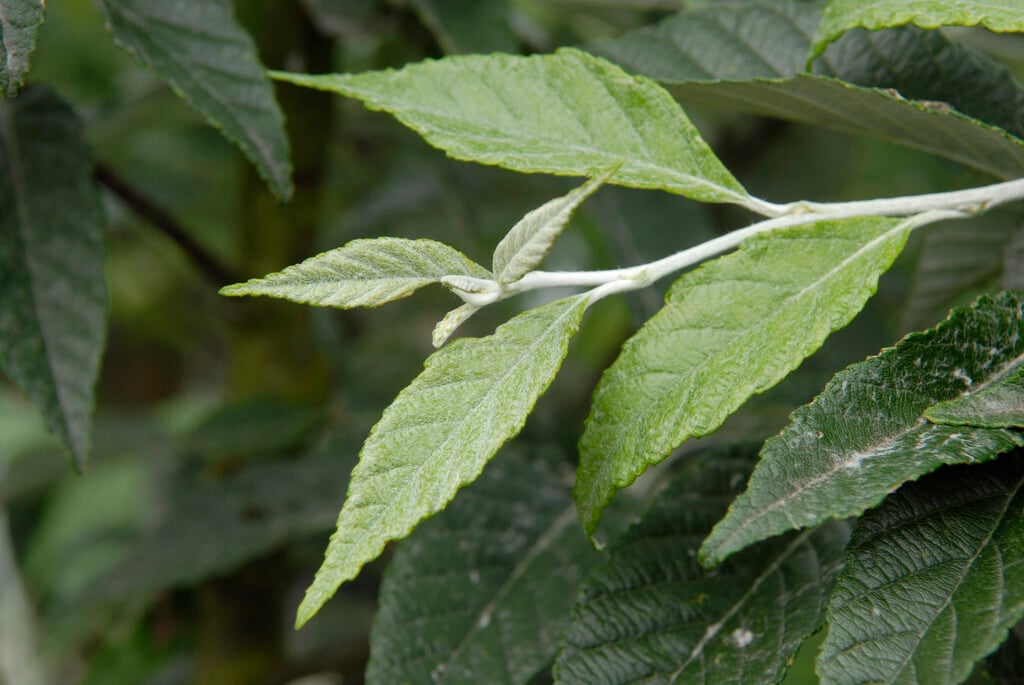
Sorbus folgneri 'Emiel'

RHS Plant Profile
Folgner's whitebeam 'Emiel'
Folgner's whitebeam 'Emiel' visionspictures.com
Award of Garden Merit
Trees

A spreading tree to 10m tall with narowly ovate, toothed leaves to 10cm long, green above with white undersides and turning rich orange and red shades in autumn. Clusters of small, white, spring flowers are followed by hanging orange to red fruits in autumn

Position

Full sun, Partial shade

Soil Types

Chalk, Clay, Loam, Sand

Max Height

8-12 metres

Max Spread

wider than 8 metres

Size

Time to Maturity
20–50 years
Max Spread
wider than 8 metres
Max Height
8-12 metres

Growing Conditions

Chalk Clay Loam Sand
Moisture
Moist but well–drained or Well–drained
pH
Acid or Alkaline or Neutral

Position

Full sun Partial shade
Aspect
East–facing or North–facing or South–facing or West–facing
Exposure
Exposed or Sheltered
Hardiness
H6

Colour & Scent

Season Stem Flower Foliage Fruit
Spring
Summer
Autumn
Winter

Botanical Details

Family
Rosaceae
Native to GB/Ireland
No
Foliage
Deciduous
Habit
Spreading branched
Potentially harmful
Fruit are ornamentalnot to be eaten. Wear gloves and other protective equipment when handling. Pets: Fruit are ornamentalnot to be eaten - see the HTA guide to potentially harmful plants for further information and useful contact numbers
Genus
Sorbus can be deciduous trees or shrubs with simple or pinnate leaves and clusters of small white or pink flowers, followed by white, yellow, pink, red or brown berries; some have fine autumn colour
Name Status
Unresolved

How to Grow

Cultivation

Grow in moderately fertile, humus-rich, moist but well-drained soil in sun or light dappled shade; will grow in a wide range of soils but prefers acidic or neutral soil. See tree cultivation for further advice

Propagation

Propagate by seed, softwood cuttings or grafting

Suggested planting locations and garden types

  • Wildlife gardens
  • Low Maintenance

Pruning

Pruning group 1

Pests

May be susceptible to aphids, scale insects, pear blister mite, red spider mite and sawfly larvae

Diseases

May be susceptible to fireblight, apple canker, silver leaf and honey fungus