

Pears: choosing cultivars
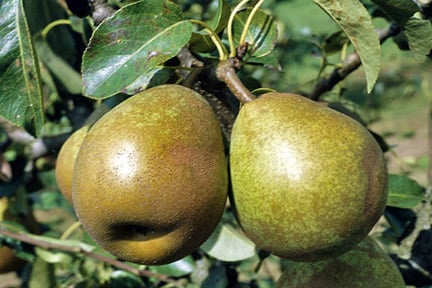
Biting into a succulent, perfectly-ripe pear is one of the joys of autumn. There are dozens of cultivars to choose from, but listed below are some of the best flavoured and most reliable.
Common name - Pear blister mite
Scientific name - Eriophyes pyri
Plants affected - Pear
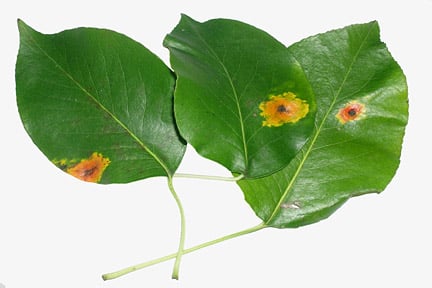
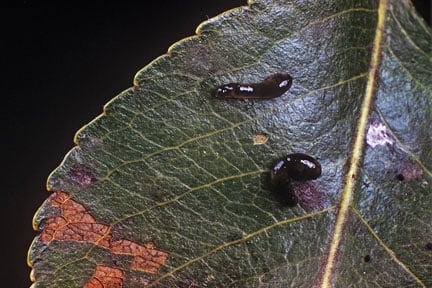
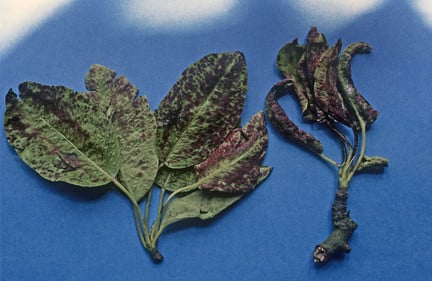
Main symptoms - Many slightly raised pink or yellowish green blotches on the foliage in spring, later becoming blackish brown
Caused by - A microscopic gall mite
Timing - April-September

Pear blister mite is a microscopic mite that feeds within the foliage of pear trees.
Similar mites can be found on Sorbus and other trees in the Rosaceae family, these are different species to that found on pear. As with pear blister mite they have limited effects on the host plant health and can be tolerated.
Pear blister mite is a gall mite, also known as eriophyid mites, these are minute animals usually less than 0.2 mm long when fully grown. They have elongate bodies and two pairs of legs, unlike other mites which have four pairs. Their size means they can usually only be seen with the aid of a microscope. Their presence is readily detected by the distinctive abnormal plant growths induced by their feeding activities.
There are many species of eriophyid mite which are usually host specific this means that each species of mite will only feed on a single, or several closely related, plant species.
Eriophyid mites feed by sucking but while doing so secrete chemicals into the plant tissue that converts some of the normal (parenchyma) plant cells to tissues which can give rise to a range of growth forms. These then grow to produce the gall. The mites can then suck sap from plant cells lining the gall structure, which are invariably more nutritious than unaffected tissue, but often do not cause serious damage to the plant.
Pear trees with blister mite will have the following symptoms:

Pear leaf blister mite, spring symptoms on leaves
Although heavily affected trees may look unhealthy, the mite has little impact on the tree’s health or ability to produce fruit and control is not necessary. This mite can be treated as part of the a healthy tree supports.
In light populations leaves or shoots could be removed however taking these leaves off a heavily affected tree may do more harm to the plant than the mite.
Pear blister mites overwinter underneath the outer scales on pear trees.
In spring, the mites emerge and penetrate into developing foliage. They feed by sucking out the contents of the leaf cells and while doing so produce secretions that create small discoloured blisters around where the mites are feeding.
The mites spend the summer feeding and breeding inside the leaves but come out and to seek overwintering sites before leaf fall.