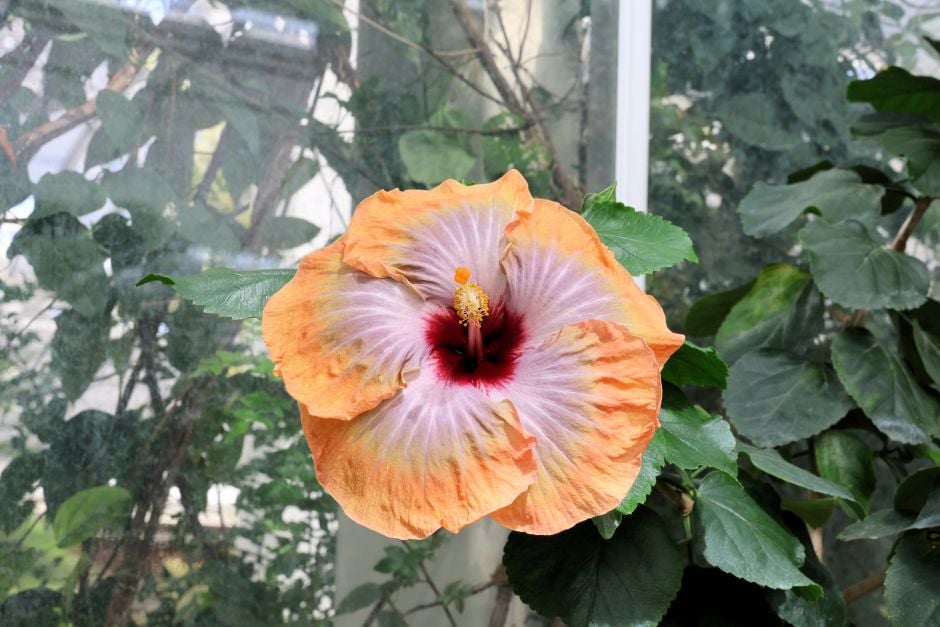
Hibiscus × rosa-sinensis 'Fifth Dimension'

RHS Plant Profile
Chinese hibiscus 'Fifth Dimension'
Chinese hibiscus 'Fifth Dimension' RHS
Herbaceous Perennial

A bushy, deciduous herbaceous perennial with upright stems, woody at the base, and large, dark green foliage. The flowers appear from July through to September, unusually changing colour throughout the day, starting gun-metal grey with a white halo and veining and small red eye, then the edges turn to orange then finally yellow

Position

Full sun

Soil Types

Chalk, Clay, Loam, Sand

Max Height

1.5-2.5 metres

Max Spread

1-1.5 metres

Size

Time to Maturity
2–5 years
Max Spread
1-1.5 metres
Max Height
1.5-2.5 metres

Growing Conditions

Chalk Clay Loam Sand
Moisture
Moist but well–drained
pH
Acid or Neutral

Position

Full sun
Aspect
South–facing or West–facing
Exposure
Sheltered
Hardiness
H1B

Colour & Scent

Season StemFlowerFoliageFruit
Spring Green
Summer Grey, Silver, Red, White, Orange, Yellow Green
Autumn Green
Winter

Botanical Details

Family
Malvaceae
Native to GB/Ireland
No
Foliage
Deciduous
Habit
Bushy
Genus
Hibiscus can be deciduous or evergreen shrubs, trees, annuals or perennials, with simple or palmately lobed leaves and large, funnel-shaped flowers over a long flowering season
Name Status
Accepted

How to Grow

Cultivation

May be grown outdoors in mild, frost-free areas, or in large containers that can be moved indoors over winter. Outdoors, grow in neutral to slightly acidic soil in full sun, and mulch well over winter. Hibiscus need long, hot summers to flower well. Indoors, grow in bright filtered light with moderate humidity and good ventilation. See Hibiscus rosa-sinensis cultivation for further advice

Propagation

Propagate by seed or by division in spring, or by softwood or semi-hardwood cuttings

Suggested planting locations and garden types

  • City and courtyard gardens
  • Coastal
  • Cottage and informal garden
  • Patio and container plants
  • Conservatory and greenhouse
  • Flower borders and beds

Pruning

pruning group 1; little pruning is usually necessary

Pests

May be susceptible to aphids, scale insects, mealybugs and glasshouse whitefly when grown under glass

Diseases

May be susceptible to honey fungus (rarely) and Powdery mildews