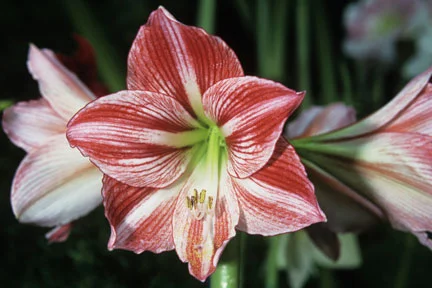
Hippeastrum
Hippeastrum are popular gifts at Christmas. They are often commonly known as amaryllis and, by following a few easy tips, these beautiful flowers will bloom year after year for you.
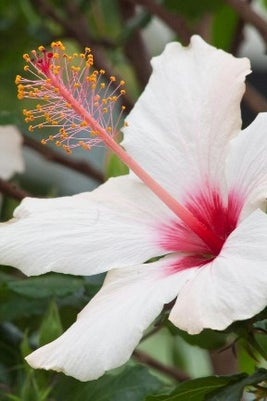
Common name - Tropical hibiscus, rose of China, Hawaiian hibiscus
Botanical name - Hibiscus rosa-sinensis
Group - Evergreen houseplant for warm greenhouse or conservatory
Flowering time - May to October
Planting time - April
Height and spread - May reach 2m (6½ft)
Aspect - Bright, filtered light
Hardiness - Tender minimum 7-10ºC (45-50ºF)
Difficulty - Moderate

Hibiscus requires bright, humid conditions with good , protected from direct sunlight and a minimum night temperature of 7ºC (45ºF). Plants can be placed outdoors in summer but need to be brought indoors before temperatures drop below 12ºC (59ºF).
Plants can be kept small and bushy with regular pruning and may live for up to 20 years.
Softwood tip cuttings or semi-ripe cuttings taken in late spring or early summer, root readily;
Unfortunately houseplants are not reliably listed in the RHS Plant Finder, as stocks offered in garden centres tend to be sourced abroad making it difficult to identify availablity. Also the range of available Hibiscus rosa-sinensis cultivars is continually changing with new introductions, so it is difficult to make recommendations.
For a form, consider Hibiscus rosa-sinensis ‘Cooperi’ (v) AGM, a compact plant with heavily marbled olive-green and white leaves, sometimes tinted pink and bearing red flowers, height 1-2m (3-6ft)
Generally trouble free but may suffer from common glasshouse pests such as aphids, red spider mites and glasshouse whitefly.
Flower buds and leaves turn yellow and drop in winter when light levels are low indoors but plants can survive in this semi-dormant state if watering is reduced.