Erica × griffithsii 'Elegant Spike'
heather 'Elegant Spike'
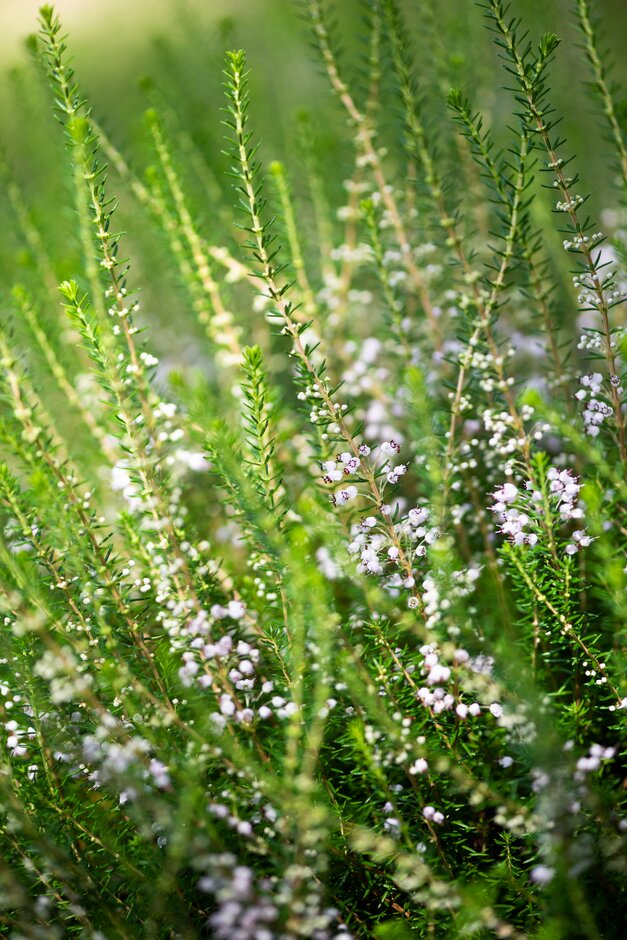
Vigorous, upright, evergreen shrub to about 60cm high and 75cm wide, with tiny, needle-like, mid-green leaves. Small, fragrant, bell-shaped, pale rose-pink flowers are produced in long upright sprays, from mid summer to mid autumn
Size
Ultimate height
0.5–1 metresTime to ultimate height
5–10 yearsUltimate spread
0.5–1 metresGrowing conditions
Moisture
Moist but well–drained, Well–drainedpH
Acid, Neutral, AlkalineColour & scent
| Stem | Flower | Foliage | Fruit | |
| Spring | Green | |||
|---|---|---|---|---|
| Summer | Pink | Green | ||
| Autumn | Pink | Green | ||
| Winter | Green |
Position
- Full sun
- Partial shade
Aspect
South–facing or West–facing or East–facing
Exposure
Sheltered Hardiness
H4Botanical details
- Family
- Ericaceae
- Native to GB / Ireland
- No
- Foliage
- Evergreen
- Habit
- Bushy, Spreading branched
- Genus
Erica can be prostrate or erect, evergreen shrubs with fine, needle-like leaves in whorls, and racemes or panicles of small, bell-shaped or tubular flowers
- Name status
Accepted
How to grow
Cultivation
Best grown in neutal to acid well-drained soil in an open site with full sun but tolerant of mildy alkaline soils and a little shade. Ideal for growing in containers in lime free (ericaceous) potting compost. See Hardy heathers and erica cultivation
Propagation
Propagate by semi-ripe cuttings in mid or late summer
Suggested planting locations and garden types
- City and courtyard gardens
- Coastal
- Cottage and informal garden
- Patio and container plants
- Wildlife gardens
- Low Maintenance
- Flower borders and beds
Pruning
Pruning group 10 after flowering
Pests
Generally pest-free
Diseases
May be susceptible to fungal diseases, including honey fungus (rarely), and Phytophthora root rot, in wet conditions
Get involved
The RHS is the UK’s gardening charity, helping people and plants to grow - nurturing a healthier, happier world, one person and one plant at a time.