Theobroma cacao
cocoa
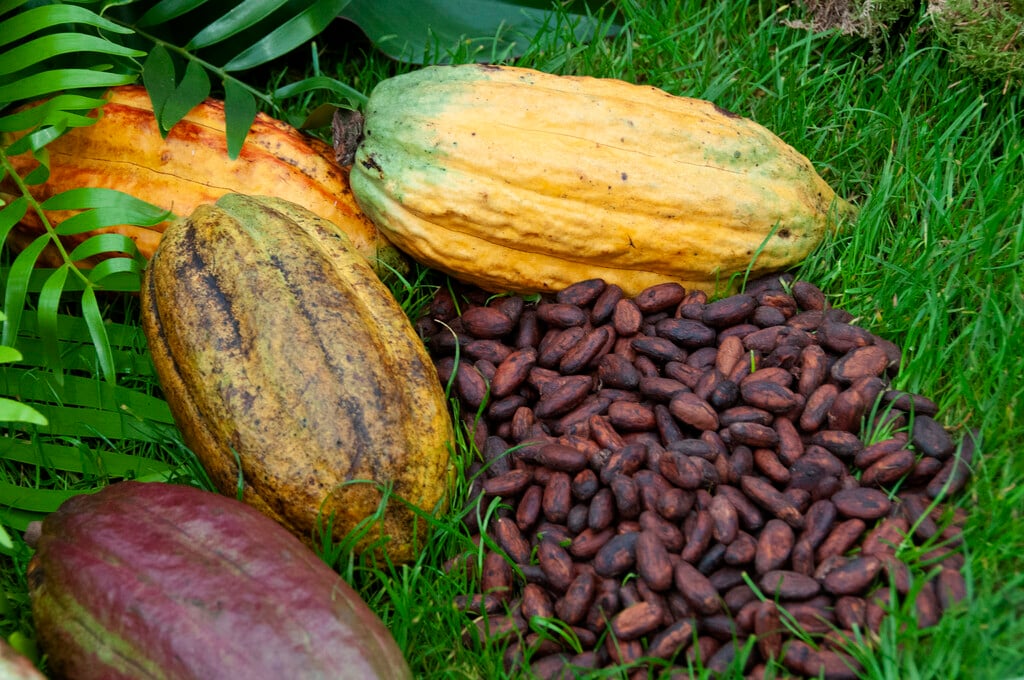
A small, semi-evergreen to evergreen tree, which grows up to 8 metres in its native habitat, but much shorter in cooler climates. The long, oval foliage is dark green and lush with prominent dark veining. Clusters of white flowers with a pink calyx emerge directly from the trunk or branches on trees that are 3 to 4 years old. The fruit is large and ovoid, ripening from yellow to orange, with the seeds or 'beans' being the main ingredient of chocolate. It will take around 5 years for trees to begin fruiting. Although Cacao trees can live for up to 100 years, they generally only fruit for half of their lifetime, with the peak fruiting age at around 10 years old
Size
Ultimate height
4–8 metresTime to ultimate height
10–20 yearsUltimate spread
4–8 metresGrowing conditions
Moisture
Well–drainedpH
Acid, NeutralColour & scent
| Stem | Flower | Foliage | Fruit | |
| Spring | White | Green | ||
|---|---|---|---|---|
| Summer | Green | Orange Yellow | ||
| Autumn | Green | |||
| Winter | Green |
Position
- Partial shade
Aspect
East–facing or South–facing or West–facing
Exposure
Sheltered Hardiness
H1ABotanical details
- Family
- Malvaceae
- Native to GB / Ireland
- No
- Foliage
- Evergreen or Semi evergreen
- Habit
- Bushy
- Name status
Correct
- Plant range
- C & S America
How to grow
Cultivation
Grow in well-drained, slightly acidic soil, incorporating well-rotted organic matter. Feed with a balanced fertiliser every couple of weeks during the growing season. Not easy to grow in the UK as it requires consistent warmth and high humidity to thrive, so best grown in a heated greenhouse with a temperature of between 18-32°C 12°C (65-90°F). Protect from cold temperatures below 12°C (54°F)
Propagation
Propagate by semi-hardwood cuttings or grafting. It is possible to propagate by seed, but plants may not come true to seed and may vary in traits
Suggested planting locations and garden types
- Sub-tropical
- Conservatory and greenhouse
Pruning
For container-grown trees, prune once or twice a year, taking out the top of the plant to maintain height. Remove dead or dying branches during the growing season
Pests
May be susceptible to mealybugs and capsid bug, aphids, scale insects, red spider mite and fungus gnats
Diseases
May be susceptible to fungus diseases, including phytophthora
Get involved
The RHS is the UK’s gardening charity, helping people and plants to grow - nurturing a healthier, happier world, one person and one plant at a time.