Cornus kousa 'Bultinck's Giant'
kousa 'Bultinck's Giant'
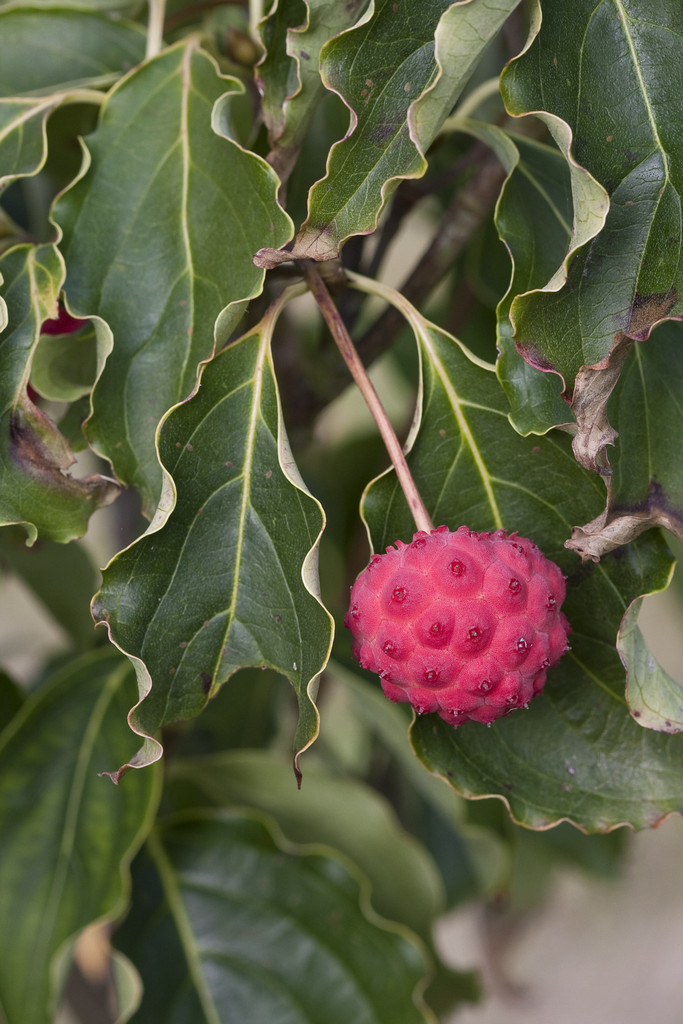
A compact, upright, bushy tree reaching about 4m, with rather leathery, glossy, dark green leaves turning red-purple in autumn. Tight clusters of small, greenish flowers are surrounded by large, creamy-white bracts, followed by edible, deep pink, strawberry-like fruit
Size
Ultimate height
2.5–4 metresTime to ultimate height
10–20 yearsUltimate spread
2.5–4 metresGrowing conditions
Moisture
Moist but well–drained, Well–drainedpH
Acid, NeutralColour & scent
| Stem | Flower | Foliage | Fruit | |
| Spring | Green | |||
|---|---|---|---|---|
| Summer | White | Green | ||
| Autumn | Purple Red | Pink | ||
| Winter |
Position
- Full sun
- Partial shade
Aspect
North–facing or West–facing or East–facing or South–facing
Exposure
Exposed or Sheltered Hardiness
H6Botanical details
- Family
- Cornaceae
- Native to GB / Ireland
- No
- Foliage
- Deciduous
- Habit
- Bushy
- Genus
Cornus can be deciduous shrubs or trees, or creeping, woody-based perennials, some with brightly coloured young stems. Tiny flowers are borne in dense clusters, sometimes with showy bracts. Many have fine autumn colour
- Name status
Unresolved
How to grow
Cultivation
Grow in fertile, humus-rich, well-drained, neutral to acid soil in sun or light shade. For more advice, see flowering dogwood cultivation
Propagation
Propagate by semi-hardwood or hardwood cuttings or grafting
Suggested planting locations and garden types
- City and courtyard gardens
- Patio and container plants
- Architectural
- Cottage and informal garden
- Low Maintenance
Pruning
Pests
Generally pest-free but may be susceptible to horse chestnut scale
Diseases
May be susceptible to cornus anthracnose disease
Get involved
The RHS is the UK’s gardening charity, helping people and plants to grow - nurturing a healthier, happier world, one person and one plant at a time.