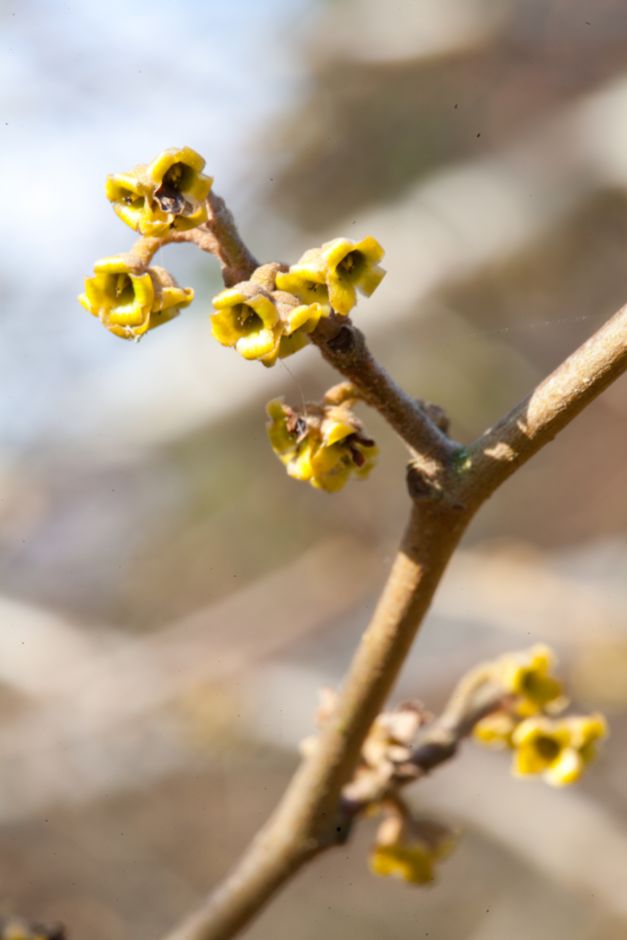
Hamamelis virginiana

RHS Plant Profile
Virginian witch hazel
Virginian witch hazel RHS

Other common names

American witch hazel, snapping hazel nut, spotted alder, winter bloom

Synonyms

Hamamelis androgyna
Hamamelis riparia
Trilopus nigra var. catesbiana
Trilopus nigra
Trilopus riparia
Trilopus estivalis
Hamamelis virginica var. parvifolia
Trilopus rotundifolia
Hamamelis dioica
Hamamelis rotundifolia
Hamamelis corylifolia
Hamamelis estivalis
Trilopus virginica
Hamamelis nigra
Hamamelis virginiana var. orbiculata
Hamamelis caroliniana
Hamamelis parvifolia
Trilopus dentata
Hamamelis dentata
Hamamelis macrophylla
Hamamelis virginica var. macrophylla
Hamamelis hyemalis
Hamamelis virginiana var. parvifolia
Hamamelis communis
Trilopus parvifolia
Hamamelis virginiana var. angustifolia
Hamamelis virginica
Hamamelis monoica

Shrubs

An erect large shrub up to 5m high (or occasionally a small tree up to 10m high) with smooth, broadly-oval, obovate, or nearly-round leaves, up to 15cm long, which open light green before becoming dark green. Clusters of sweetly-scented flowers with slightly-twisted, crimped, pale yellow petals, about 16mm long, appear from mid-autumn to late autumn, the flowers emerging while the leaves are still green and remaining as the leaves turn golden yellow and fall. H. virginiana is the species from which medicinal witch-hazel extract is made

Position

Full sun, Partial shade

Soil Types

Clay, Loam, Sand

Max Height

4-8 metres

Max Spread

2.5-4 metres

Size

Time to Maturity
10–20 years
Max Spread
2.5-4 metres
Max Height
4-8 metres

Growing Conditions

Clay Loam Sand
Moisture
Moist but well–drained
pH
Acid or Neutral

Position

Full sun Partial shade
Aspect
North–facing or South–facing or West–facing or East–facing
Exposure
Sheltered
Hardiness
H6

Colour & Scent

Fragrance Flower
Season Stem Flower Foliage Fruit
Spring
Summer
Autumn
Winter

Botanical Details

Family
Hamamelidaceae
Native to GB/Ireland
No
Foliage
Deciduous
Habit
Columnar upright
Genus
Hamamelis are deciduous shrubs with broadly ovate or rounded leaves, sometimes colouring well in autumn, and fragrant yellow to red flowers with 4 narrow petals, borne on the leafless branches in late winter and early spring, or in autumn
Name Status
Correct
Plant Range
E Canada, Midwest & East USA, Mexico

How to Grow

Cultivation

Grow in moderately fertile, neutral or preferably slightly acidic soil which is well-drained but humus-rich and moisture-retentive in summer, in full sun or partial shade, in an open position with shelter from cold drying winds, and add mulch to conserve moisture; will also tolerate soils over chalk if they are deep and humus-rich; for more advice, see witch hazel cultivation

Propagation

Propagate by seed, sown in containers in a cold frame as soon as they are ripe (seeds may take two years to germinate), or by layering in autumn

Suggested planting locations and garden types

  • Cottage and informal garden
  • Low Maintenance
  • Banks and slopes
  • Hedging and screens
  • Flower borders and beds

Pruning

Pruning group 1

Pests

Generally pest-free

Diseases

May be susceptible to coral spot, honey fungus, phytophthora root rot and powdery mildews