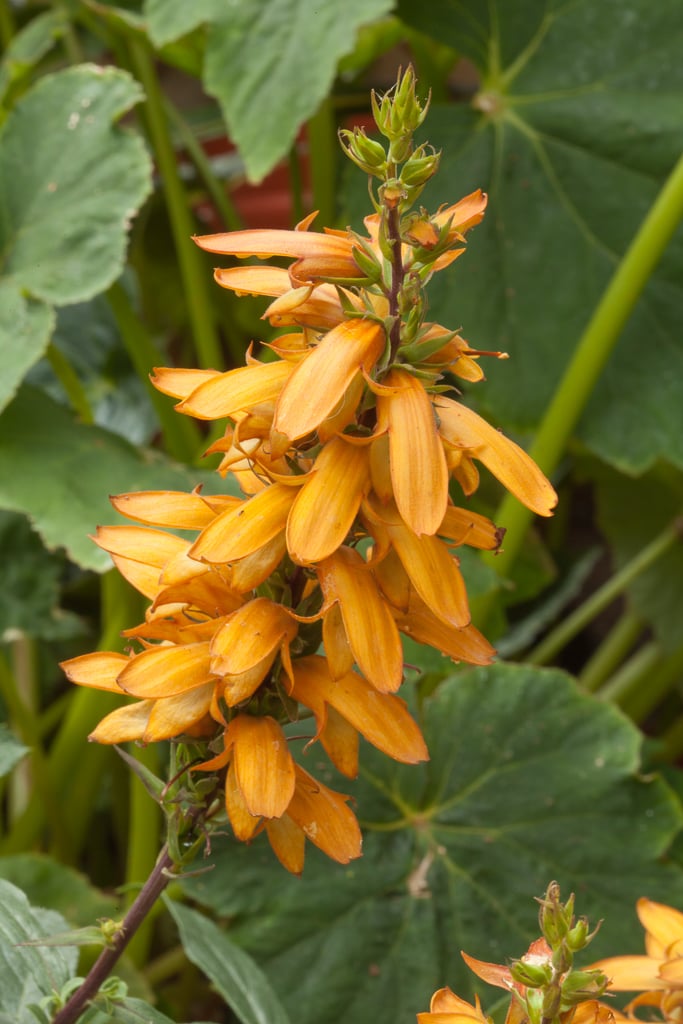
Digitalis isabelliana

RHS Plant Profile
Isabel's foxglove
Isabel's foxglove John Fielding

Synonyms

Isoplexis isabelliana
Digitalis canariensis var. isabelliana
Callianassa isabelliana

Plants for pollinators
Shrubs

A half-hardy evergreen shrub to 1.2m high, with upright stems and broadly ovate, serrated dark green leaves. Spikes of rich orange flowers, with long hoods forming a beak-like shape, are produced from the tips of the stems in summer

Position

Full sun, Partial shade

Soil Types

Chalk, Loam, Sand

Max Height

1-1.5 metres

Max Spread

0.1-0.5 metres

Size

Time to Maturity
2–5 years
Max Spread
0.1-0.5 metres
Max Height
1-1.5 metres

Growing Conditions

Chalk Loam Sand
Moisture
Well–drained
pH
Acid or Alkaline or Neutral

Position

Full sun Partial shade
Aspect
East–facing or South–facing or West–facing
Exposure
Sheltered
Hardiness
H3

Colour & Scent

Season Stem Flower Foliage Fruit
Spring
Summer
Autumn
Winter

Botanical Details

Family
Plantaginaceae
Native to GB/Ireland
No
Foliage
Evergreen
Habit
Bushy, Columnar upright
Potentially harmful
TOXIC if eaten. Wear gloves and other protective equipment when handling TOXIC to pets - see the HTA guide to potentially harmful plants for further information and useful contact numbers
Genus
Digitalis can be biennials or usually short-lived perennials forming a rosette of simple leaves with bell-shaped flowers in slender, erect, usually one-sided racemes
Name Status
Correct
Plant Range
Canary Islands

How to Grow

Cultivation

In frost-free climates, may be grown outdoors in well-drained soil, in a sheltered spot in sun or part shade. Elsewhere, grow under glass in peat-free, loam-based potting compost, in full or bright filtered light with low to moderate humidity. Water moderately during growth and sparingly in winter. See foxglove cultivation for more details advice

Propagation

Propagate by seed, sown in pots at 18-24°C in spring, or by softwood cuttings in spring or semi-ripe cuttings with bottom heat in summer

Suggested planting locations and garden types

  • City and courtyard gardens
  • Coastal
  • Cottage and informal garden
  • Patio and container plants
  • Sub-tropical
  • Conservatory and greenhouse
  • Flower borders and beds

Pruning

Pruning group 9

Pests

May be susceptible to aphids and leaf and bud eelworms, and to glasshouse red spider mite and glasshouse whitefly when grown under glass

Diseases

May be susceptible to powdery mildews, downy mildews and leaf spot