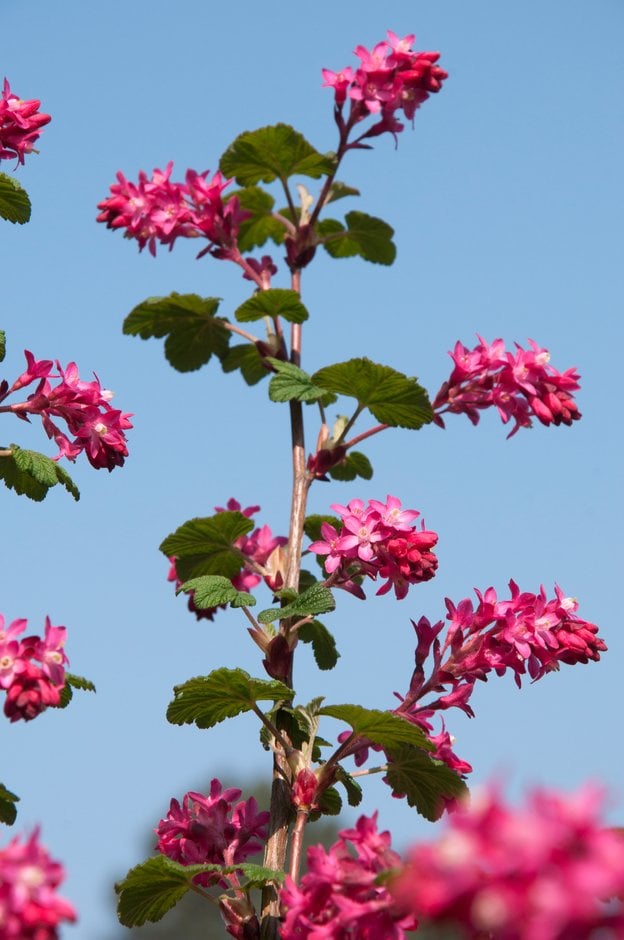
Ribes sanguineum 'Red Bross'

RHS Plant Profile
flowering currant 'Red Bross'
flowering currant 'Red Bross' RHS
Plants for pollinators
Shrubs

A deciduous shrub to around 2m tall with aromatic, lobed dark greeb leaves. Clusters of dark pink to red flowers are borne in spring and may be followed by black berries

Position

Full sun

Soil Types

Chalk, Clay, Loam, Sand

Max Height

1.5-2.5 metres

Max Spread

1-1.5 metres

Size

Time to Maturity
5–10 years
Max Spread
1-1.5 metres
Max Height
1.5-2.5 metres

Growing Conditions

Chalk Clay Loam Sand
Moisture
Moist but well–drained or Well–drained
pH
Acid or Alkaline or Neutral

Position

Full sun
Aspect
South–facing or West–facing or East–facing or North–facing
Exposure
Exposed or Sheltered
Hardiness
H6

Colour & Scent

Fragrance Foliage
Season Stem Flower Foliage Fruit
Spring
Summer
Autumn
Winter

Botanical Details

Family
Grossulariaceae
Native to GB/Ireland
No
Foliage
Deciduous
Habit
Bushy
Genus
Ribes can be deciduous or evergreen shrubs, sometimes spiny, with simple, usually palmately lobed leaves and small tubular or bell-shaped, solitary or racemose flowers borne in spring or summer, followed by juicy, sometimes edible berries
Name Status
Unresolved

How to Grow

Cultivation

Easy to grow in moderately fertile well-drained soil in full sun. Useful for informal hedging

Propagation

Propagate by hardwood cuttings in winter

Suggested planting locations and garden types

  • City and courtyard gardens
  • Coastal
  • Cottage and informal garden
  • Wildlife gardens
  • Flower borders and beds
  • Hedging and screens

Pruning

Pruning group 2 or Pruning group 13 if wall-trained, in late summer; trim hedges after flowering

Pests

May be susceptible to scale insects, gall mites, gall midge and aphids

Diseases

May be susceptible to currant leaf spot, powdery mildews, coral spot, rust diseases and sometimes honey fungus