Acanthus mollis Latifolius Group
bear's breech Latifolius Group
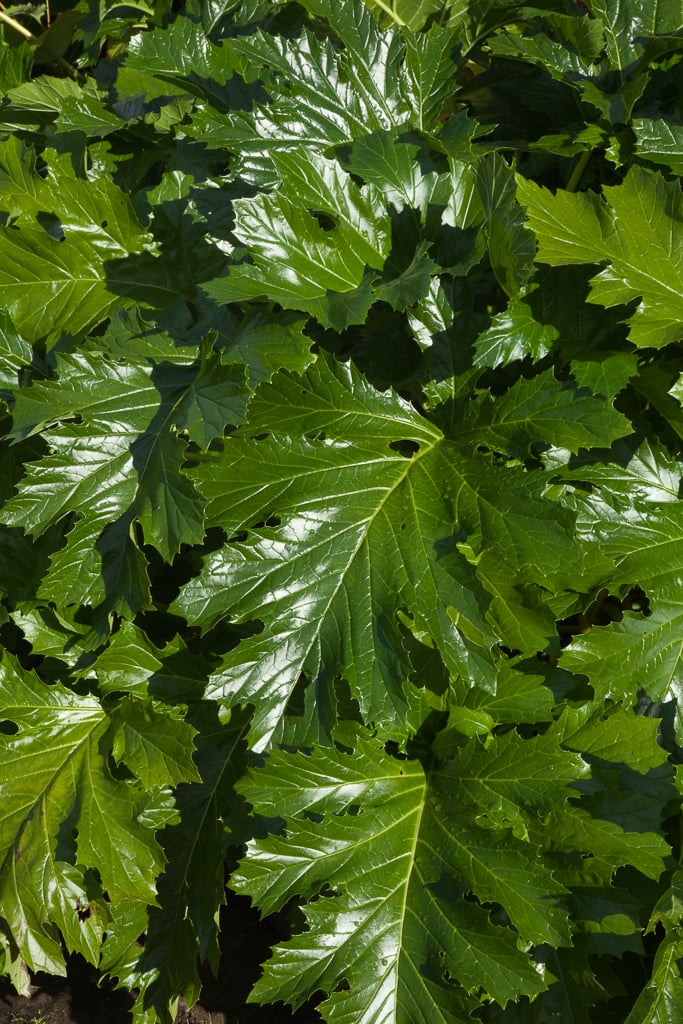
A group of clump-forming perennials, with very large, glossy, shallowly lobed basal leaves up to 1.2m long. Tall, spiny spikes of flowers are produced in late summer; flowers may be white or pale pink, and hooded with green or purple bracts. This group is named for its dense clumps of dramatic foliage, and may not flower as prolifically as some other cultivars
Size
Ultimate height
1–1.5 metresTime to ultimate height
2–5 yearsUltimate spread
1–1.5 metresGrowing conditions
Moisture
Moist but well–drained, Well–drainedpH
Acid, Alkaline, NeutralColour & scent
| Stem | Flower | Foliage | Fruit | |
| Spring | Green | |||
|---|---|---|---|---|
| Summer | Green White Purple | Green | ||
| Autumn | Green | |||
| Winter | Green |
Position
- Full sun
- Partial shade
Aspect
East–facing or North–facing or South–facing or West–facing
Exposure
Exposed or Sheltered Hardiness
H6Botanical details
- Family
- Acanthaceae
- Native to GB / Ireland
- No
- Foliage
- Semi evergreen or Deciduous
- Habit
- Clump forming
- Genus
Acanthus are robust herbaceous perennials with handsome, lobed foliage and tall, erect racemes of two-lipped flowers with colourful bracts
- Name status
Accepted
How to grow
Cultivation
Grow in sun or part shade, will tolerate most soils but thrives in deep loam. Acanthus need careful positioning as they can be difficult to remove once established. Has the potential to become a nuisance if not managed well
Propagation
Propagate by division in spring or autumn, or by root cuttings in winter
Suggested planting locations and garden types
- Architectural
- Cottage and informal garden
- Flower borders and beds
Pruning
Cut spent stems down to the base after flowering. Cut back old foliage in spring
Pests
Diseases
May be susceptible to powdery mildews
Get involved
The Royal Horticultural Society is the UK’s leading gardening charity. We aim to enrich everyone’s life through plants, and make the UK a greener and more beautiful place.