Fuchsia 'Lady in Red' (d)
fuchsia 'Lady in Red'
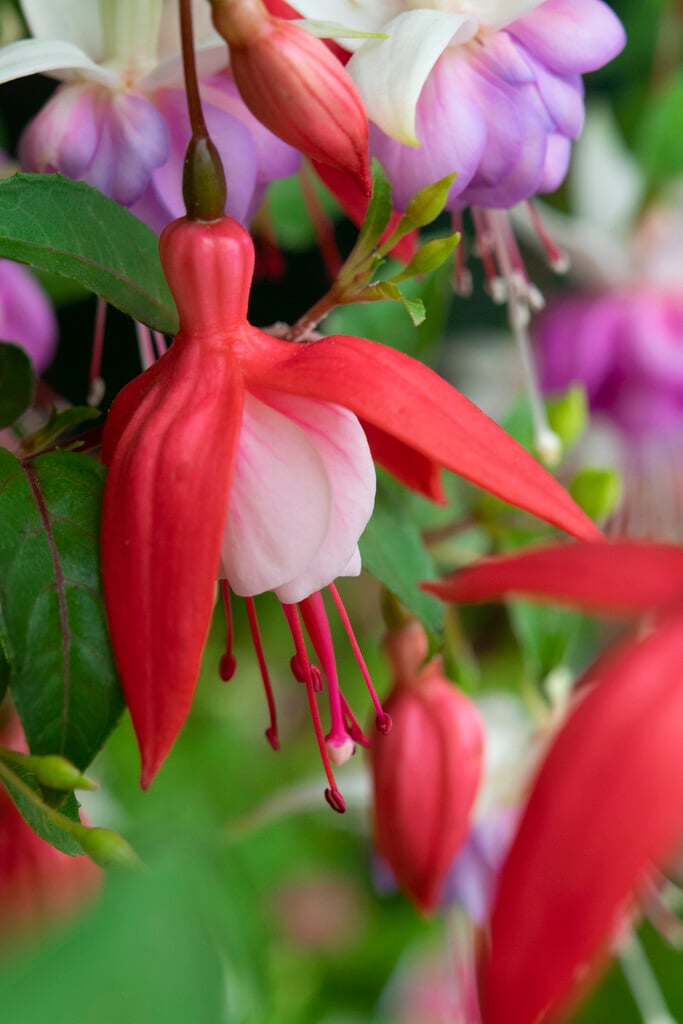
A bushy, upright to trailing deciduous shrub with dark green leaves and double red flowers with white corollas which have red veining at the base, appearing from summer through until the autumn. Can be grown as a standard
Size
Ultimate height
0.5–1 metresTime to ultimate height
2–5 yearsUltimate spread
0.5–1 metresGrowing conditions
Moisture
Moist but well–drained, Well–drainedpH
Acid, Alkaline, NeutralColour & scent
| Stem | Flower | Foliage | Fruit | |
| Spring | Green | |||
|---|---|---|---|---|
| Summer | Red White | Green | ||
| Autumn | Red White | Green | ||
| Winter |
Position
- Full sun
- Partial shade
Aspect
East–facing or South–facing or West–facing
Exposure
Sheltered Hardiness
H2Botanical details
- Family
- Onagraceae
- Native to GB / Ireland
- No
- Foliage
- Deciduous
- Habit
- Bushy, Columnar upright, Trailing
- Potentially harmful
- Although Fuchsia berries are edible, most are not particularly tasty and are sparsely produced on plants. Fuchsia plants are generally grown as an ornamental and not for fruit crops within the UK
- Genus
Fuchsia can be deciduous or evergreen shrubs or trees, rarely perennials, with opposite or whorled leaves and usually pendent flowers with conspicuous tubular calyx, 4 spreading sepals and 4 erect petals
- Name status
Unresolved
How to grow
Cultivation
Grow in a cool or frost-free greenhouse in containers of peat-free multi-purpose compost in bright indirect light and keep just moist. Can be grown outside for the summer in sun or part shade, water freely and use a general liquid fertiliser monthly from spring to summer. See tender fuchsia cultivation for further information
Propagation
Propagate by softwood or semi-hardwood cuttings
Suggested planting locations and garden types
- City and courtyard gardens
- Coastal
- Cottage and informal garden
- Patio and container plants
- Bedding
- Conservatory and greenhouse
- Flower borders and beds
Pruning
Pests
May be susceptible to aphids, capsid bug, fuchsia gall mite, fuchsia flea beetle, glasshouse red spider mite and vine weevil
Diseases
May be susceptible to fuchsia rust, grey moulds and honey fungus (rarely)
Get involved
The Royal Horticultural Society is the UK’s leading gardening charity. We aim to enrich everyone’s life through plants, and make the UK a greener and more beautiful place.