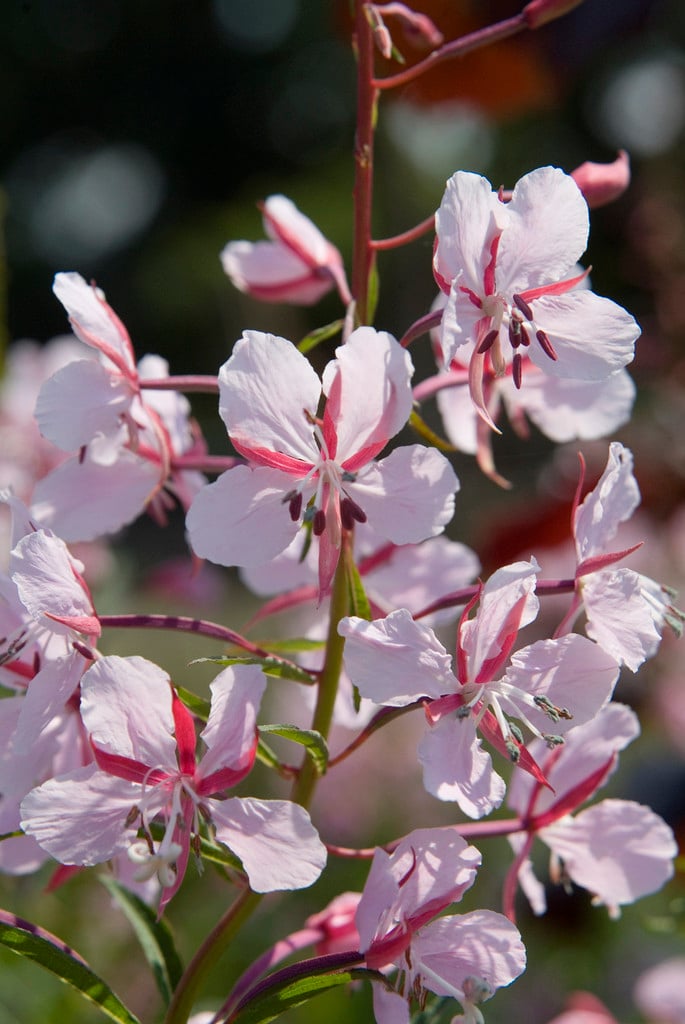
Chamaenerion angustifolium 'Stahl Rose'

RHS Plant Profile
rosebay willowherb 'Stahl Rose'
rosebay willowherb 'Stahl Rose' RHS

Synonyms

Chamerion angustifolium 'Stahl Rose'
Epilobium angustifolium 'Stahl Rose'

Plants for pollinators
Herbaceous Perennial

A vigorous, upright, strongly-spreading perennial to about 1.5m tall, producing uprigh stems with long, narrow, willow-like leaves and tall spires of flowers, with pale pink petals offset by dark pink sepals, from mid-summer to early autumn, followed by long pink-tinged seed pods; seeds are cocooned in silky plumes

Position

Full sun, Partial shade

Soil Types

Chalk, Clay, Loam, Sand

Max Height

1-1.5 metres

Max Spread

1.5-2.5 metres

Size

Time to Maturity
2–5 years
Max Spread
1.5-2.5 metres
Max Height
1-1.5 metres

Growing Conditions

Chalk Clay Loam Sand
Moisture
Moist but well–drained
pH
Acid or Alkaline or Neutral

Position

Full sun Partial shade
Aspect
West–facing or South–facing or East–facing
Exposure
Exposed or Sheltered
Hardiness
H7

Colour & Scent

Season Stem Flower Foliage Fruit
Spring
Summer
Autumn
Winter

Botanical Details

Family
Onagraceae
Native to GB/Ireland
No
Foliage
Deciduous
Habit
Columnar upright
Genus
Chamaenerion can be annuals or perennials, sometimes invasive, with erect stems bearing willowy leaves and showy, 4-petalled flowers in terminal racemes
Name Status
Accepted

How to Grow

Cultivation

Grow in moist but well-drained, humus-rich soil in full sun or partial shade; has the potential to become a nuisance so site with care

Propagation

Propagate by seed, propagate by division in spring or autumn or propagate by softwood cuttings from side shoots in spring

Suggested planting locations and garden types

  • Cottage and informal garden
  • Wildflower meadow
  • Wildlife gardens

Pruning

Deadhead to encourage repeat flowering and to prevent self-seeding

Pests

Can be damaged by slugs and snails

Diseases

May be susceptible to powdery mildews and a rust