Photinia × fraseri Louise ('Mclarlou'PBR) (v)
Christmas berry 'Louise'
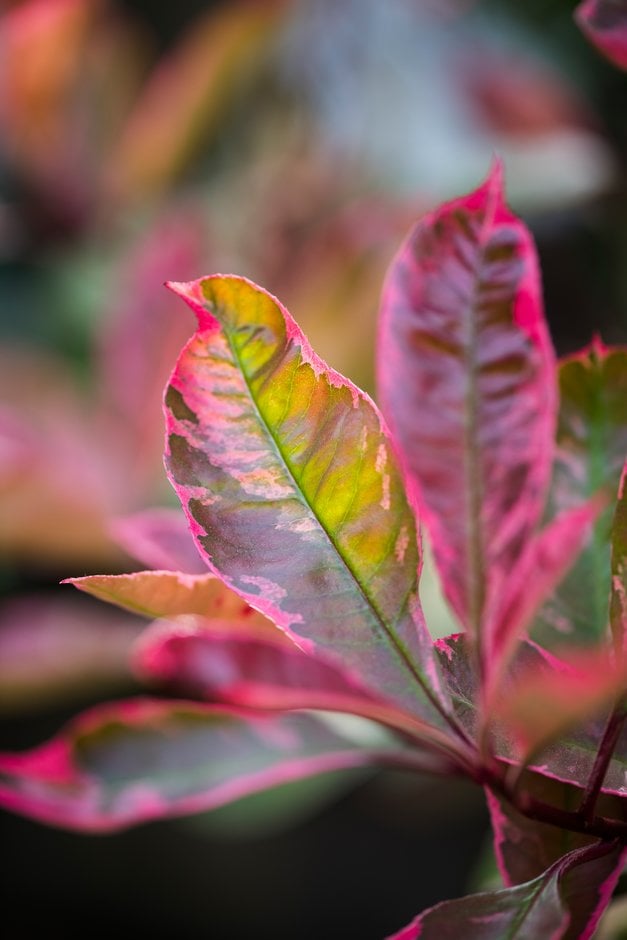
An evergreen shrub or small tree with elliptic to lance-shaped leaves that emerge red to olive green with pink margins before maturing to dark grey-green with creamy-white margins. Panicles of creamy-white spring flowers may be followed by red fruits
Size
Ultimate height
2.5–4 metresTime to ultimate height
10–20 yearsUltimate spread
2.5–4 metresGrowing conditions
Moisture
Moist but well–drained, Well–drainedpH
Acid, NeutralColour & scent
| Stem | Flower | Foliage | Fruit | |
| Spring | Cream White | Green Grey Silver Red Pink Cream | ||
|---|---|---|---|---|
| Summer | Green Grey Silver Red Pink Cream | Red | ||
| Autumn | Green Grey Silver Red Pink Cream | |||
| Winter | Green Grey Silver Red Pink Cream |
Position
- Full sun
- Partial shade
Aspect
South–facing or West–facing or East–facing or North–facing
Exposure
Exposed or Sheltered Hardiness
H5Botanical details
- Family
- Rosaceae
- Native to GB / Ireland
- No
- Foliage
- Evergreen
- Habit
- Bushy
- Potentially harmful
- Fruit are ornamental - not to be eaten. Wear gloves and other protective equipment when handling. Pets: Fruit are ornamental - not to be eaten - see the HTA guide to potentially harmful plants for further information and useful contact numbers
- Genus
Photinia can be evergreen or deciduous shrubs or trees, with simple leaves and panicles of small white flowers, usually followed by red berries
- Name status
Trade
How to grow
Cultivation
Grows best in fertile, humus-rich soil in sun or partial shade. See photinia cultivation
Propagation
Propagate by semi-hardwood cuttings in summer
Suggested planting locations and garden types
- Cottage and informal garden
- Low Maintenance
- Hedging and screens
Pruning
Most cultivars may be pruned hard in spring to regenerate if necessary. If growing as a hedge trim two or three times during the growing season to main shape and encourage new red foliage. See pruning evergreen shrubs for further advice
Pests
May be susceptible to vine weevil
Diseases
May be susceptible to fireblight, a leaf spot, honey fungus and powdery mildews
Get involved
The Royal Horticultural Society is the UK’s leading gardening charity. We aim to enrich everyone’s life through plants, and make the UK a greener and more beautiful place.