Eryngium proteiflorum
protea-like-flowered eryngo
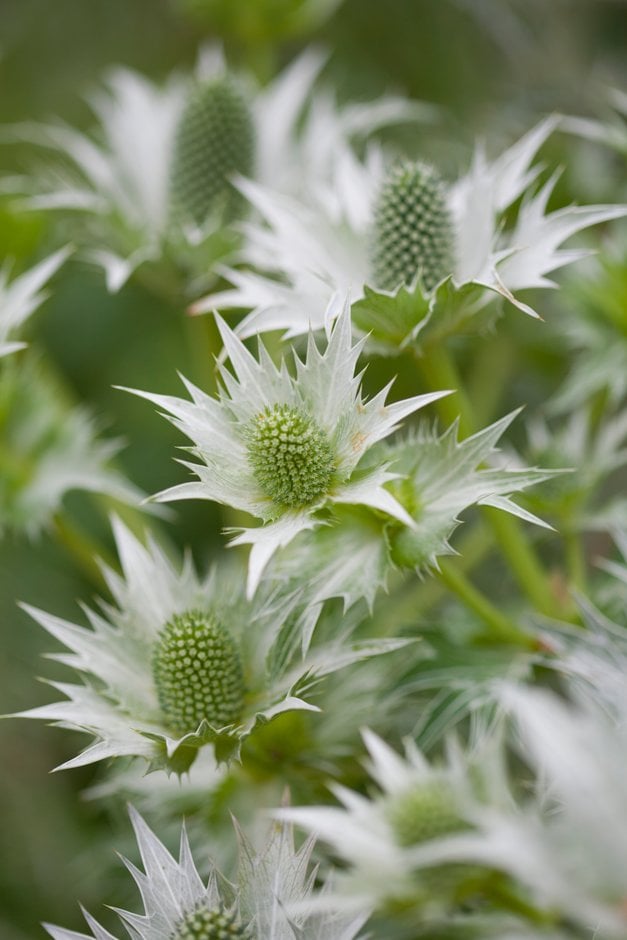
An evergreen perennial with rosettes of strap-shaped, arching, grey-green, spiny-edged leaves. In late summer and autumn strong, upright stems support clusters of flowerheads each consisting of a large, blue-green central cone surrounded by a ruff of broad, spiny, silver bracts. Individual rosettes die after flowering
Size
Ultimate height
0.5–1 metresTime to ultimate height
2–5 yearsUltimate spread
0.5–1 metresGrowing conditions
Moisture
Well–drainedpH
Acid, Alkaline, NeutralColour & scent
| Stem | Flower | Foliage | Fruit | |
| Spring | Green Grey Silver | |||
|---|---|---|---|---|
| Summer | Blue Green Grey Silver | Green Grey Silver | ||
| Autumn | Blue Green Grey Silver | Green Grey Silver | ||
| Winter | Green Grey Silver |
Position
- Full sun
Aspect
South–facing or West–facing
Exposure
Exposed or ShelteredDrought resistance
Yes Hardiness
H4Botanical details
- Family
- Apiaceae
- Native to GB / Ireland
- No
- Foliage
- Evergreen
- Habit
- Clump forming
- Genus
Eryngium can be annuals, biennials or perennials with simple or divided leaves, often spiny edged, and cone-like flower-heads often surrounded by an involucre of conspicuous spiny bracts
- Name status
Correct
- Plant range
- Mexico
How to grow
Cultivation
Grow in dry, well-drained, poor to moderately fertile soil in full sun. Protect from winter wet
Propagation
Propagate by seed or division
Suggested planting locations and garden types
- City and courtyard gardens
- Coastal
- Cottage and informal garden
- Gravel garden
- Cut flowers
- Flower borders and beds
Pruning
Carefully remove dead rosettes after flowering
Pests
May be susceptible to leaf and bud eelworms, and slugs and snails
Diseases
May be susceptible to root rot and powdery mildews
Get involved
The Royal Horticultural Society is the UK’s leading gardening charity. We aim to enrich everyone’s life through plants, and make the UK a greener and more beautiful place.