Primula vulgaris 'Avondale' (Kennedy Irish Series) (Pr/Prim)
primrose 'Avondale'
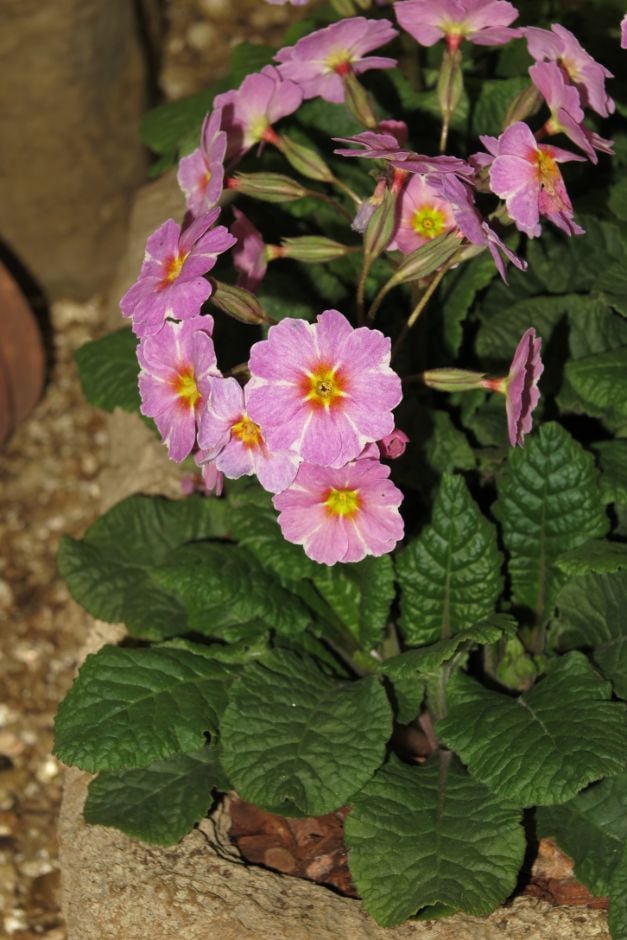
A semi-evergreen, clump-forming perennial to 15cm tall with a rosette of wrinkled, green, oblong leaves. The pink spring flowers have a white line at the centre of each petal and golden-yellow eyes edged with red ring
Size
Ultimate height
0.1–0.5 metresTime to ultimate height
2–5 yearsUltimate spread
0.1–0.5 metresGrowing conditions
Moisture
Moist but well–drained, Poorly–drainedpH
Acid, Alkaline, NeutralColour & scent
| Stem | Flower | Foliage | Fruit | |
| Spring | Pink | Green | ||
|---|---|---|---|---|
| Summer | Green | |||
| Autumn | Green | |||
| Winter | Green |
Position
- Full sun
- Partial shade
Aspect
East–facing or South–facing or North–facing or West–facing
Exposure
Exposed or Sheltered Hardiness
H7Botanical details
- Family
- Primulaceae
- Native to GB / Ireland
- No
- Foliage
- Semi evergreen
- Habit
- Bushy
- Potentially harmful
- Harmful if eaten. Wear gloves and other protective equipment when handling. Pets: Harmful if eaten. For further information and contact numbers regarding pets, see the HTA guide to potentially harmful plants
- Genus
Primula are herbaceous or semi-evergreen perennials, forming a basal rosette of simple leaves, with salver-shaped or bell-shaped flowers which may be solitary or carried in an umbel or in whorls on an erect stem
- Name status
Unresolved
- Horticultural Group
- Primrose group primulas are mainly grown as herbaceous perennials, and produce clusters of flowers on individual stems from the basal rosettes, although a few may also have umbel-like flowers. They are either spring-flowering, if grown without protection, or winter- to spring-flowering, if grown as biennial container plants in greenhouses or indoors.
How to grow
Cultivation
Grow in moist but well-drained, humus-rich soil in sun or part shade. See primula cultivation
Propagation
Propagate by division, or separating and rooting offsets, between autumn and spring
Suggested planting locations and garden types
- Gravel garden
- Rock garden
- City and courtyard gardens
- Coastal
- Cottage and informal garden
- Patio and container plants
- Wildlife gardens
- Flower borders and beds
- Garden edging
Pruning
No pruning required
Pests
May be susceptible to aphids, vine weevil, slugs, leaf and bud eelworms, leaf-mining flies and glasshouse red spider mite
Diseases
May be susceptible to primula brown core, grey moulds, primula leaf spot and a virus
Get involved
The Royal Horticultural Society is the UK’s leading gardening charity. We aim to enrich everyone’s life through plants, and make the UK a greener and more beautiful place.