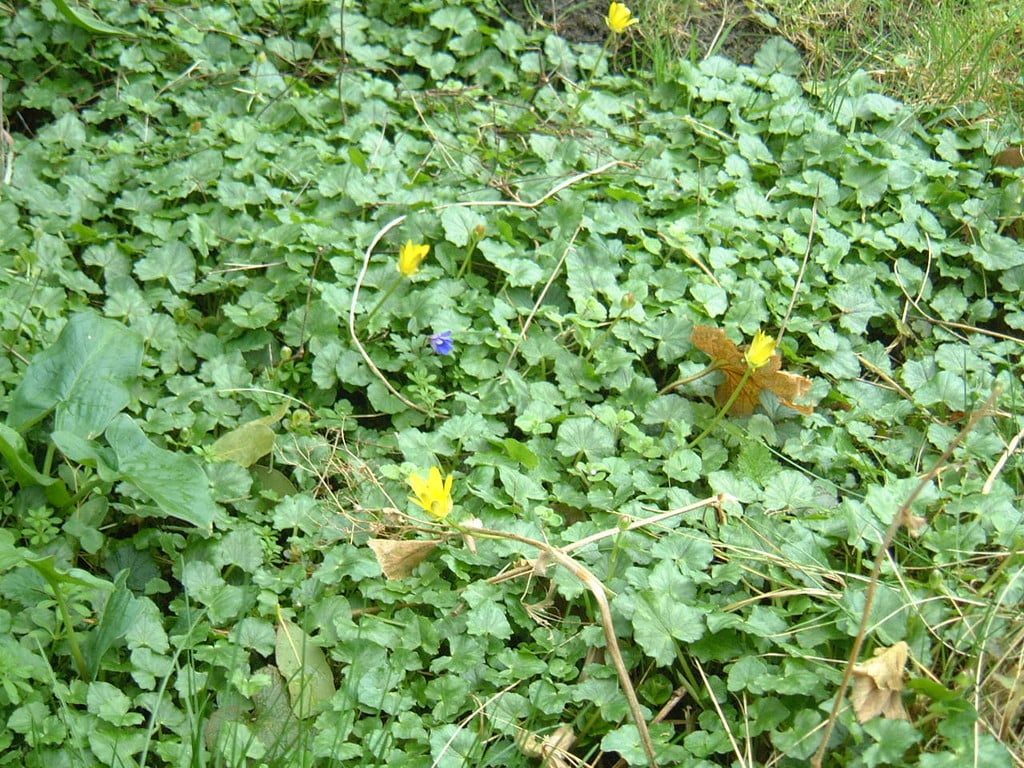
Ficaria verna

RHS Plant Profile
lesser celandine
lesser celandine RHS

Other common names

pilewort

Synonyms

Ranunculus ficaria 'Verna'
Ranunculus ficaria

Plants for pollinators
Herbaceous Perennial

A low-growing, tuberous perennial with rich green, glossy leaves sometimes marked with silver or bronze. Bright golden-yellow, cup-shaped flowers appear in spring, fading to white with age, and providing a good early nectar source

Position

Full shade, Full sun, Partial shade

Soil Types

Clay, Loam

Max Height

Up to 10 cm

Max Spread

0.1-0.5 metres

Size

Time to Maturity
1–2 years
Max Spread
0.1-0.5 metres
Max Height
Up to 10 cm

Growing Conditions

Clay Loam
Moisture
Moist but well–drained
pH
Acid or Alkaline or Neutral

Position

Full shade Full sun Partial shade
Aspect
North–facing or East–facing or South–facing or West–facing
Exposure
Exposed or Sheltered
Hardiness
H7

Colour & Scent

Season Stem Flower Foliage Fruit
Spring
Summer
Autumn
Winter

Botanical Details

Family
Ranunculaceae
Native to GB/Ireland
Yes
Foliage
Deciduous
Habit
Matforming
Potentially harmful
Harmful if eatenskin irritant. Wear gloves and other protective equipment when handling
Genus
Ficaria is a relatively small genus of European herbs. It is closely related to buttercups (Ranunculus) and is sometimes included within that genus
Name Status
Correct
Plant Range
Europe, NW Africa, SW Asia

How to Grow

Cultivation

Occurs naturally in open woods, hedges and damp meadows. A good early source of pollen and nectar for insects, though plants can spread and have potential to become a nuisance if not controlled. See lesser celandine for more information

Propagation

Propagate by seeds and tubers

Suggested planting locations and garden types

  • Cottage and informal garden
  • Wildlife gardens

Pruning

No pruning required

Pests

May be susceptible to slugs, snails and aphids

Diseases

May be susceptible to powdery mildews on drier soils