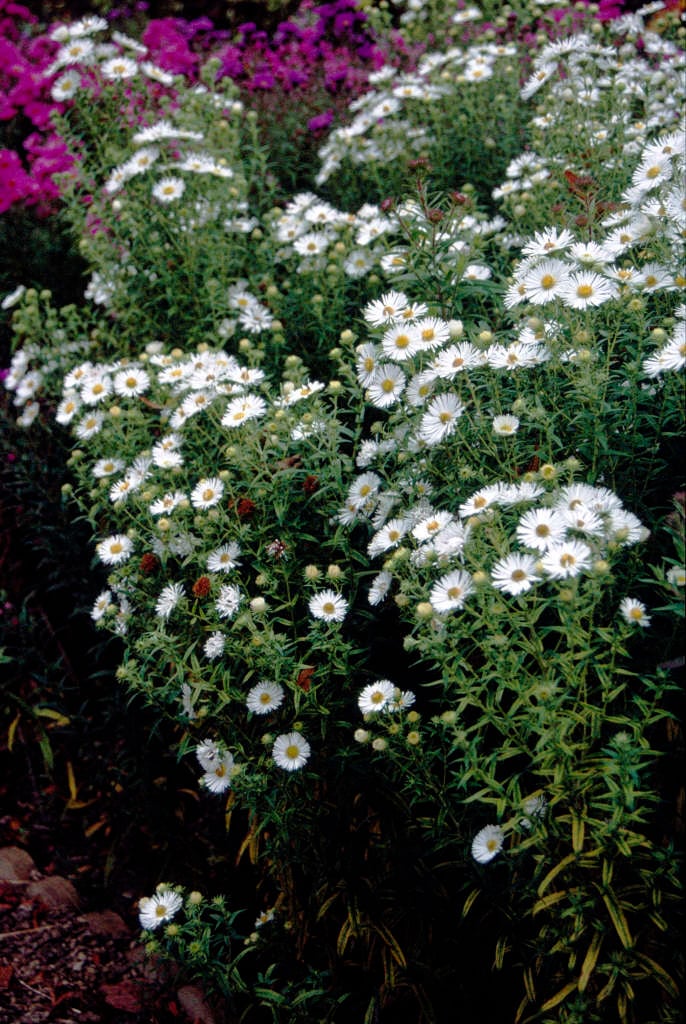
Symphyotrichum novae-angliae 'Herbstschnee'

RHS Plant Profile
New England aster 'Herbstschnee'
New England aster 'Herbstschnee' RHS

Synonyms

Aster novae-angliae 'Autumn Snow'
Aster novae-angliae 'Herbstschnee'
Aster novi-belgii 'Autumn Snow'
Aster novae-angliae Autumn Snow
Symphyotrichum novae-angliae Autumn Snow

Plants for pollinators
Herbaceous Perennial

A clump-forming perennial to 1.2m tall, with lance-shaped leaves and open sprays of yellow-centred flowers 5cm across, with many narrow white rays, opening from late summer to late autumn

Position

Full sun, Partial shade

Soil Types

Chalk, Clay, Loam, Sand

Max Height

1-1.5 metres

Max Spread

0.1-0.5 metres

Size

Time to Maturity
2–5 years
Max Spread
0.1-0.5 metres
Max Height
1-1.5 metres

Growing Conditions

Chalk Clay Loam Sand
Moisture
Moist but well–drained
pH
Acid or Alkaline or Neutral

Position

Full sun Partial shade
Aspect
North–facing or East–facing or South–facing or West–facing
Exposure
Exposed or Sheltered
Hardiness
H7

Colour & Scent

Season Stem Flower Foliage Fruit
Spring
Summer
Autumn
Winter

Botanical Details

Family
Asteraceae
Native to GB/Ireland
No
Foliage
Deciduous
Habit
Bushy
Genus
Symphyotrichum includes around 90 species of annuals, biennials and perennials, mostly spread through the Americas, that were formerly included within the genus Aster. Leaves are simple, lance-shaped and entire, but it is their daisy-like flowerheads that they are grown for; central disc florets are typically yellow, surrounded by strap-shaped ray florets in shades of pink, blue, purple or white
Name Status
Accepted

How to Grow

Cultivation

Thrives in fertile, moist but well drained, preferably neutral to alkaline soil in sun or partial shade. Plants will benefit from mulching in autumn, and will not tolerate waterlogging in winter. May need support, see staking (perennials). For more advice see aster cultivation

Propagation

Propagate by division in spring; division every third year to maintain vigour

Suggested planting locations and garden types

  • Cottage and informal garden
  • Wildlife gardens
  • Coastal
  • Gravel garden
  • Prairie planting
  • Flower borders and beds
  • Cut flowers

Pruning

Cut back in late autumn

Pests

May be susceptible to slugs and snails on new growth, and to aphids and leaf and bud eelworms

Diseases

May be susceptible to Fusarium wilt, grey moulds, powdery mildews and leaf spots