Hibiscus syriacus 'Rwoods5'PBR
rose of Sharon [Magenta Chiffon]
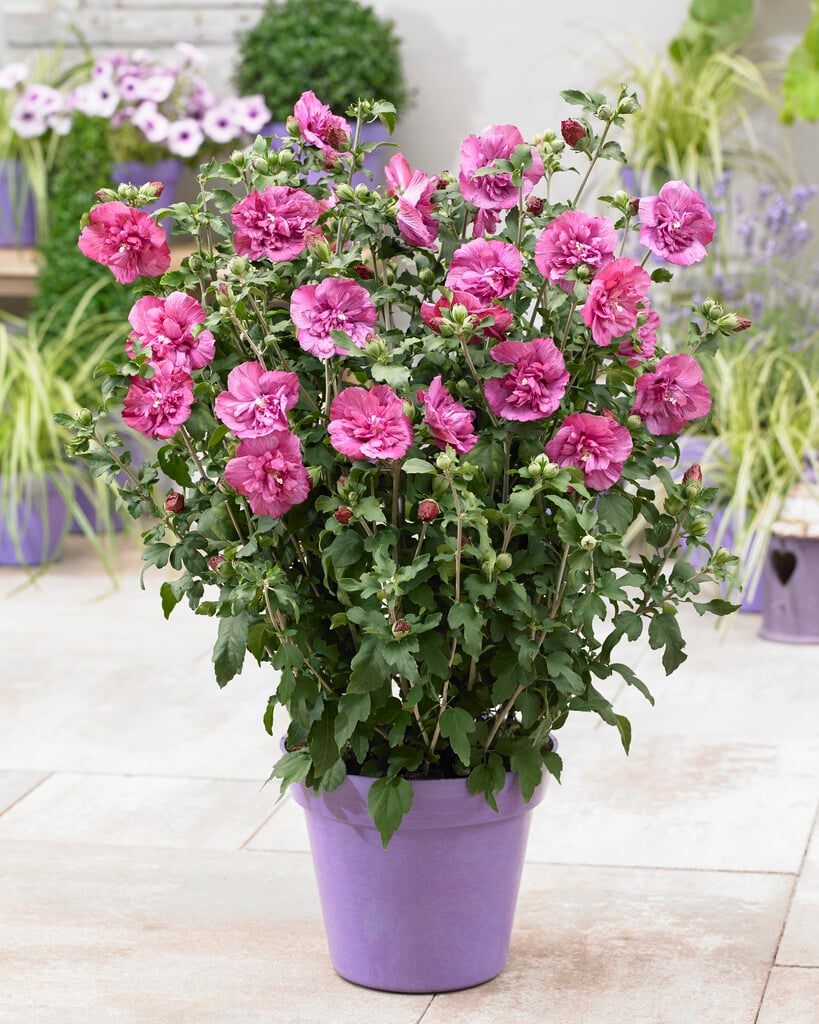
The latest of the new 'Chiffon' hibiscus, this has been bred by Roderick Woods in Norfolk, and it has wonderful fully double, reddish pink flowers, each packed with lots of slightly ruffled petals that create a slightly frilly effect. The flowers appear late in the season, which makes this resilient deciduous shrub perfect for continuing the display in the shrub border well into autumn.
Size
Ultimate height
2.5–4 metresTime to ultimate height
5–10 yearsUltimate spread
1.5–2.5 metresGrowing conditions
Moisture
Moist but well–drained, Well–drainedpH
Acid, NeutralColour & scent
| Stem | Flower | Foliage | Fruit | |
| Spring | Green | |||
|---|---|---|---|---|
| Summer | Pink | Green | ||
| Autumn | Pink | Green | ||
| Winter |
Position
- Full sun
Aspect
South–facing or West–facing or East–facing
Exposure
Sheltered Hardiness
H5Botanical details
- Family
- Malvaceae
- Native to GB / Ireland
- No
- Foliage
- Deciduous
- Habit
- Bushy
- Genus
Hibiscus can be deciduous or evergreen shrubs, trees, annuals or perennials, with simple or palmately lobed leaves and large, funnel-shaped flowers over a long flowering season
- Name status
Trade
How to grow
Cultivation
May be grown outdoors in mild, frost-free areas, or in large containers that can be moved indoors over winter. Outdoors, grow in neutral to slightly acidic soil in full sun, and mulch well over winter. Hibiscus need long, hot summers to flower well. Indoors, grow in bright filtered light with moderate humidity and good ventilation
Propagation
Propagate by softwood cuttings in late spring, by semi-ripe cuttings in summer, or by layering in spring or autumn
Suggested planting locations and garden types
- City and courtyard gardens
- Cottage and informal garden
- Patio and container plants
- Coastal
- Wall side borders
- Flower borders and beds
Pruning
Very little pruning required, just prune away any broken or dead branches after flowering - pruning group 1.
Pests
May be susceptible to aphids, scale insects, mealybugs and glasshouse whitefly when grown under glass
Diseases
May be susceptible to honey fungus (rarely) and powdery mildews
Get involved
The RHS is the UK’s gardening charity, helping people and plants to grow - nurturing a healthier, happier world, one person and one plant at a time.