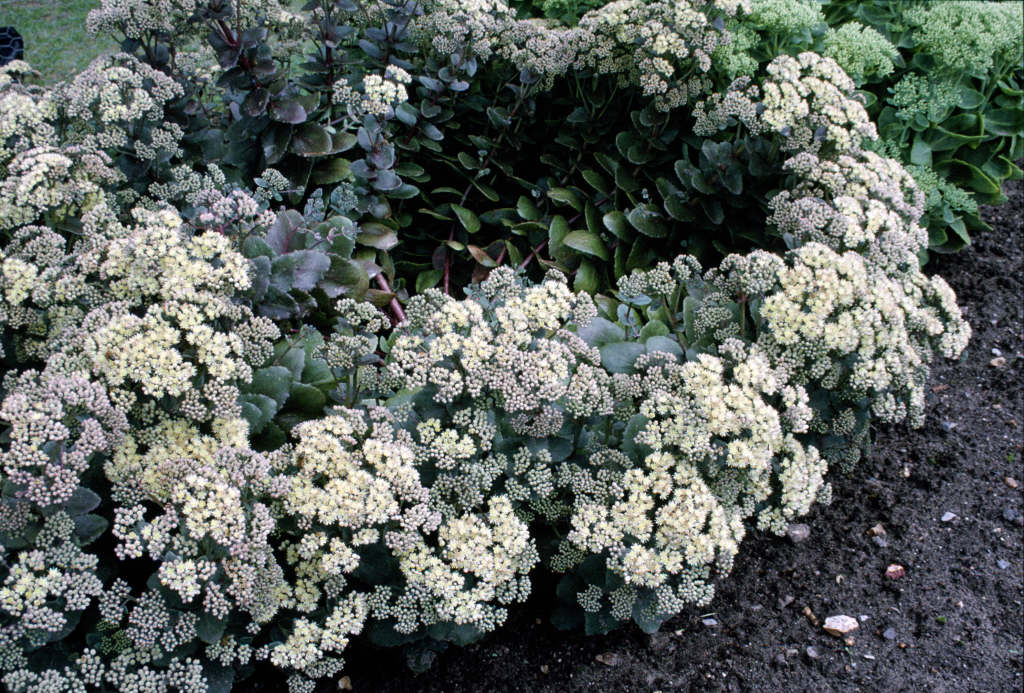
Hylotelephium telephium subsp. ruprechtii

RHS Plant Profile
Ruprecht's orpine
Ruprecht's orpine RHS

Other common names

Ruprecht stonecrop

Synonyms

Sedum 'Eleanor Fisher'
Sedum maximum subsp. ruprechtii
Sedum ruprechtii
Sedum telephium subsp. ruprechtii

Plants for pollinators
Herbaceous Perennial

A clump-forming plant to 40cm tall, with pinkish stems bearing fleshy rounded grey-purple leaves flushed pink, and flat heads of small, yellowish-white flowers tinged with pink, in late summer to autumn

Position

Full sun

Soil Types

Chalk, Loam, Sand

Max Height

0.1-0.5 metres

Max Spread

0.1-0.5 metres

Size

Time to Maturity
2–5 years
Max Spread
0.1-0.5 metres
Max Height
0.1-0.5 metres

Growing Conditions

Chalk Loam Sand
Moisture
Well–drained
pH
Alkaline or Neutral

Position

Full sun
Aspect
South–facing or West–facing
Exposure
Exposed or Sheltered
Hardiness
H7

Colour & Scent

Season Stem Flower Foliage Fruit
Spring
Summer
Autumn
Winter

Botanical Details

Family
Crassulaceae
Native to GB/Ireland
No
Foliage
Deciduous
Habit
Bushy
Genus
Hylotelephium are succulent perennials with heads of small star-shaped flowers in summer to autumn. They are sometimes included within the genus Sedum
Name Status
Correct
Plant Range
NE Europe

How to Grow

Cultivation

Grow in moderately fertile, well-drained, neutral to slightly alkaline soil in full sun. A drought-tolerant plant, see hylotelephium cultivation for further advice

Propagation

Propagate by division in spring. Propagate by softwood cuttings of non-flowering shoots in early summer

Suggested planting locations and garden types

  • City and courtyard gardens
  • Coastal
  • Cottage and informal garden
  • Gravel garden
  • Patio and container plants
  • Rock garden
  • Wildlife gardens
  • Garden edging
  • Flower borders and beds

Pruning

For bushy, compact plants, cut back the new stems by half in late May, this method is called the Chelsea Chop. Or cut back after flowering, and during border tidy ups in late winter before new growth emerges; seedheads can be left to overwinter

Pests

May be susceptible to slugs, snails and vine weevil

Diseases

May be susceptible to fungal and bacterial crown and root rot on wet soils, or powdery mildews on very dry soils