Digitalis × valinii Illumination Series
foxglove Illumination Series
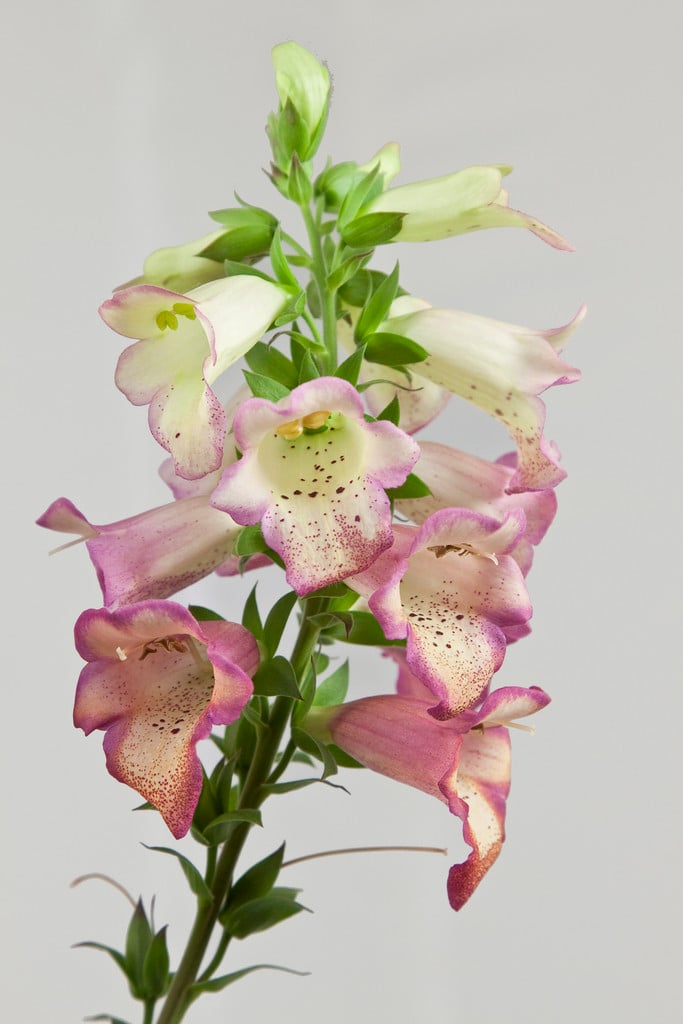
A series of hybrids between the hardy, native, biennial D. purpurea, and the frost-tender, short-lived shrub D. canariensis. They are sturdy, upright, semi-evergreen perennials, to around 90cm, with a basal rosette of dark green leaves. Spikes of outward-facing, open, bell-shaped flowers with pointed lobes are produced over a long period in summer and autumn; the flowers are sterile but still produce nectar. Colours range from pale to deep pink with cream to orange interiors
Size
Ultimate height
0.5–1 metresTime to ultimate height
2–5 yearsUltimate spread
0.1–0.5 metresGrowing conditions
Moisture
Moist but well–drained, Well–drainedpH
Acid, Alkaline, NeutralColour & scent
| Stem | Flower | Foliage | Fruit | |
| Spring | Green | |||
|---|---|---|---|---|
| Summer | Cream Orange Pink | Green | ||
| Autumn | Cream Orange Pink | Green | ||
| Winter | Green |
Position
- Full sun
- Partial shade
Aspect
South–facing or East–facing or West–facing
Exposure
Exposed or Sheltered Hardiness
H4Botanical details
- Family
- Plantaginaceae
- Native to GB / Ireland
- No
- Foliage
- Semi evergreen
- Habit
- Columnar upright
- Potentially harmful
- TOXIC if eaten. Wear gloves and other protective equipment when handling TOXIC to pets - see the HTA guide to potentially harmful plants for further information and useful contact numbers
- Genus
Digitalis can be biennials or usually short-lived perennials forming a rosette of simple leaves with bell-shaped flowers in slender, erect, usually one-sided racemes
- Name status
Accepted
How to grow
Cultivation
Will grow in almost any soil or situation except very wet or very dry; ideal site is a humus-rich soil in partial shade
Propagation
Propagate by division in spring
Suggested planting locations and garden types
- City and courtyard gardens
- Cottage and informal garden
- Flower borders and beds
Pruning
Cut back main flower spike as it fades to encourage the growth of flowering side shoots
Pests
May be susceptible to aphids and leaf and bud eelworm
Diseases
May be susceptible to powdery mildews, downy mildews and leaf spot
Get involved
The RHS is the UK’s gardening charity, helping people and plants to grow - nurturing a healthier, happier world, one person and one plant at a time.