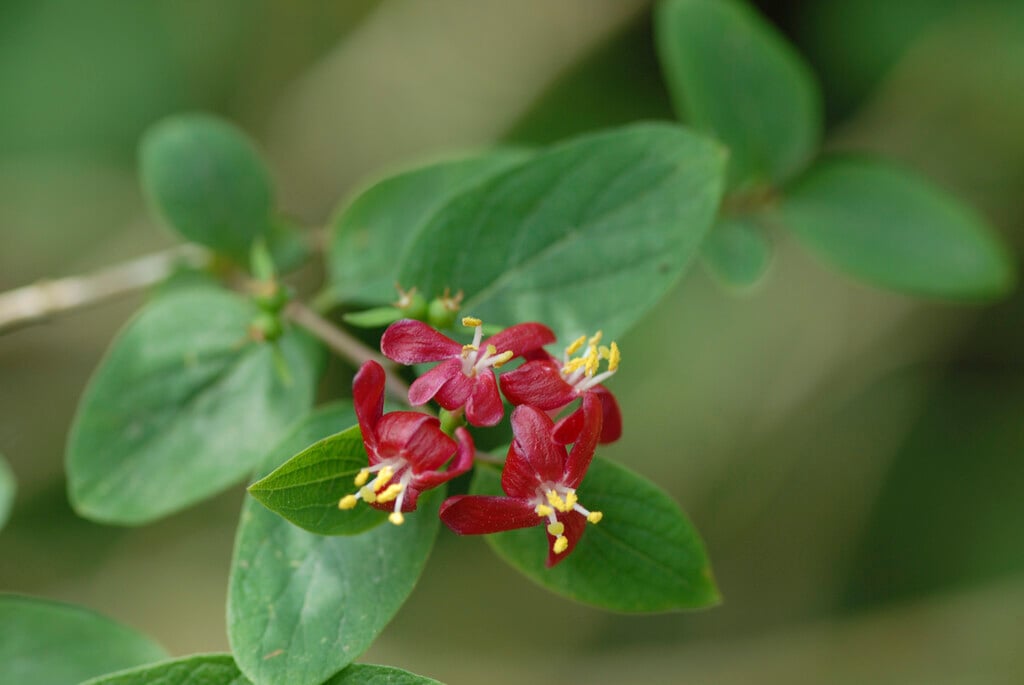
Lonicera tatarica 'Arnold Red'

RHS Plant Profile
Tatarian honeysuckle 'Arnold Red'
Tatarian honeysuckle 'Arnold Red' visionspictures.com
Shrubs

A deciduous shrub reaching 4m tall, 2.5m wide. It has green leaves and small red flowers clustered all along the stems in early summer. These develop into bright scarlet berries loved by birds

Position

Full sun, Partial shade

Soil Types

Chalk, Clay, Loam, Sand

Max Height

2.5-4 metres

Max Spread

1.5-2.5 metres

Size

Time to Maturity
5–10 years
Max Spread
1.5-2.5 metres
Max Height
2.5-4 metres

Growing Conditions

Chalk Clay Loam Sand
Moisture
Moist but well–drained
pH
Acid or Alkaline or Neutral

Position

Full sun Partial shade
Aspect
East–facing or South–facing or West–facing
Exposure
Sheltered
Hardiness
H6

Colour & Scent

Season Stem Flower Foliage Fruit
Spring
Summer
Autumn
Winter

Botanical Details

Family
Caprifoliaceae
Native to GB/Ireland
No
Foliage
Deciduous
Habit
Bushy, Spreading branched
Potentially harmful
Fruit are ornamental - not to be eaten. Wear gloves and other protective equipment when handling. Pets: Fruit are ornamental - not to be eaten - see the HTA guide to potentially harmful plants for further information and useful contact numbers
Genus
Lonicera can be deciduous and evergreen shrubs, or climbers with twining stems. The tubular or two-lipped flowers, often very fragrant, are followed by red or black berries
Name Status
Accepted

How to Grow

Cultivation

Grow in any well-drained soil in full or partial sun. See honeysuckle (shrubby) cultivation for further advice

Propagation

Propagate from hardwood cuttings, softwood cutttings or semi-ripe cutting at each time of year

Suggested planting locations and garden types

  • City and courtyard gardens
  • Cottage and informal garden
  • Banks and slopes

Pruning

Pruning group 2

Pests

May be susceptible to aphids

Diseases

May be susceptible to powdery mildews