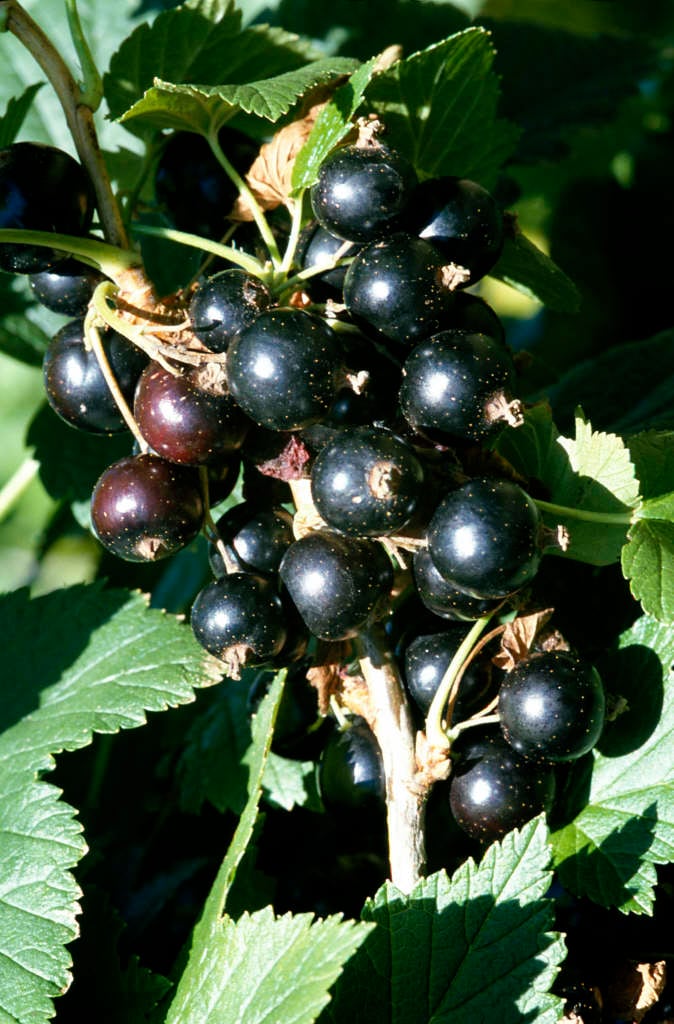
Ribes nigrum 'Ben Connan' (B)

RHS Plant Profile
blackcurrant 'Ben Connan'
blackcurrant 'Ben Connan' RHS
Award of Garden MeritPlants for pollinators
Fruit Edible

A culinary cultivar with large fruit of excellent flavour on medium long strigs. It produces heavy crops early in the season and has a compact habit

Position

Full sun

Soil Types

Clay, Loam, Sand

Max Height

1-1.5 metres

Max Spread

1-1.5 metres

Size

Time to Maturity
2–5 years
Max Spread
1-1.5 metres
Max Height
1-1.5 metres

Growing Conditions

Clay Loam Sand
Moisture
Moist but well–drained
pH
Acid or Alkaline or Neutral

Position

Full sun
Aspect
East–facing or South–facing or North–facing or West–facing
Exposure
Sheltered
Hardiness
H6

Colour & Scent

Season Stem Flower Foliage Fruit
Spring
Summer
Autumn
Winter

Botanical Details

Family
Grossulariaceae
Native to GB/Ireland
No
Foliage
Deciduous
Habit
Bushy
Genus
Ribes can be deciduous or evergreen shrubs, sometimes spiny, with simple, usually palmately lobed leaves and small tubular or bell-shaped, solitary or racemose flowers borne in spring or summer, followed by juicy, sometimes edible berries
Name Status
Accepted
Horticultural Group
This genus produces blackcurrants

How to Grow

Cultivation

Grow as a multi-stemmed bush in a soil enriched with well-rotted manure or compost. Tolerates a range of soils including slightly alkaline ones. Add a balanced general fertiliser and additional nitrogen in spring

Propagation

propagate by hardwood cuttings in the dormant season

Suggested planting locations and garden types

  • Cottage and informal garden
  • Wildlife gardens
  • Edible fruit

Pruning

Prune blackcurrants when dormant, from late autumn to late winter. Fruit forms on young wood, so when pruning aim to remove older wood, leaving the young shoots

Pests

May be susceptible to gall mites, gall midge and aphids

Diseases

May be susceptible to a leaf spot, powdery mildews, coral spot and sometimes honey fungus