Rosa 'Red Wing' (S)
rose 'Red Wing'
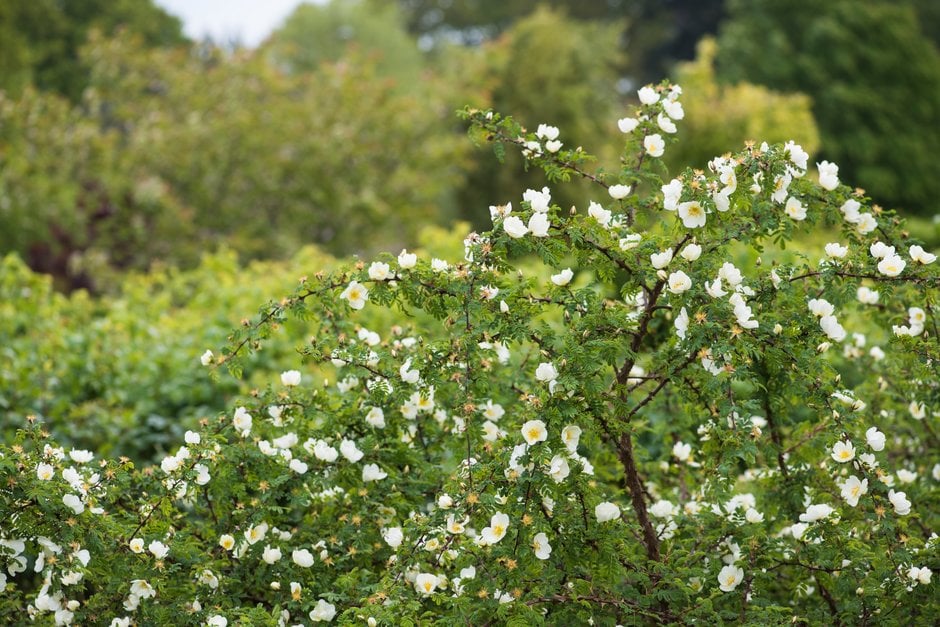
A dense, upright shrub to around 2m tall with small, neat, divided leaves giving a fern-like appearance and scarlet, translucent thorns, particularly noticeable on new growth. Single, white to pale yellow, four-petalled blooms borne in summer are followed by ornamental red fruits (hips) in autumn
Size
Ultimate height
1.5–2.5 metresTime to ultimate height
2–5 yearsUltimate spread
1.5–2.5 metresGrowing conditions
Moisture
Moist but well–drained, Well–drainedpH
Acid, Alkaline, NeutralColour & scent
| Stem | Flower | Foliage | Fruit | |
| Spring | Green | |||
|---|---|---|---|---|
| Summer | Yellow White | Green | ||
| Autumn | Red | |||
| Winter |
Position
- Full sun
- Partial shade
Aspect
South–facing or West–facing or East–facing
Exposure
Exposed or Sheltered Hardiness
H5Botanical details
- Family
- Rosaceae
- Native to GB / Ireland
- No
- Foliage
- Deciduous
- Habit
- Bushy
- Potentially harmful
- Fruit are ornamental - not to be eaten. Wear gloves and other protective equipment when handling. Pets: Fruit are ornamental - not to be eaten - see the HTA guide to potentially harmful plants for further information and useful contact numbers
- Genus
Rosa can be deciduous or semi-evergreen shrubs or scrambling climbers, with usually thorny stems bearing compound pinnate leaves and solitary or clustered flowers. Flowers may be followed by showy red or purple fruits in some varieties.
- Name status
Accepted
- Horticultural Group
- Shrub roses are large shrubs with usually thorny stems bearing large leaves and fragrant, single to double flowers in clusters in summer, and usually also in autumn
How to grow
Cultivation
Suited to a wide range of situations but best in an open site in full sun, where ruby-red young thorns can be appreciated. Grow in moderately fertile, humus-rich, moist but well-drained soil - see rose cultivation.
Propagation
Propagate by hardwood cuttings in late summer or autumn or by chip budding in summer
Suggested planting locations and garden types
- City and courtyard gardens
- Cottage and informal garden
- Wildlife gardens
- Cut flowers
- Flower borders and beds
Pruning
Pruning group 20 (roses), do not deadhead flowers if fruits (hips) are required
Pests
May be susceptible to aphids including rose root aphid, rose leafhopper, scale insects, large rose sawfly, rose leaf-rolling sawfly and rose slugworm
Diseases
May be susceptible to black spot, rose dieback, grey moulds, rose rust, rose powdery mildews and downy mildews, rose sickness or replant disease and a virus
Get involved
The Royal Horticultural Society is the UK’s leading gardening charity. We aim to enrich everyone’s life through plants, and make the UK a greener and more beautiful place.