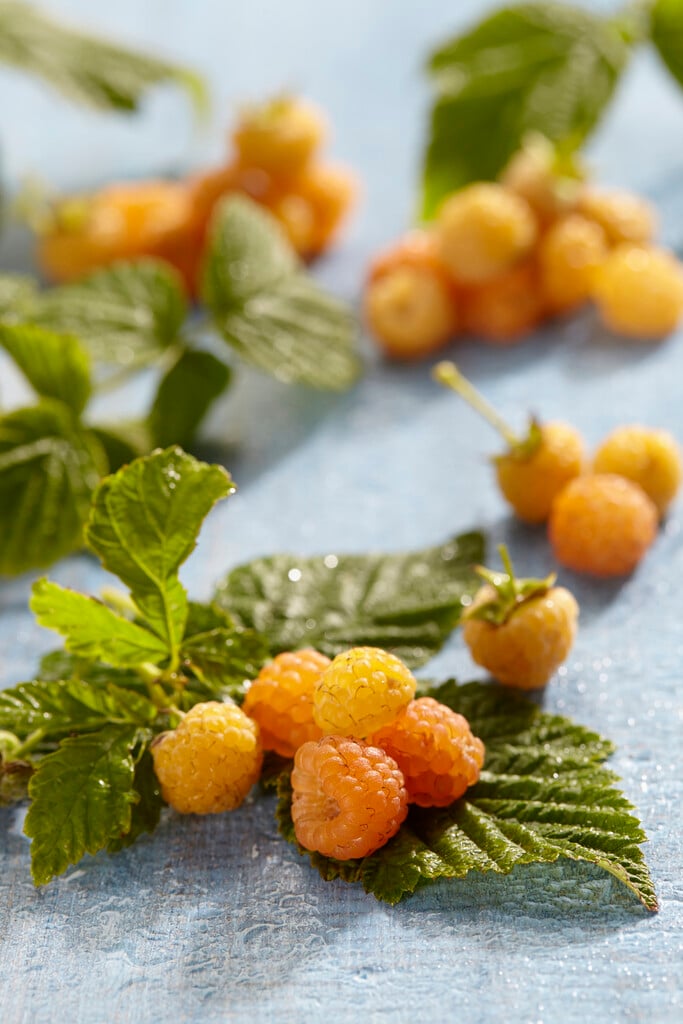
Size
Ultimate height
1.5–2.5 metresTime to ultimate height
2–5 yearsUltimate spread
1–1.5 metresGrowing conditions
Moisture
Moist but well–drainedpH
Acid, NeutralColour & scent
| Stem | Flower | Foliage | Fruit | |
| Spring | Green | |||
|---|---|---|---|---|
| Summer | White | Green | Yellow | |
| Autumn | White | Green | Yellow | |
| Winter |
Position
- Full sun
- Partial shade
Aspect
East–facing or North–facing or South–facing or West–facing
Exposure
Sheltered Hardiness
H7Botanical details
- Family
- Rosaceae
- Native to GB / Ireland
- No
- Foliage
- Deciduous
- Habit
- Columnar upright, Clump forming, Suckering
- Genus
Rubus can be deciduous or evergreen shrubs, often scrambling with bristly or prickly stems bearing simple, lobed, palmate or pinnate leaves and 5-petalled flowers followed by juicy, sometimes edible fruits
- Name status
Unresolved
- Horticultural Group
- This genus produces fruit, but not necessarily edible fruit
How to grow
Cultivation
Train to wires in a sheltered spot, in any fertile soil as long as it isn't too chalky. Plant in sun or partial shade. May have the potential to become a nuisance if not managed well. See raspberry cultivation
Propagation
Propagate by division
Suggested planting locations and garden types
- Wildlife gardens
- Edible fruit
Pruning
Prune canes which have finished fruiting, to the ground. Tie in new ones to support
Pests
Generally pest-free
Diseases
May be susceptible to grey moulds and honey fungus (rarely)
Get involved
The RHS is the UK’s gardening charity, helping people and plants to grow - nurturing a healthier, happier world, one person and one plant at a time.
