Pieris 'Brouwer's Beauty'
pieris 'Brouwer's Beauty'
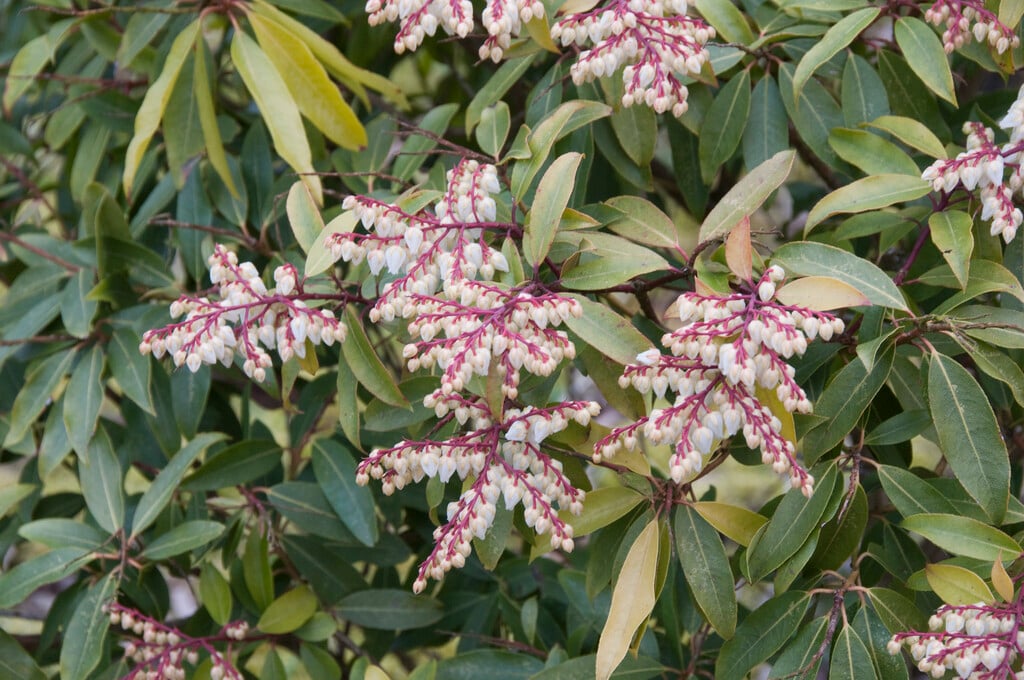
A compact, slow-growing evergreen shrub to around 2m high, with slightly glossy, lance-shaped leaves that emerge bright yellow-green and mature to deep green. Long sprays of small, scented, urn-shaped creamy white flowers open from dark reddish-purple buds in spring
Buy this plant
Size
Ultimate height
1.5–2.5 metresTime to ultimate height
10–20 yearsUltimate spread
1.5–2.5 metresGrowing conditions
Moisture
Moist but well–drainedpH
AcidColour & scent
| Stem | Flower | Foliage | Fruit | |
| Spring | White | Green | ||
|---|---|---|---|---|
| Summer | Green | |||
| Autumn | Green | |||
| Winter | Green |
Position
- Full sun
- Partial shade
Aspect
East–facing or South–facing or West–facing
Exposure
Sheltered Hardiness
H5Botanical details
- Family
- Ericaceae
- Native to GB / Ireland
- No
- Foliage
- Evergreen
- Habit
- Bushy
- Potentially harmful
- Harmful if eaten. Wear gloves and other protective equipment when handling. Pets (dogs, cats, rabbits, rodents, tortoises): Harmful if eaten - For further information and contact numbers regarding pets, see the HTA guide to potentially harmful plants
- Genus
Pieris are compact evergreen shrubs with leathery, dark green leaves, often brightly coloured when young, and small white urn-shaped flowers borne in panicles in spring
- Name status
Unresolved
How to grow
Cultivation
Grow in moderately fertile, moist but well drained, acid soil; will not tolerate chalk soils or waterlogging. Position in full sun or light shade, with protection from cold, drying winds, and mulch annually in autumn
Propagation
Propagate by softwood cuttings in early summer or semi-hardwood cuttings in late summer. Some bottom heat may be required
Suggested planting locations and garden types
- City and courtyard gardens
- Cottage and informal garden
- Low Maintenance
- Flower borders and beds
Pruning
Minimal pruning required, see pruning group 8 (evergreens)
Pests
May be susceptible to pieris lacebug
Diseases
May be susceptible to honey fungus (rarely), Phytophthora root rot, and fungal leaf spot
Get involved
The Royal Horticultural Society is the UK’s leading gardening charity. We aim to enrich everyone’s life through plants, and make the UK a greener and more beautiful place.