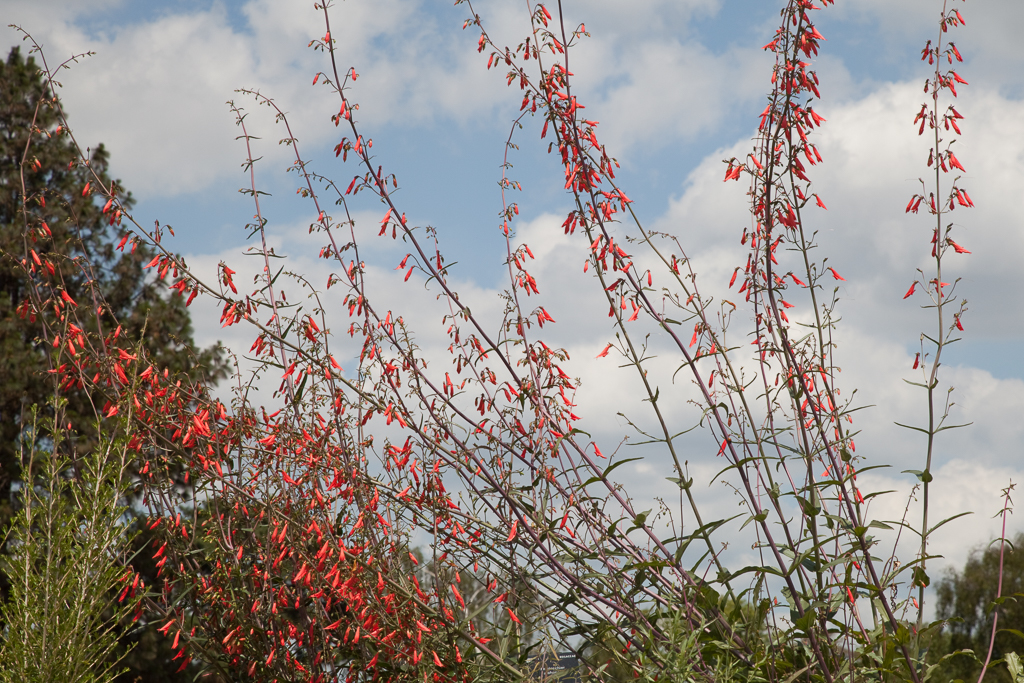
Penstemon barbatus subsp. coccineus

RHS Plant Profile
penstemon 'Coccineus'
penstemon 'Coccineus' John Fielding

Synonyms

Penstemon barbatus subsp. coccineus

Herbaceous Perennial

A tall, upright perennial to 1.8m with semi-evergreen basal rosettes and deciduous stems with leaves up to 20cm long. From early summer to early autumn bears loose spires of hanging, tubular red flowers 4cm long

Position

Full sun

Soil Types

Chalk, Loam, Sand

Max Height

1.5-2.5 metres

Max Spread

0.5-1 metres

Size

Time to Maturity
2–5 years
Max Spread
0.5-1 metres
Max Height
1.5-2.5 metres

Growing Conditions

Chalk Loam Sand
Moisture
Well–drained
pH
Alkaline or Acid or Neutral

Position

Full sun
Aspect
South–facing or East–facing or West–facing
Exposure
Sheltered
Hardiness
H5

RHS Recommended: for People & Planet

Growing conditions for maximum benefit

This plant will provide the maximum benefits if it is healthy and allowed to grow to maturity

For Bio-Diversity

  • Plants for Pollinators

Colour & Scent

Season StemFlowerFoliageFruit
Spring Green
Summer Red Green
Autumn Red Green
Winter Green

Botanical Details

Family
Plantaginaceae
Native to GB/Ireland
No
Foliage
Semi evergreen
Habit
Clump forming
Genus
Penstemon may be deciduous or evergreen perennials or subshrubs, with simple, narrow leaves and racemes or panicles of bell-shaped or funnel-shaped flowers in summer and early autumn
Name Status
Synonym

How to Grow

Cultivation

Grow in fertile, well-drained soil in a sheltered position in full sun or partial shade. In cold areas, protect plant overwinter with a dry mulch. See penstemon cultivation

Propagation

Propagate by softwood cuttings in early summer, semi-hardwood cuttings in midsummer, or division in spring

Suggested planting locations and garden types

  • City and courtyard gardens
  • Cottage and informal garden
  • Coastal
  • Patio and container plants
  • Wildlife gardens
  • Gravel garden
  • Flower borders and beds
  • Cut flowers

Pruning

deadhead after flowering to maintain vigour, then cut back to base in winter

Pests

May be susceptible to slugs, snails and chrysanthemum eelworms

Diseases

May be susceptible to downy mildews