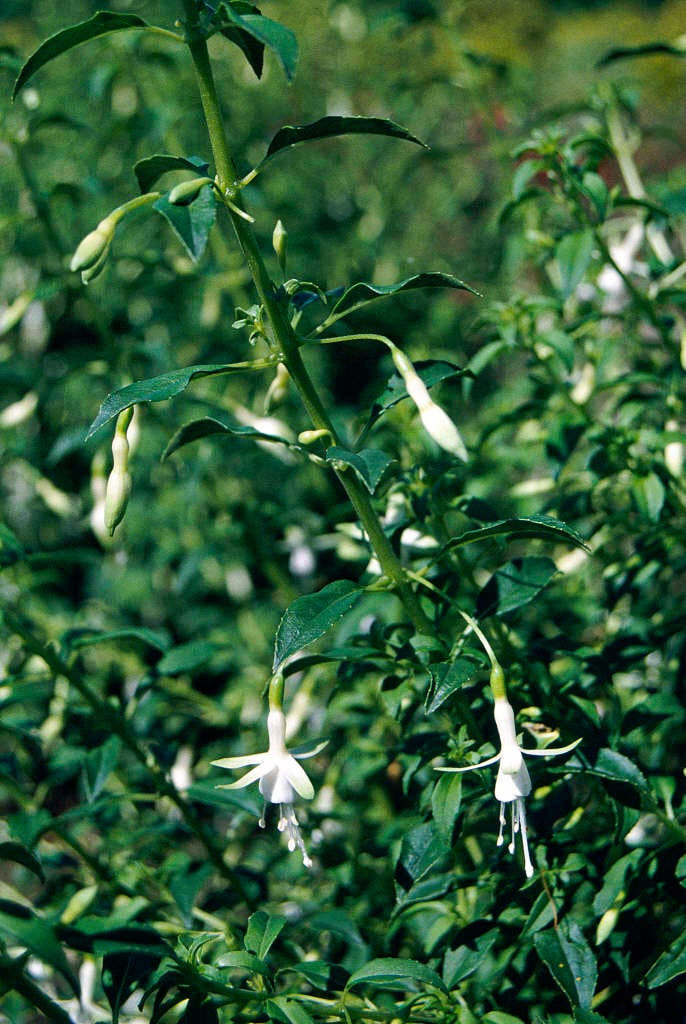
Fuchsia 'Hawkshead'

RHS Plant Profile
fuchsia 'Hawkshead'
fuchsia 'Hawkshead' RHS 2002
Award of Garden MeritPlants for pollinators
Shrubs

A bushy upright, deciduous shrub about 1m tall, with slender small, dark green leaves, and from summer to autumn produces dainty, slender single white flowers with white tubes and broad sepals tinged with green

Position

Full sun, Partial shade

Soil Types

Chalk, Clay, Loam, Sand

Max Height

0.5-1 metres

Max Spread

0.1-0.5 metres

Size

Time to Maturity
2–5 years
Max Spread
0.1-0.5 metres
Max Height
0.5-1 metres

Growing Conditions

Chalk Clay Loam Sand
Moisture
Moist but well–drained
pH
Acid or Alkaline or Neutral

Position

Full sun Partial shade
Aspect
West–facing or South–facing or East–facing
Exposure
Sheltered
Hardiness
H4

Colour & Scent

Season Stem Flower Foliage Fruit
Spring
Summer
Autumn
Winter

Botanical Details

Family
Onagraceae
Native to GB/Ireland
No
Foliage
Deciduous
Habit
Bushy
Potentially harmful
Although Fuchsia berries are edible, most are not particularly tasty and are sparsely produced on plants. Fuchsia plants are generally grown as an ornamental and not for fruit crops within the UK
Genus
Fuchsia can be deciduous or evergreen shrubs or trees, rarely perennials, with opposite or whorled leaves and usually pendent flowers with conspicuous tubular calyx, 4 spreading sepals and 4 erect petals
Name Status
Accepted

How to Grow

Cultivation

Grow in moist but well-drained, fertile soil in sun or part shade. Hardy outside in most UK regions. Plant the base of the stem 5cm below the soil surface, provide a deep winter mulch and shelter from cold drying winds. See hardy fuchsia cultivation for further information

Propagation

Propagate by softwood or semi-hardwood cuttings

Suggested planting locations and garden types

  • City and courtyard gardens
  • Coastal
  • Cottage and informal garden
  • Patio and container plants
  • Wildlife gardens
  • Flower borders and beds

Pruning

Pruning group 6

Diseases

May be susceptible to fuchsia rust, grey moulds and honey fungus (rarely)