Iris 'Edward' (Reticulata)
iris 'Edward'
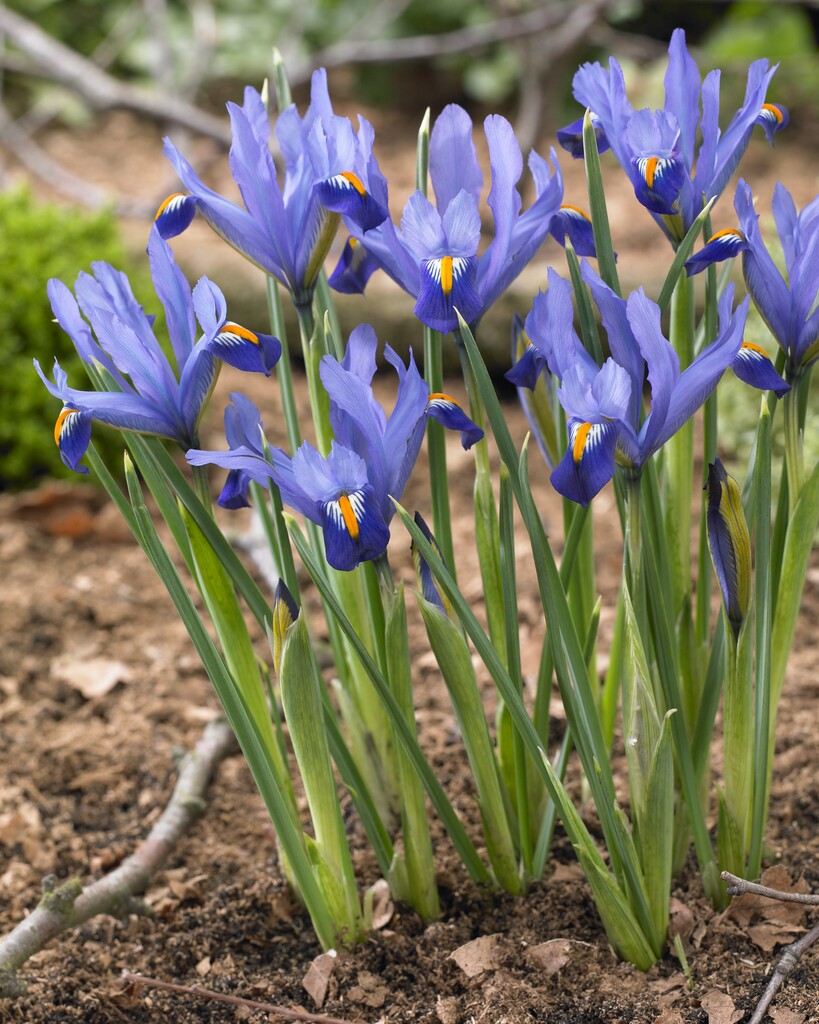
A dwarf bulbous perennial, to around 15cm high, with narrow, upright green leaves. Flowers are rich violet, with a golden yellow blotch on a streaked white ground on the fall petals. Flowers from late winter to early spring
Size
Ultimate height
0.1–0.5 metresTime to ultimate height
2–5 yearsUltimate spread
0–0.1 metreGrowing conditions
Moisture
Moist but well–drained, Well–drainedpH
Acid, Alkaline, NeutralColour & scent
| Stem | Flower | Foliage | Fruit | |
| Spring | Purple Yellow White | Green | ||
|---|---|---|---|---|
| Summer | ||||
| Autumn | ||||
| Winter | Purple Yellow White | Green |
Position
- Full sun
Aspect
South–facing
Exposure
Sheltered Hardiness
H7Botanical details
- Family
- Iridaceae
- Native to GB / Ireland
- No
- Foliage
- Deciduous
- Habit
- Tufted
- Potentially harmful
- Harmful if eaten. Wear gloves and other protective equipment when handling. Pets: Harmful if eaten. For further information and contact numbers regarding pets, see the HTA guide to potentially harmful plants
- Genus
Iris may be rhizomatous or bulbous perennials, with narrow leaves and erect stems bearing flowers with 3 large spreading or pendent fall petals, alternating with 3 erect, often smaller, standard petals, in late winter, spring or early summer
- Name status
Unresolved
- Horticultural Group
- Reticulata irises are small, bulbous perennials with narrow leaves almost square in section, and solitary, sometimes fragrant purple, yellow or blue flowers in early spring
How to grow
Cultivation
Thrives in a sunny position, in most soils with good drainage. In drier soils, dig in well-rotted organic matter before planting, and mulch in spring. Feed after flowering to encourage bulb growth. See bulb iris cultivation
Propagation
Propagate by division, separating bulb offsets from midsummer to early autumn
Suggested planting locations and garden types
- City and courtyard gardens
- Cottage and informal garden
- Patio and container plants
- Rock garden
- Flower borders and beds
- Underplanting of roses and shrubs
Pruning
No pruning required
Pests
Diseases
May be susceptible to leaf spots, ink disease, rust diseases, bulb rot and viruses; see Iris diseases for more details
Get involved
The Royal Horticultural Society is the UK’s leading gardening charity. We aim to enrich everyone’s life through plants, and make the UK a greener and more beautiful place.