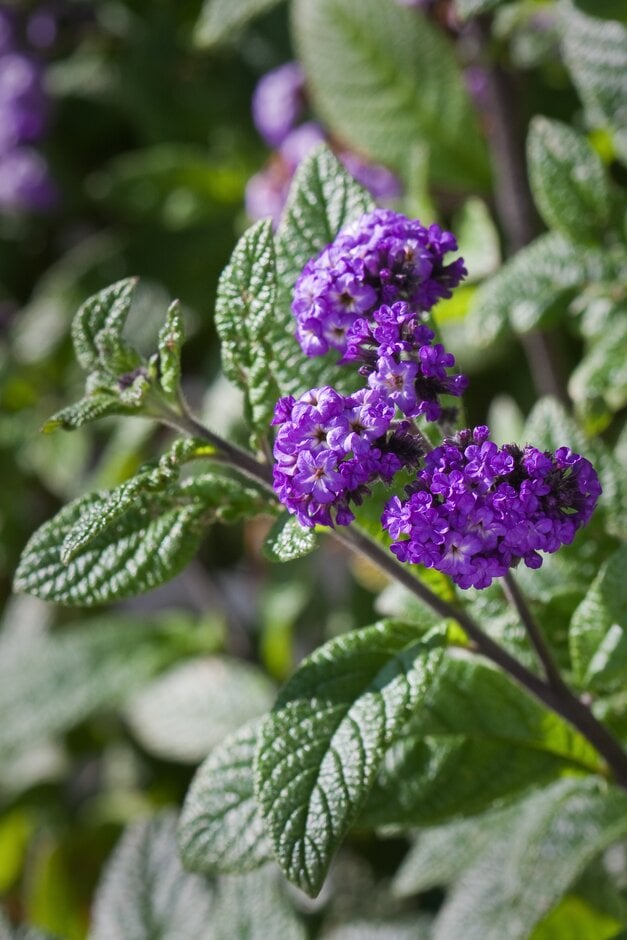
Size
Ultimate height
0.5–1 metresTime to ultimate height
2–5 yearsUltimate spread
0.1–0.5 metresGrowing conditions
Moisture
Moist but well–drainedpH
Acid, Alkaline, NeutralColour & scent
| Stem | Flower | Foliage | Fruit | |
| Spring | Green | |||
|---|---|---|---|---|
| Summer | Blue Purple | Green | ||
| Autumn | ||||
| Winter |
Position
- Full sun
- Partial shade
Aspect
South–facing or West–facing or East–facing
Exposure
Sheltered Hardiness
H1CBotanical details
- Family
- Boraginaceae
- Native to GB / Ireland
- No
- Foliage
- Evergreen
- Habit
- Bushy
- Potentially harmful
- Pets: Harmful if eaten repeatedly. For further information and contact numbers regarding pets, see the HTA guide to potentially harmful plants
- Genus
Heliotropium can be annuals, perennials, sub-shrubs or shrubs, with simple leaves and large clusters of small, scented flowers in summer
- Name status
Unresolved
How to grow
Cultivation
Under glass, grow in peat-free compost in full light but with some protection from hot sun. Outdoors grow in any moist but well-drained soil in full sun. Water moderately in the growing season and apply a balanced fertiliser once a month. In the winter keep the rootball just moist
Propagation
Propagate cultivars by taking softwood cuttings or semi-ripe cuttings in summer
Suggested planting locations and garden types
- Cottage and informal garden
- City and courtyard gardens
- Patio and container plants
- Wildlife gardens
- Coastal
- Sub-tropical
- Flower borders and beds
- Conservatory and greenhouse
Pruning
Tip-prune shoots on young plants in early spring to promote bushy growth. Older leggy plants can gave their stems shortened by half in spring
Pests
Glasshouse whitefly may be a problem if grown under glass
Diseases
Generally disease-free
Get involved
The Royal Horticultural Society is the UK’s leading gardening charity. We aim to enrich everyone’s life through plants, and make the UK a greener and more beautiful place.
