Campanula latiloba 'Hidcote Amethyst'
great bellflower 'Hidcote Amethyst'
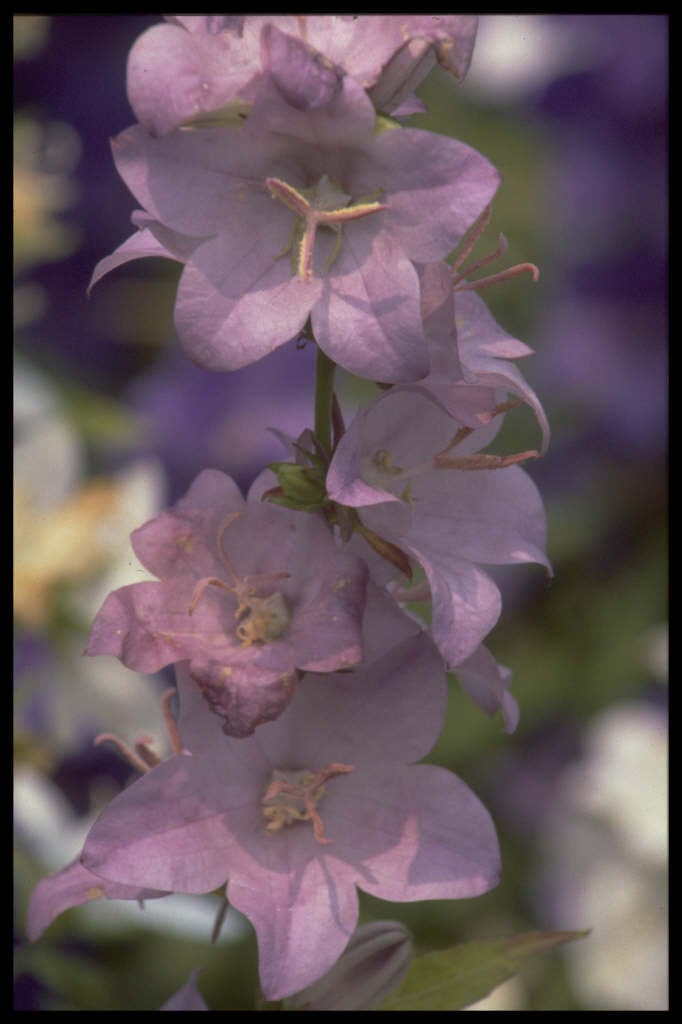
'Hidcote Amethyst' is a perennial with erect stems clothed with narrow, pointed leaves, arising from a rich green rosette of broader leaves. Pale lilac-purple, cup-shaped flowers in each of the upper leaf axils form a short raceme
Buy this plant
Size
Ultimate height
0.5–1 metresTime to ultimate height
2–5 yearsUltimate spread
0.1–0.5 metresGrowing conditions
Moisture
Moist but well–drainedpH
Alkaline, NeutralColour & scent
| Stem | Flower | Foliage | Fruit | |
| Spring | Green | |||
|---|---|---|---|---|
| Summer | Purple | Green | ||
| Autumn | Green | |||
| Winter |
Position
- Full sun
- Partial shade
Aspect
East–facing or South–facing or North–facing or West–facing
Exposure
Sheltered Hardiness
H7Botanical details
- Family
- Campanulaceae
- Native to GB / Ireland
- No
- Foliage
- Deciduous
- Habit
- Clump forming
- Genus
Campanula may be annuals, herbaceous or evergreen perennials, with bell or star-shaped, often blue, flowers in late spring or summer
- Name status
Accepted
How to grow
Cultivation
Best grown in fertile, neutral to alkaline soil that is moist but well-drained; in partial shade or sun. Needs staking in exposed sites.
Propagation
Propagate by division in spring or autumn or take basal cuttings in spring
Suggested planting locations and garden types
- Cottage and informal garden
- City and courtyard gardens
- Coastal
- Gravel garden
- Wildlife gardens
- Cut flowers
- Flower borders and beds
Pruning
Cut back after flowering to prevent self-seeding and to encourage a second flush of flowers
Pests
Diseases
May be susceptible to a rust, powdery mildews and a leaf spot
Get involved
The Royal Horticultural Society is the UK’s leading gardening charity. We aim to enrich everyone’s life through plants, and make the UK a greener and more beautiful place.