Prunus tenella
dwarf Russian almond
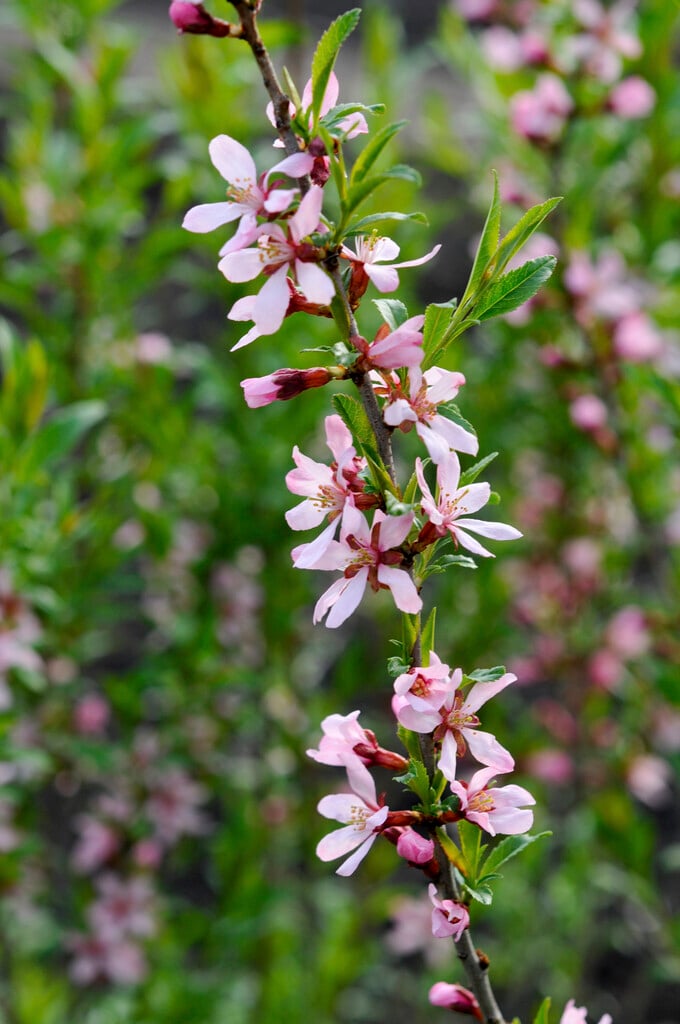
A species of small, slow-growing, upright deciduous shrub to around 1.5m in height, with narrow, glossy dark green foliage, turning to pale yellow in the autumn, and woody stems. Red buds open to bowl-shaped pink flowers appear before the leaves open in April to May, and have a faint scent of bitter almonds. Small, almond-shaped fruits encased in a dull yellow, furry case, follow in July to August. Although the fruits are edible, they vary in quality and the more bitter seeds may be toxic if consumed in large quantities. These shrubs are produced as an ornamental plant rather than an edible crop within the UK
Size
Ultimate height
1–1.5 metresTime to ultimate height
5–10 yearsUltimate spread
1–1.5 metresGrowing conditions
Moisture
Moist but well–drained, Well–drainedpH
Acid, Alkaline, NeutralColour & scent
| Stem | Flower | Foliage | Fruit | |
| Spring | Pink | Green | ||
|---|---|---|---|---|
| Summer | Green | Yellow | ||
| Autumn | Yellow | |||
| Winter |
Position
- Full sun
Aspect
East–facing or North–facing or South–facing or West–facing
Exposure
Sheltered Hardiness
H6Botanical details
- Family
- Rosaceae
- Native to GB / Ireland
- No
- Foliage
- Deciduous
- Habit
- Bushy, Columnar upright
- Genus
Prunus can be deciduous or evergreen trees or shrubs with showy flowers in spring, and often good autumn foliage colour. Some have edible fruit in autumn, and a few species have ornamental bark
- Name status
Correct
How to grow
Cultivation
Grow in moderately fertile soil in full sun
Propagation
Propagate by chip budding or grafting, although softwood cuttings in early summer with bottom heat can be successful
Suggested planting locations and garden types
- City and courtyard gardens
- Cottage and informal garden
- Wildlife gardens
- Flower borders and beds
Pruning
Pruning group 1. Prune in mid-summer if silver leaf is a problem
Pests
May be susceptible to caterpillars, leaf-mining moths and bullfinches
Diseases
May be susceptible to peach leaf curl, silver leaf, bacterial canker, blossom wilt and honey fungus
Get involved
The Royal Horticultural Society is the UK’s leading gardening charity. We aim to enrich everyone’s life through plants, and make the UK a greener and more beautiful place.