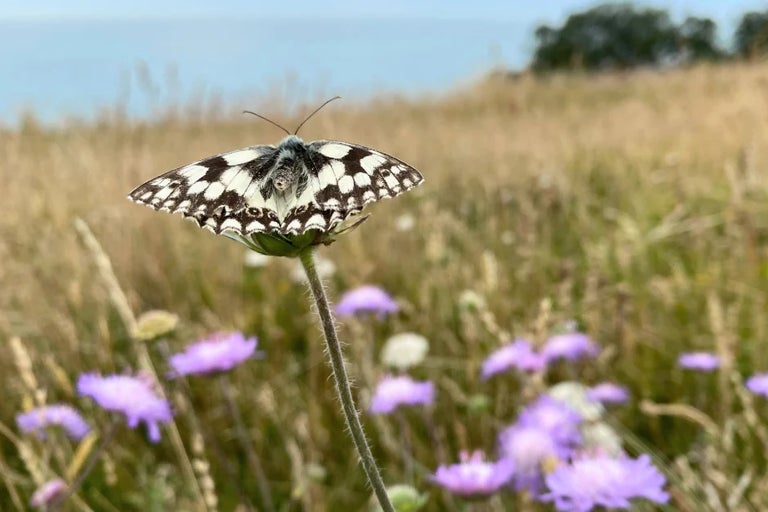
Encourage pollinating insects into your garden by giving them a head-start. Here we pick 10 of the best plants for beneficial pollinating insects, that are sure-fire winners for gardeners too
Helen Bostock
Senior Wildlife Specialist
6-minute read
As plants burst into life in spring, so too do the vital pollinating insects that are so important for gardeners and farmers. Many are driven to replenish their dwindling food stores and feed their growing brood. Honeybees that utilised honey reserves throughout winter can now range for several miles looking for energy-boosting . At this time of year, a queen can be laying 2,000 eggs a day and colonies burgeon.
In early spring, queen bumblebees scout about for nesting sites. They fill wax nectar pots to sustain them while they incubate their brood, and later feed their larvae with nectar and pollen. The solitary mason bee, often seen searching for water on newly-dug plots, is an important of early-blossoming fruit trees such as peaches. In tubular nests, eggs are laid on a stash of pollen and nectar in each cell. Hoverflies are also on the wing in April. While the larvae of some species are useful predators of garden pests, adults require nectar to survive.
Helen Bostock, Senior Wildlife Specialist, frequently draws on the RHS Plants for Pollinators lists to recommend plants that sustain pollinating garden visitors through the year. Here she chooses pollinator-friendly RHS Recommended: Award of Garden Merit plants with a selection of flower shapes and colours (including both natives and non-natives), to provide pollen and nectar for insects in spring.
Silver sparkle in the shade
Pretty spotted leaves catch the light, while purple flowers give early bees a much-needed meal
Lungwort selection Pulmonaria ‘Diana Clare’ shimmers with its silvery-marked leaves making it attractive as groundcover beneath spring-flowering shrubs. Over a long period, it bears short-tubed, purple flowers in dusky calyces. These are visited by emerging queen bumblebees and foraging solitary bees. Performs best in moisture-retentive soil in semi shade. Height to around 30cm (12in). Hardiness rating H6.
Blossom with character
Twisting branches and delicate flowers make this a real talking point, buzzing with early insect visitors
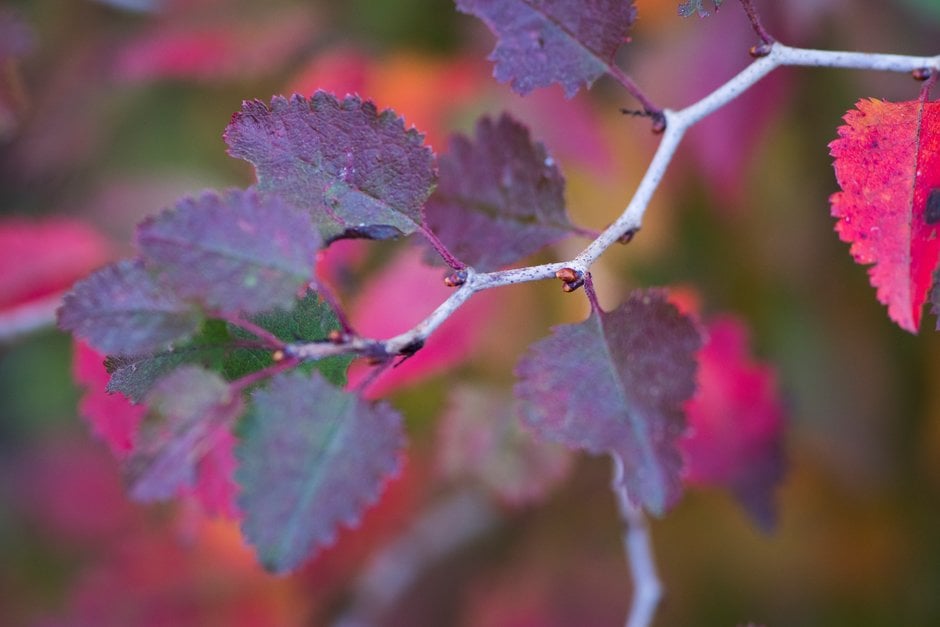
A medium-sized shrub with a rounded habit and twisted stems, the Prunus incisa ‘Kojo-no-mai’ has hanging clusters of pink buds held on red stalks. These open to white single blossoms and provide a food source for pollinators. The oval, serrated leaves show good autumn colour. It prefers sun or semi shade and a free-draining site that does not dry out. Height to around 2.5m (8ft), but with summer pruning, shrubs may be kept smaller. Hardiness rating H6.
Wildflower sunshine
Clusters of soft yellow flowers bring a natural, meadow feel and attract a wide range of insects
A of grasslands, hedgrows and woodland clearings, especially on chalk, Primula veris (cowslips) send up multiple flowering stems from leafy . These bear hanging clusters of warm yellow flowers in April and May. Occasionally, naturally occurring red or orange-flowered plants crop up. Cowslips offer nectar bars for long-tongued bees and bee flies, moths and butterflies. Height to around 25cm (10in). Hardiness rating H5.
Bright yellow flowers appear while it’s still cold, offering one of the first food sources for bee
Eranthis hyemalis (winter aconite) is a compact that brings bright colour to the garden in late winter. It produces cheerful, cup-shaped yellow flowers about 3cm across, each framed by finely divided leafy bracts. Well suited to naturalising in moist, well-drained soil and partial shade, it is ideal beneath trees. Flowering so early, it provides valuable nectar and pollen for emerging bumblebees and solitary bees when food is scarce, making it both attractive and beneficial in the garden. Height to around 10cm (3.9in). Hardiness rating H6.
Spring clouds, autumn jewels
Masses of white blossom glow in spring, followed by small fruits that add later-season interest
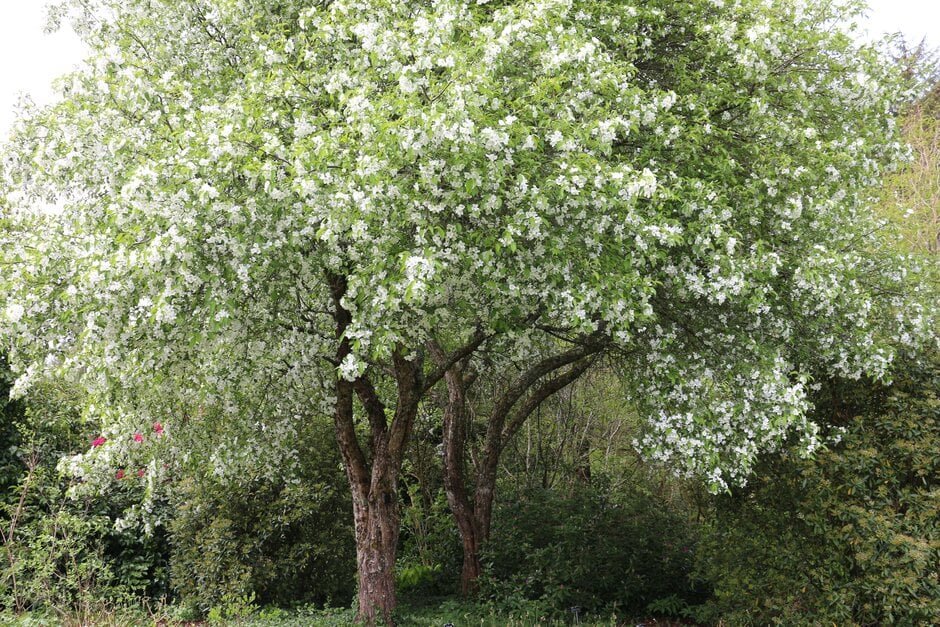
This crab apple becomes an upright tree with a rounded crown as it matures. Single flowers, grouped in clusters, open to white, scented clouds of blossom. Dangling fruits in late summer are cherry-like. Although the Malus hupehensis is a food source for bees, interestingly, pollinators are not necessary for reproduction. This species produces seed without , so offspring come true from seed even when planted with alongside other species. Eventual height of 5-7m (16–22ft). Hardiness rating H6.
Tiny but full of life
Delicate flowers open on sunny days, offering pollen to insects emerging from winter
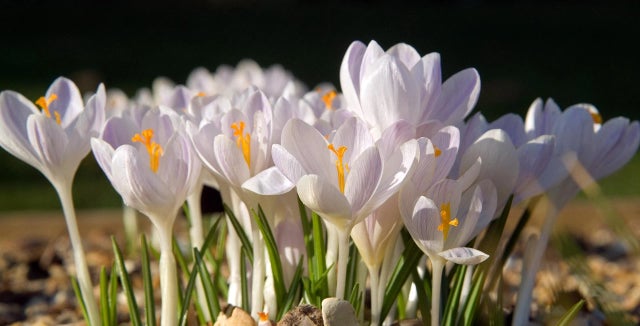
Crocus offer an early pollen source to bees and beetles braving warmer spring days.Crocus biflorus ‘Blue Pearl’ prefers a dry, sunny spot for a summer baking. It may also be in grass if you’re prepared to hold back on your mowing until the foliage has died down. Its scented flowers are lavender-blue with a white interior and yellow throat. Height to 10cm (3in). Hardiness rating H6
Bold flowers and strong leaves bring long-lasting interest, with plenty to tempt visiting insects
Bergenia ‘Eroica’ offers a jazzy combination of magenta-pink flower clusters and rhubarb-red stems. Bees and other pollinators visit the flowers. Green foliage colours red in winter and shows good frost resistance. Plants spread by and make good groundcover in sun or semi-shade. Height to around 30cm (1ft). Hardiness rating H7.
A blaze of orange
Small flowers pack a punch in colour and quickly become a busy feeding spot for pollinators
This spring-flowering Berberis darwinii is showier than most. Its hanging flowers may be small, but en masse their warm-orange colouring is a striking sight. They’re set against an evergreen backdrop of small, glossy, dark-green leaves. As well as supporting pollinators, subsequent blue-black berries in autumn are a food source for birds. Height to 2m (6ft). Hardiness rating H5.
Groundcover with purpose
Low-growing and colourful, it creates a carpet of flowers that insects can easily land on and feed from
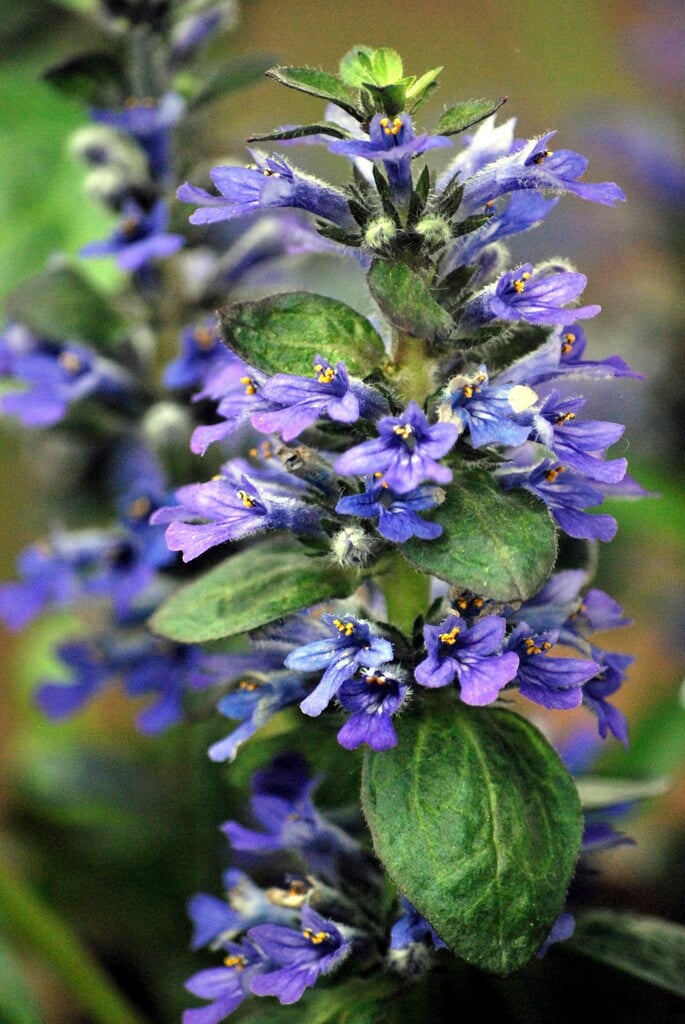
Ajuga reptans ‘Catlin’s Giant’ is a large-flowered selection of native bugle. It forms attractive mats of groundcover with its glossy, burgundy leaves. Its lipped, bluish-purple flowers in spring and early summer provide landing pads for pollinators such as bees. It's also a one of the food sources for adult orange tip butterflies (Anthocharis cardamines) which emerge in April. Height to 30cm (1ft). Hardiness rating H7.
A quiet wildlife hero
Its soft spring catkins may be subtle, but they provide essential early food for bees and other insects
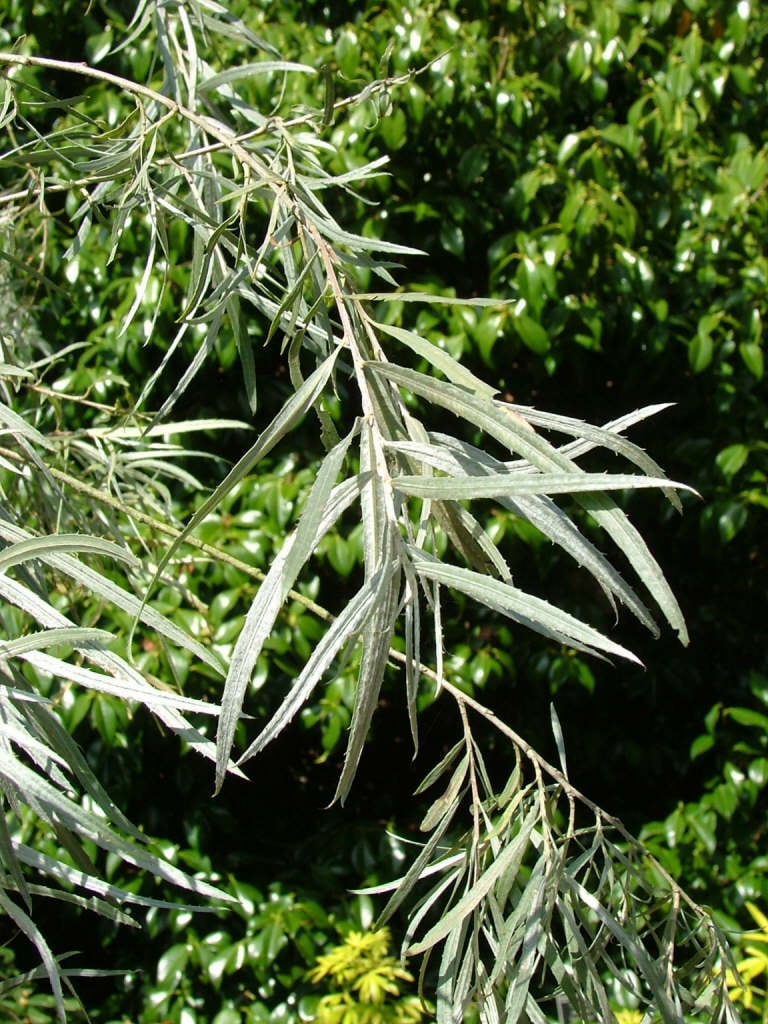
Salix exigua is a suckering shrub forming dense thickets of slender stems, well suited to naturalistic planting and damp soils. Its narrow, lance-shaped leaves, up to 10cm long, emerge silvery before maturing to soft grey-green. In spring, grey-yellow catkins appear with the leaves, male to around 5cm and female to 6cm long. These early flowers provide a valuable source of pollen and nectar for bees and other pollinators. Best grown in moist, well-drained soil in full sun, it spreads to form a loose colony, creating useful habitats and seasonal interest. Height to several metres. Hardiness rating H6.