Quick Facts
Usually bought as huge, dormant bulbs
1
Enjoy light shade, like their native woodland habitat
2
Need deep, moist but well-drained soil
3
Plants grown from seed can be extremely tall - up to 4m
4
Offsets make more, but shorter, flower spikes
5
Seedheads are strong and very decorative
6
They are a high-impact plant for shady positions
7
Benefit from shelter from strong winds
8


Before you get started
What are cardiocrinums?
These bulbous, herbaceous perennials are members of the lily family (Liliaceae), from high-altitude woodlands across eastern Asia. They show variations in size, and dark red markings and tints, according to their geographical origin. Technically known as monocarpic perennials the rosette of leaves around the flower stem dies but is replaced by a supply of new plantlets from the base – gradually forming a clump. They are hardy, and will tolerate brief periods down to -15°C. Being woodland plants, they prefer dappled shade, in soil that is rich in organic matter.
Safety note: Cardiocrinum isn't known to be toxic to people or pets. However, because some other lilies are dangerous to cats, keep any lily-type plants including Cardiocrinum out of their reach.
Choosing
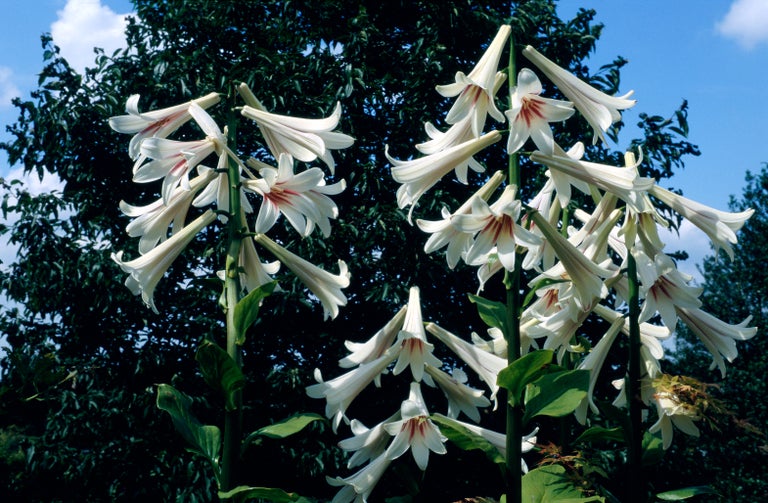
There are three species: Cardiocrinum giganteum, C. cordatum and C. spathayanum, which show variations in the degree of redness on leaves, stems and flowers, but most in cultivation are varieties of C. giganteum. They grow to various heights, ranging from 1.5–4m tall, and the flowers come in a subtle array of cream to white, with green tints and stripes and speckles of deep red in the throat of each trumpet. All give off a sweet, heady perfume in the evenings.
They can suit any size and style of garden, from traditional cottage borders to shady urban courtyards but especially beneath trees, as long as the soil is deep enough. See our guide to garden styles for more inspiration. To browse photos and descriptions of cardiocrinums, go to RHS Find a Plant.
Buying
Cardiocrinums are available to buy as online, and from some specialist bulb suppliers, but are rarely sold in growth. The large, dormant bulbs are often ordered in autumn to be delivered and planted in spring. If you buy them any other time, they should be planted as soon as possible, as long as the ground isn’t frozen or very cold and . The larger they are, the more expensive, but the better the flower should be. Smaller bulbs may take a further year or two to grow large enough to flower. Occasionally you may find small offset bulbs available which will take another five years to reach flowering size.
Cardiocrinums can also be bought as seed. This is very slow – at least seven years to reach flowering size – but immensely rewarding and significantly cheaper.
Use Find a Plant to help search for plants and suppliers.
Planting
When to plant
The should be planted into their intended position as soon after you get them as possible. They resent disturbance so this will be better than potting them up in any temporary fashion. Autumn is a great time to plant as they will have some time to settle in before winter. However, spring is also a good time, and this is often when the bulbs can be obtained.
Where to plant
Plant in a spot with shade and where there is deep soil with plenty of organic matter. The soil should be reliably moist but not become . Being so tall, make sure to choose a spot where they are sheltered from strong winds. Bearing in mind their height, you could plant them behind small shrubs, but don’t forget that their leaves are handsome, so you may not want to hide them.
How to plant
Plant dormant bulbs in soil generously enriched with organic matter. The bulbs should be buried so that their top or ‘nose’ is just showing above the soil. They need a minimum of 50cm2 to themselves to allow sufficient room to spread. Water them in and make sure the soil remains damp whilst they establish.
For seeds, sow in deep and keep cool and damp for at least three years. can be slow - perhaps taking two years. See Propagating below.
Ongoing care
Watering
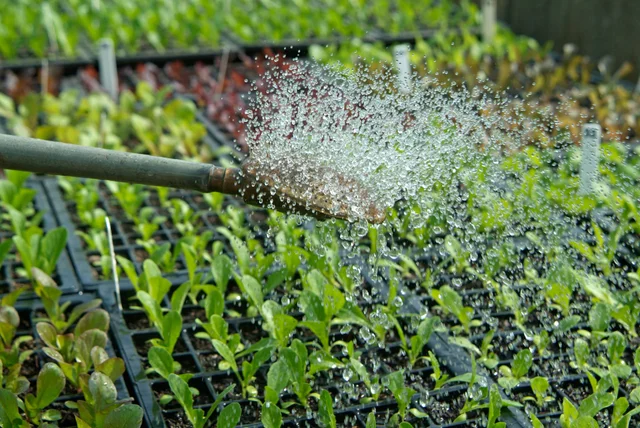
Make sure the soil around the remains slightly damp. This is especially important if growing under trees as the soil can become very dry. Also, if they are grown against a wall which may prevent rain reaching the ground.
Mulching
An open, lightweight over the crown, using organic matter such as that doesn’t become cold and soggy, will protect bulbs from extremely cold weather. Cardiocrinums should overwinter throughout the UK, but this extra layer will help protect against late frosts damaging the emerging buds.

Feeding
Being such large plants, they are hungry and will respond well to extra . A spring mulch of garden or well-rotted manure will be perfect.

Caring for older plants
Although cardiocrinums hate root disturbance, there may come a time when they are overcrowded in their allotted space, so their performance dwindles. If this happens, lift and divide them in spring, just before growth starts. Replant immediately and water well to settle them back in.
Pruning and training
No pruning is needed and the stout stems do not need staking.
Propagating
You can increase the number of cardiocrinums you grow by dividing offsets or by sowing seed. Learn more about these techniques in our propagating bulbs page.
Division
Small offset bulblets from around the edge of the main bulb can be separated and planted independently. To do this, gently pull away the soil from the offset and cut it away using a sharp blade. Replant as soon as possible, either into its new position, or into a deep pot of peat-free to grow on. These will take around five years to reach flowering size.
Seed
This can be a cheap and fun way to propagate Cardiocrinum, but it can take several years (typically seven years) for the plants to reach flowering maturity. Seed collected from varieties may produce plants that differ from the parents. Sow seed in late autumn when it’s ripe, or in spring.
Year 1: Seed sowing and
- Fill deep pots with peat-free and water to moisten.
- Sow seed in a small cluster per pot and cover with a light dusting of compost.
- Label pots in a way that will last a long time.
- Place outdoors in a shaded place where the pots are safe from disturbance.
- Keep damp but not soggy.
Year 2: Bulb growth
- It may take two years, but once germinations occurs and shoots appear, move to a brighter but still shaded, sheltered spot in the garden to grow on.
- Encourage good growth by keeping the compost just moist.
- Feed during spring and summer (high potash for bulb development).
- Gently remove any obviously weak by pulling them out whole. Don't try to transplant these spare seedlings as they are almost certain to die.
Years 3-7: Maturity and flowering
- Continue to keep reliably damp and feed as per year 2.
- Continue to thin extra seedlings, aiming to have a single plant per pot.
- Plant out whilst dormant in the autumn of year 5 or 6 or in the spring of year 6 or 7.
Problems
Like all members of the lily family, they are prone to lily beetle, so vigilance is crucial especially with small plants. Large plants can usually tolerate a small number of beetles. Remove and squash beetles and wipe off the messy green-brown blobs that are in fact larvae covered in a protective layer of their own excrement!
Cardiocrinums are loved by slugs and snails, so again, maintain vigilance when the plants are small and remove any you find.