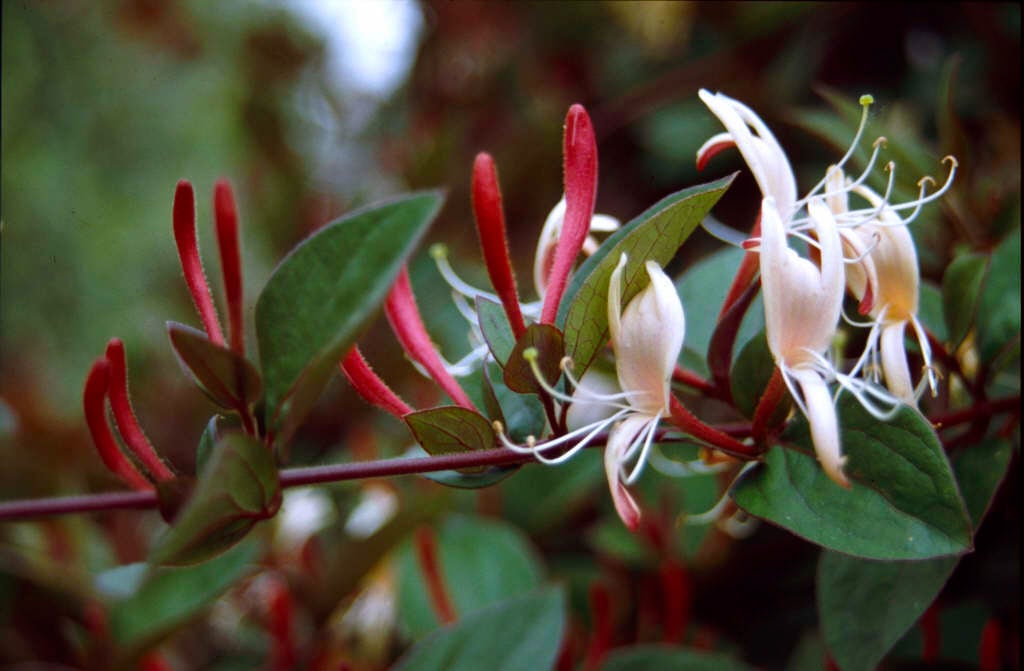
Lonicera japonica var. repens

RHS Plant Profile
creeping Japanese honeysuckle
creeping Japanese honeysuckle RHS 1997

Synonyms

Lonicera japonica 'Repens'
Lonicera flexuosa

Award of Garden Merit
Climber Wall Shrub

A vigorous evergreen climber with purplish stems and leaves, and clusters of strongly fragrant white flowers tinged with purple on the outside

Position

Full sun, Partial shade

Soil Types

Chalk, Clay, Loam, Sand

Max Height

4-8 metres

Max Spread

1-1.5 metres

Size

Time to Maturity
5–10 years
Max Spread
1-1.5 metres
Max Height
4-8 metres

Growing Conditions

Chalk Clay Loam Sand
Moisture
Moist but well–drained
pH
Acid or Alkaline or Neutral

Position

Full sun Partial shade
Aspect
North–facing or West–facing or South–facing or East–facing
Exposure
Exposed or Sheltered
Hardiness
H5

Colour & Scent

Fragrance Flower
Season Stem Flower Foliage Fruit
Spring
Summer
Autumn
Winter

Botanical Details

Family
Caprifoliaceae
Native to GB/Ireland
No
Foliage
Deciduous
Habit
Climbing
Potentially harmful
Fruit are ornamental - not to be eaten. Wear gloves and other protective equipment when handling. Pets: Fruit are ornamental - not to be eaten - see the HTA guide to potentially harmful plants for further information and useful contact numbers
Genus
Lonicera can be deciduous and evergreen shrubs, or climbers with twining stems. The tubular or two-lipped flowers, often very fragrant, are followed by red or black berries
Name Status
Correct
Plant Range
Temperate Asia

How to Grow

Cultivation

This plant is listed on Schedule 9 of the UK Wildlife & Countryside Act (Northern Ireland) as an invasive non-native species. Although not banned from sale, it is an offence to plant or cause these to grow in the wild IN NORTHERN IRELAND. Gardeners possessing them should undertake measures to control them. See RHS advice on invasive non-native species for further information Vigorous honeysuckle best in partial shade but tolerates full sun, thrives in any moist but well-drained soil. This species is listed on Schedule 9 of The Wildlife (Northern Ireland) Order (1985), as amended, as an invasive non-native species. While this does not prevent it from being sold or being grown in gardens in Northern Ireland, the RHS encourages those that do grow it to take great care with managing it and with disposing of unwanted material. The RHS also encourages gardeners in Northern Ireland to find alternative plants to grow to those listed on Schedule 9. For suggested alternative plants see the Plantlife/RHS guide, Gardening without harmful invasive plants

Propagation

Please see cultivation notes

Pests

May be susceptible to honeysuckle aphids, Thrips and glasshouse whitefly

Diseases

May be susceptible to powdery mildews, fungal leaf spot, silver leaf and honey fungus (rarely)