Quick Facts
Erigerons thrive in free-draining soil in full sun
1
They bloom from late spring through to autumn
2
Almost no maintenance is needed, especially for alpine types
3
They readily self-seed, especially in paving and walls
4
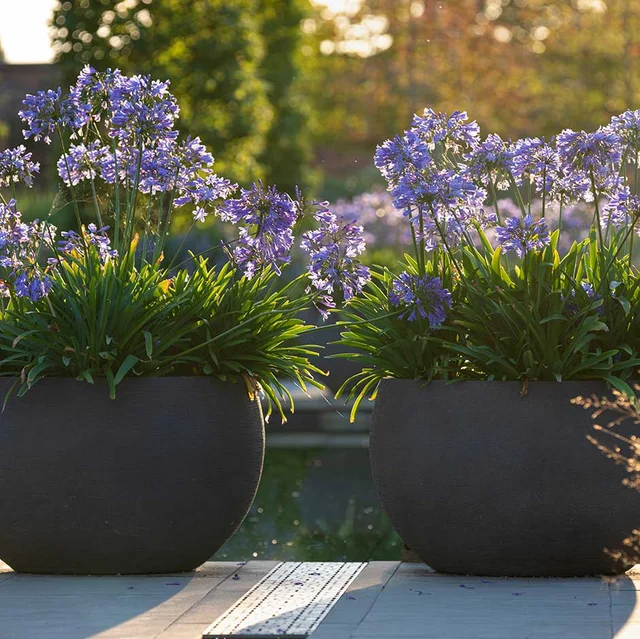
Erigerons are suitable for container planting
5
They are ideal for attracting pollinators
6


Before you get started
What are erigerons?
Many erigerons are herbaceous perennials, though some are or biennials. They have daisy-like flowers and many have grey-green foliage. They have an exceptionally long flowering period. Many species originate from North America, though these plants can be found in dry grassland and mountainous areas around the world. Given the right conditions – avoiding excessive winter wet – they are fully hardy.
Choosing erigerons
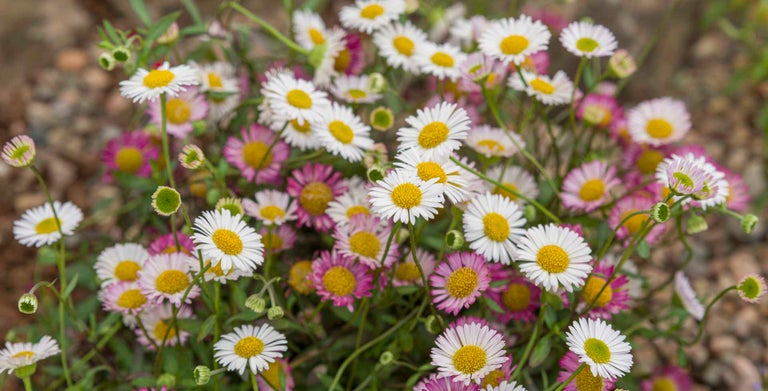
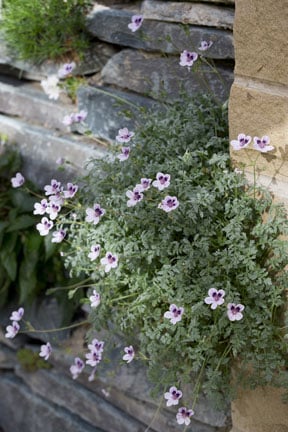
Erigerons are small to medium-sized plants, suitable for the front or middle of the border. Low-growing types like E. glaucus ‘Sea Breeze’ have a creeping, carpeting habit and are ubiquitous at the seaside, tumbling over retaining walls in front gardens. The daintiest species, E. karvinskianus, is a wonderful plant for softening hard landscaping, and has an exceptionally long flowering period, blooming from early summer through to the first frosts. Beware, however, that in some parts of the world it is considered to be and is even banned from sale in New Zealand.
Meanwhile, taller cultivars like E. ‘Quakeress’ and E. ‘Dunkelste Aller’ are more clump-forming. They can grow to about 60cm and often need some support with twigs or sticks. Many of these taller cultivars are hybrids. They are resilient plants which flower from June or early July into late autumn if deadheaded regularly.
Erigeron flowers are most commonly pastel shades like mauve, violet, lilac or pink – E. ‘Azurfee’ is a classic example – but occasionally they are orange or yellow (E. aureus ‘Canary Bird’).
To help you choose the perfect erigeron for you, look for those that have received the RHS Recommended: Award of Garden Merit, as these have been assessed and are known to perform well. Use the RHS Find a Plant tool to browse images and focus your search on criteria for your particular requirements.
Buying erigerons
Erigerons are widely available from garden centres and nurseries as potted plants in spring and summer, or you can obtain some species as seed, which is easy to grow. Use our Find a Plant tool for stockists.
Planting
When to plant
Erigerons are best planted in spring, to avoid the risk of the plant sitting in cold, wet soil over winter before its roots have established.
Where to plant
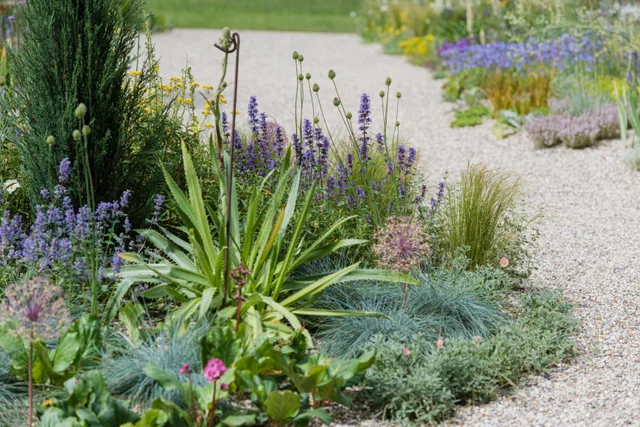
Choose a sunny, free-draining position. Erigerons will do best in light soils, so if yours is heavy and prone to waterlogging, then plant in a container instead.
How to plant
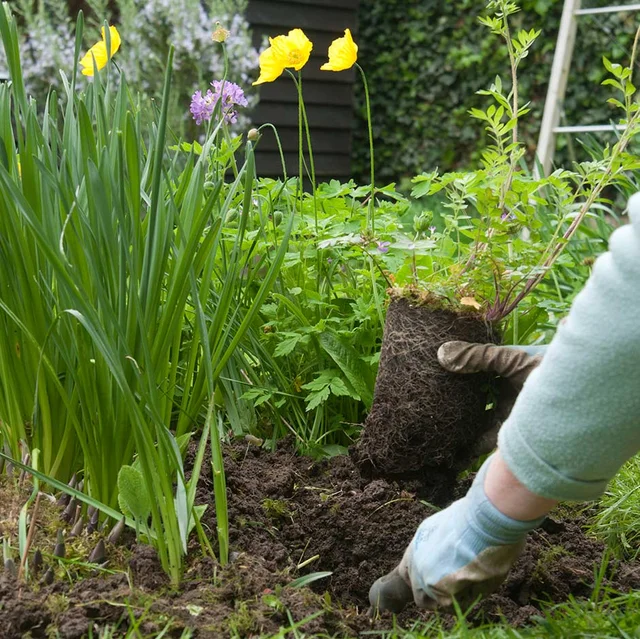
Dig a hole slightly bigger than the plant’s . Pop in the plant, backfill with soil, firm it in and water well.
If you are planting into a gravel garden you will need to scrape away the gravel before planting and replace it afterwards. If you are planting in a rock garden, it’s probably easier to use or seed because it will be difficult to dig a big hole.
In containers, use multi-purpose, peat-free mixed with horticultural grit in a ratio of 3 parts compost to 1 part grit.
Ongoing care
Watering and feeding
Erigerons’ habitats are dry grasslands and mountainous areas, so they are well adapted to poor soils, drought and full sun. Indeed, they need these conditions to thrive, so don’t be tempted to ply them with too much water or food. In the ground, they should take care of themselves, with no extra water or food needed.
Weeding
Some erigerons, especially E. karvinskianus, have a tendency to self-seed prolifically, so it’s worth checking regularly for unwanted plants and removing them.
Mulching
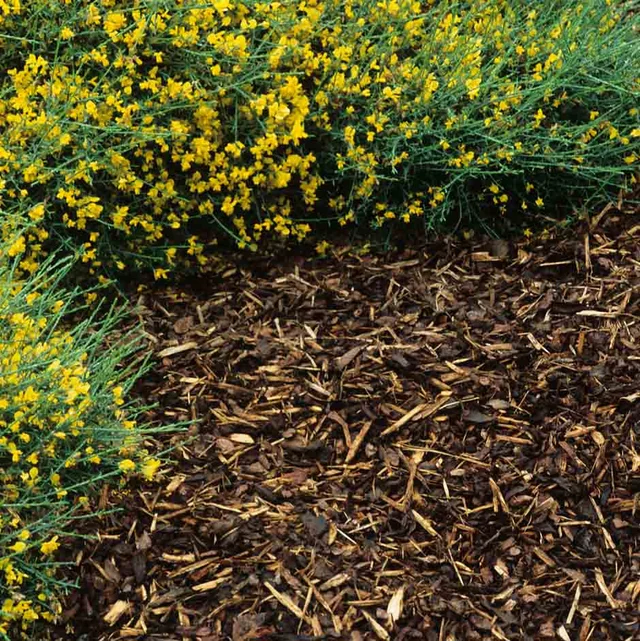
Mulching is not necessary, but if plants are growing in a border then they can be mulched alongside their neighbours. A low-nutrient , like leaf mould, will help suppress weeds as well as improve the soil’s ability to retain and release moisture, without making the growing environment too rich.
In containers
Although they are not very thirsty or hungry plants, erigerons in containers will still need regular water and food. Check the regularly with a finger to make sure it remains just moist, but not wet or soggy.
Compost usually contains enough to last 3-6 weeks after planting. Either add some slow-release fertiliser at the beginning of the season (according to the manufacturer’s instructions), or use a liquid seaweed feed every 14 days, diluted to half strength, to keep your erigerons performing well. Feed only during the (March to September).
Overwintering
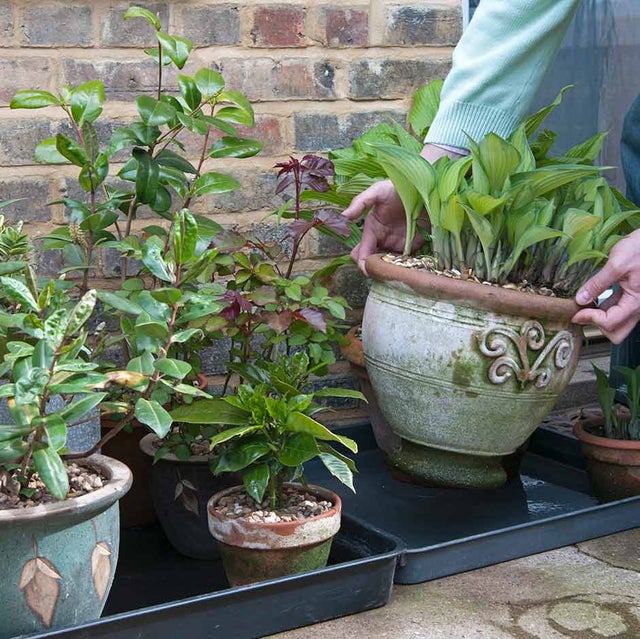
Erigerons in containers will benefit from protection from winter wet, so move them up against a wall in a ‘rain shadow’ or under cover. Those in the ground should be fine without protection as long as the soil is free draining.
Caring for older plants
Some erigerons have a tendency to go woody as they age, or their flowering diminishes. Regular pruning and division will help to avoid this (see Pruning).
Pruning and training
Alpine erigerons, like E. karvinskianus or E. alpinus, need minimal pruning – just give them an occasional trim to tidy up any straggly bits – though if they seem to be getting woody, they can be cut to the ground in spring. Bushier erigerons should be cut back near to ground level at the beginning of spring, to keep them compact.
Many erigerons benefit from through the to promote more flowers. Equally, cutting them back after the first flush of flowers can encourage a second flush later in the season.
Taller erigerons often have a tendency to flop, so support them with sticks or stakes. Put these in place in spring, before the plants get tall – it’s much harder to do it later.
Propagating
By seed
Most species of Erigeron (e.g. E. karvinskianus) and some cultivars are easy to propagate from seed.
You will also probably find self-sown popping up in odd places! These can be in spring and early summer if you wish. Just dig them up carefully, taking a clump of soil with them, and put them in a new part of the border or in a container with fresh .
By cuttings or division
Erigeron cultivars are best propagated by dividing them or taking basal cuttings in spring.
Problems
Erigerons tend to be free of pests and diseases, though some of the , taller cultivars are prone to powdery mildew if they get too dry. E. aurantiacus is vulnerable to slugs.
If you are a member of the RHS, you can use our online Gardening Advice Service for any gardening questions.