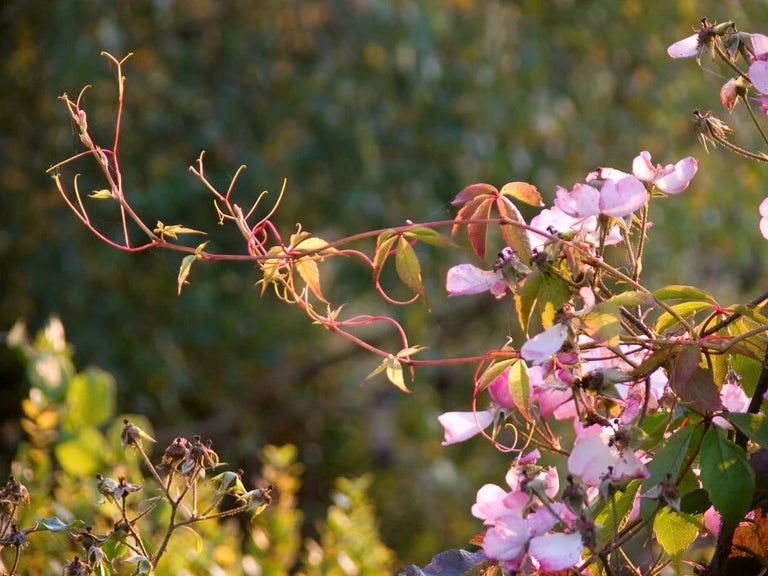
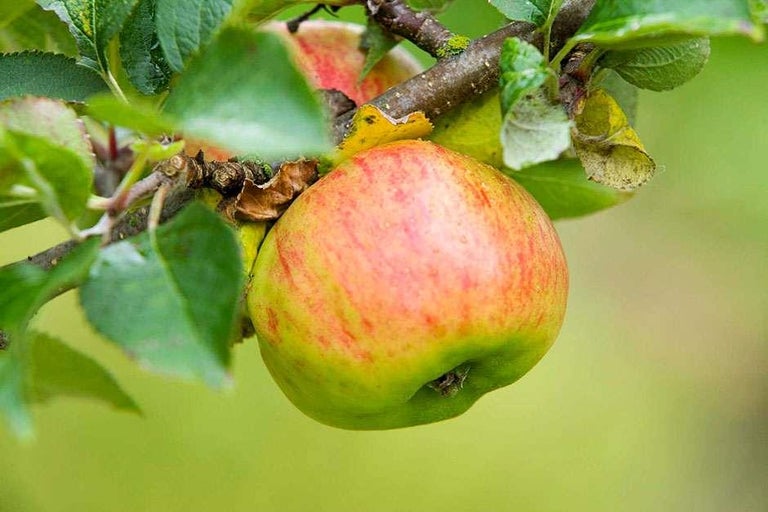
Malus domestica (Devon heritage apples)
Historic Devon-bred apples at risk of extinction, including eaters, cookers and cider apples, were brought together and given a safe haven in the Devon Heritage Orchard at RHS Garden Rosemoor
Origins of the collection
RHS Rosemoor was approached in 2015 by local orchard group Orchards Live to develop the idea of creating a Devon Heritage Orchard to safeguard rare and endangered Devonshire apple cultivars. In 2016 material was collected from many different sources, including known privately held specimens as well as from larger fruit collections throughout the UK, to bring the Devon trees home to their county. Material was sent to Frank P Matthews Nursery where the trees were propagated. The orchard was planted in spring 2017 and some further additions made in 2019. The registered National Plant Collection of Devon apples at RHS Rosemoor currently includes 64 cultivars.
"Having this collection allows people to come and view local apples, learn about their history, and hopefully inspire them to do their bit to help save these apples by choosing to plant one of them."

Malus domestica ‘Bradninch Black’ growing in the Orchard at RHS Garden Rosemoor
Where and when to see the collection
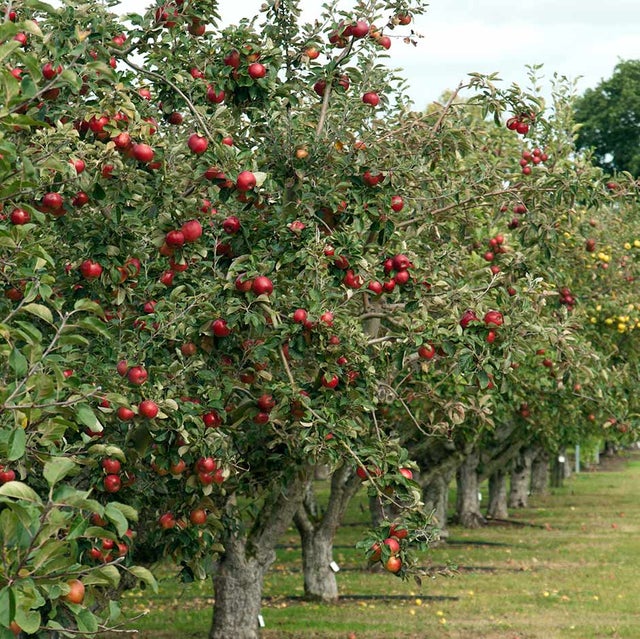
Most of the collection, currently 52 different cultivars, with two trees of each, is held in the Devon Heritage Orchard located near the Fruit and Vegetable Garden . Some other Devon apples are planted in the Southwest Orchard, the Cottage Garden Orchard, Fruit and Vegetable Garden and the Forest Garden.
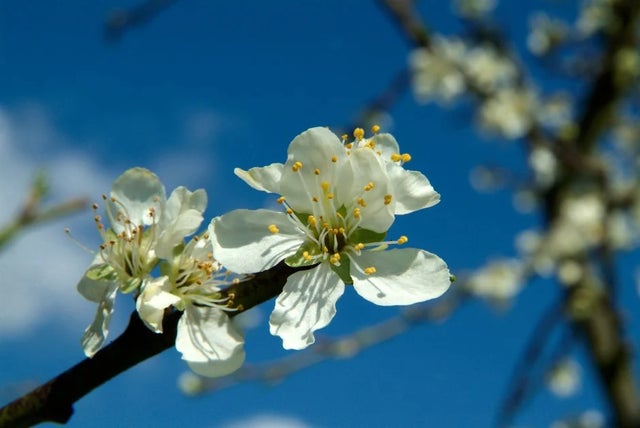
In spring the Devon Heritage Orchard is awash with blossom from mid-April through to mid-May. Having a large collection of cultivars means the blossom display is prolonged and offers a variation of colours from whites to strong pinks. In autumn, the trees are laden with fruit and the harvest begins from mid-September through to late October. In late spring and early summer the meadow beneath the trees is at its peak.
Why is it important to conserve heritage apples?
Most of the Devon apples have fallen out of favour due to factors such as people’s tastes, availability of modern cultivars and the huge loss of traditional orchards across the UK over the past 100 years. Many of the cultivars in the Devon collection are endangered and at risk of being lost permanently, especially as some are known to have only one or two trees of each in existence, often held in people’s private gardens.
"It wouldn’t take much for a new owner of a property to move in and chop down the apple tree at the bottom of their garden, not knowing its significance. As apples have complicated pollination it would be almost impossible to re-breed a lost apple cultivar if it became extinct."

A wildflower meadow grows beneath the apple trees in the Devon Orchard
Orchard care and cultivation
The trees are managed without the use of artificial sprays or fertilisers, following organic principles. They are pruned during January and February, with dessert and culinary apples being trained as goblet-shaped trees and the cider apples retaining a central leading branch.
The design of the orchard breaks the tradition of standard straight rows and instead follows the contours of the rolling wildflower meadow beneath. The meadow shifts through a colour pallet of yellows in spring, mainly meadow buttercup, to the purples of knapweed in early summer. It’s peppered with wild orchids that are naturalising in the area and has been enhanced with spring including pheasant’s eye Narcissus , white camassias and snake’s head fritillaries . This helps to boost biodiversity and bring in pollinators and insect predators.
The borders surrounding the orchard are planted with a mixture of other edible trees including quince, Mirabelle plums, elderflowers, hazels and crab apples.

Malus domestica ‘Bradninch Black’ holds such dark beauty
Peter’s personal favourites
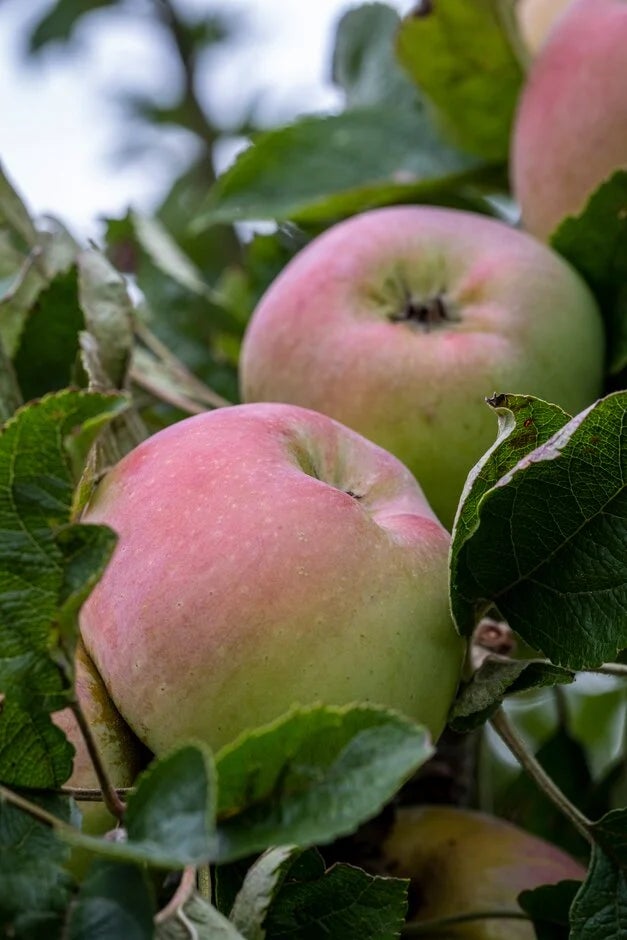
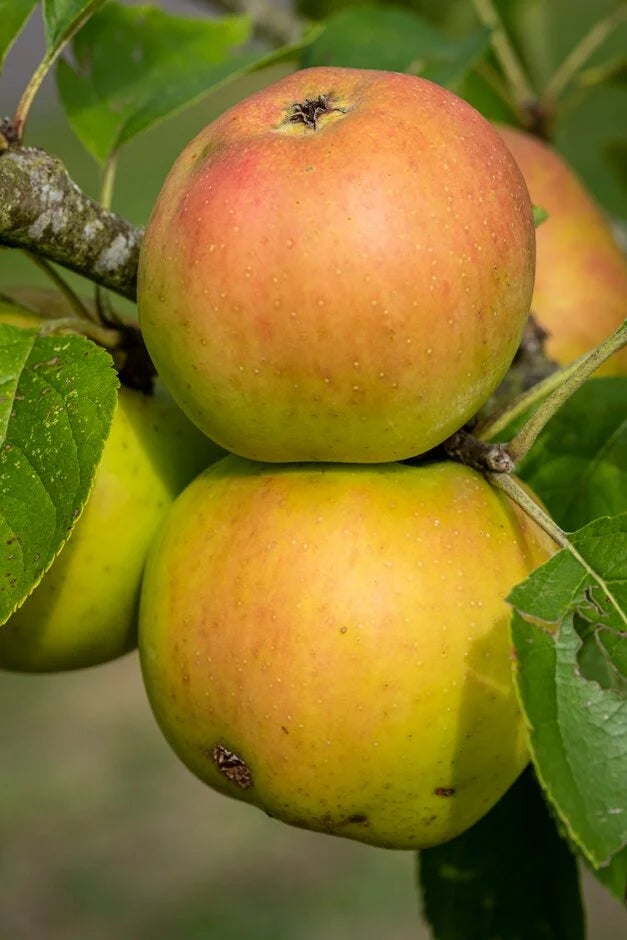
“One of my favourites is ‘Goring’, a small cider apple with a light green to yellowish skin that flushes pink, for me a standout among many of the other cider apples. Malusdomestica ‘Bradninch Black’ is another favourite, which has beautiful crimson blossom and purple leaves as they emerge, and deep-red fruits with a rich pink flesh that’s great for turning apple juice pink. ‘ Endsleigh Beauty ’ is also starting to become a firm favourite of mine, producing a plentiful crop of attractive apples with pleasant eating qualities.”
“Many of the cultivars had been lost from mainstream cultivation, however, since we started the orchard they are starting to find a resurgence on several apple nursery lists, which is encouraging to see and offers hope for the future of these apples. It’s a sign that there is a real interest once again in these heritage apples with home gardeners,” says Peter Adams, collection custodian
Using the apple harvest
RHS Rosemoor uses its apple harvest to produce juice to sell at its annual flower show and in its shop, and for dishes served in the restaurant and café. Working with a local cider producer, Rosemoor cider is also available to buy in the shop . The apples are used for displays, tastings and cookery demonstrations, and some are sold to visitors. “We make full use of the whole crop, with only the odd rotten apple being composted, which will ultimately be returned to the soil in the garden,” says Peter.

Harvesting apples at RHS Garden Rosemoor
A living gene bank
Over the past few years the Devon Heritage Orchard has been involved with two separate DNA research projects. The first was to help confirm the identities of the apples in the collection. “This threw up a few questions, as some were identified as being other cultivars, including ones without any Devon origins, but it also confirmed many to be true to their name,” says Peter. This research has helped secure the Devon Heritage Collection as an important reference collection and a gene pool reserve for the future. “We also worked on another project more recently to help identify other lost apples in Devon. DNA was taken from our trees and added to a database from which they could then be cross-referenced against to help identify other trees in other collections.”
“Curating the Devon Heritage Orchard since 2017 has and continues to be an eye opener to the history of so much of Devon’s past, told through the humble apple. The orchard here at RHS Rosemoor will stand for generations to come as a unique and special collection giving sanctuary to these rare apples, preserving them and hopefully bringing them back into cultivation with the help of enthusiastic people keen to grow a little bit of Devon’s history at home,” says Peter.
Future of the collection
Development of the collection is ongoing, and as more old Devon apple cultivars are found, RHS Rosemoor hopes to be able to give them a home. “There are many un-named out there that will bring little or no value to the orchard, so we need to ensure we know the history and heritage of the apples, and why they are significant and worth saving, before considering adding them to the collection,” says Peter.
"In future I’d like to start assembling the stories and history of our heritage apples. For example, who was ‘Reverend McCormick’ and what did he think about the apple named after him? And how did ‘Netherton Late Blower’ get its name? The questions are endless."

Peter Adams sampling some of the delicious apples at RHS Garden Rosemoor