Antirrhinum (snapdragon) trial 2026
Objectives and purpose of the trial
Lively mixes of snapdragons in brilliant shades at RHS Hyde Hall
A bumblebee pausing for a quick feed on a vivid pink snapdragon
Plants and location
What was planted?
Snapdragons are cheerful cottage garden plants and are included on the RHS Plants for Pollinators list. Their distinctive ‘snap’ flower structure is adapted for pollination by heavier insects such as bumblebees and solitary bees, which have the strength to open the hinged blooms and access their pollen and nectar.
Highly versatile, they are suited to wildlife‑friendly gardens, ornamental borders, containers and hanging baskets, as well as cut‑flower production. They are generally low-maintenance, easy to grow, and straightforward to raise from seed, making them accessible to gardeners of all experience levels.
Throughout the trial, key stages of development are being recorded, from length of flowering to plant height. Each entry is photographed to capture overall habit and floral detail, with group images taken to assess uniformity and consistency within cultivars.
Where was it planted?
Antirrhinum entries were planted both in the open ground and in containers within the Floral Fantasia area at RHS Hyde Hall, where they are arranged to provide vertical interest, vibrant colour and a succession of blooms across the summer season. Selected cultivars have also been incorporated into a garden-style setting nearby, offering a more naturalistic contrast to the formal trial layout and demonstrating their versatility in mixed planting schemes. Here are some considerations for planting out snapdragons:
- Grow in a sunny position in well-draining soil
- They typically flower from June to October
- They are classed as short-lived tender perennials, often grown as annuals for summer colour
- Deadheading (removing spent flowers) can help extend the flowering period
- Providing reasonable space between plants will help increase air flow around the plants and reduce their chances of getting rust
- They are very attractive to bees, especially bumblebees and solitary bees
- They are ideal for wildlife and cottage gardens
Judges and criteria
Judges of the trial
The judging panel is supported primarily by the RHS Herbaceous Plant Expert Group, a respected body of highly experienced horticultural professionals. Additional expertise is provided by members of the RHS Tender Ornamental Expert Group, further strengthening the depth of insight behind the trial.
The 2026 Antirrhinum judging panel includes: Michael Smith (Trial Chair and owner of W.D. Smith & Son Nurseries), Phil Johnson (managing director and breeder of English Sweet Peas, RHS Herbaceous Expert Group member and owner of Lion Seeds), Paul Hansord (former managing director at Thompson and Morgan), Nicola Speechly-Watson (horticulturist and former flower grower and florist), Stuart Lowen (former marketing manager at Ball Colegrave), Adele Dyer (principal researcher and writer at Which?), Michael Perry (Mr Plant Geek, plant promoter, influencer, presenter and RHS Tender Ornamental Expert Group member), Jim Marshall (RHS Herbaceous Plant Expert Group member), Sue Marshall (honouree of the RHS Herbaceous Plant Expert Group), Alison Mulvaney (former seed marketing and technical manager at Unwins and Fothergills), Christine Howard (Managing director at Howard Nurseries) and Veronica Lorraine (Horticulture features and gardening editor at The Sun).
Judging criteria
The following factors are all taken into consideration as part of the judging of the trial:
- Habit
- Colour and appeal
- Vigour and health
- Flower performance and longevity
- Pest and disease resistance
Snapdragons being checked as the display builds in June 2026
A vibrant patchwork of snapdragons stealing the show
Cultivation
Planting process
Prior to planting, each trial bed underwent soil analysis to confirm suitability for the trial. The results indicated that conditions were appropriate, providing a reliable basis for assessment. In line with the findings, no fertiliser or mulch was incorporated into the soil before planting.
For the ground-grown entries, each cultivar is represented by five plants arranged in a row, with sufficient spacing between entries to allow for consistent development and clear visual comparison. The pot-grown entries were planted in 10L pots using a standardised growing medium, ensuring consistency and minimising the influence of external variables. Each pot contains three plants of a single entry.
As the trial site is notably exposed and prone to strong winds, the cut-flower cultivars were staked in June 2026 to provide additional support.
How we’re managing plant health
Antirrhinums have not been trialled in 20 years, so it will be exciting to see how far their breeding has advanced during this time.

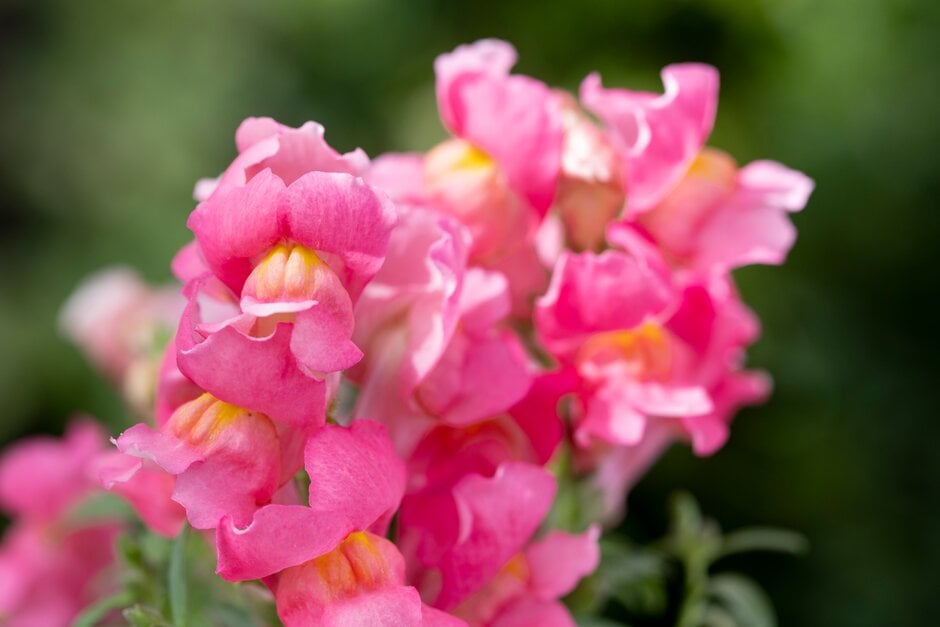
How to grow snapdragons
Explore all the information you need to know to grow and care for snapdragons in your garden
Discoveries
People’s Choice – The winners | June–August 2026
Throughout summer 2026, visitors to RHS Hyde Hall cast their votes for the snapdragons that stole the show. From eye-catching bicolours to beautifully scented flowers, discover the varieties that captured gardeners’ hearts and were crowned RHS People’s Choice winners.
Rust among the planting | July 2026
Antirrhinum ‘Opus Pink’ has been a popular variety in the trial and was sturdy enough not to need staking. However, rust was discovered on the plants and had already started to spread to neighbouring varieties. To help prevent further spread, the affected row will need to be removed, demonstrating how important disease resistance is alongside colour, vigour and overall garden performance.
People’s Choice sneak peek | July 2026
The bi-colour snapdragons have been real standouts with visitors so far, drawing plenty of attention for their eye-catching flower combinations. Among them, the cut flower variety Antirrhinum ‘Opus Appleblossom’ has emerged as a clear favourite, with many visitors highlighting its striking blooms and strong garden appeal. As the season continues, it will be interesting to see whether it can maintain its position as the frontrunner in the People's Choice vote.
Staking methods | May–June 2026
The snapdragons shot up quickly and soon needed some extra support. The initial plan was to use netting, as this better reflects how many people would grow them at home, but staking worked really well in the trial. It kept the plants steady and made weeding much easier, so it's a method that could be used again in this setting.
From RHS Chelsea to RHS Hyde Hall | May 2026
The snapdragon trial includes a notable contender, Antirrhinum ‘Shiryu Kiss’, a finalist in the RHS Chelsea Plant of the Year 2026 competition. Although it narrowly missed out on the top prize, this truly perennial cultivar offers a remarkable display of purple flowers over an exceptionally long season, combined with excellent resistance to rust and powdery mildew. A strong performance in the trial could see it win over the judges and secure its place as a future RHS award-winning plant.
Suppliers to the trial
- Syngenta (trade only)
- Sakata (trade only)
- Ball (trade only)
- Volmary (trade only)
- HemGenetics (trade only)
- D.T. Brown – Mr. Fothergills (trade only)
- Plants of Distinction (trade only)
- Bred by Peter Moore
List of plants in the trial
Handy tools and information
- Full article - Filter RHS Recommended: AGM plants by colour, height and season
Find a plant online
Filter RHS Recommended: AGM plants by colour, height and season - Full article - Explore advice and helpful tips from our resident experts
Gardening advice
Explore advice and helpful tips from our resident experts - Full article - Check how hardy plants are using the RHS hardiness ratings system
Hardiness ratings
Check how hardy plants are using the RHS hardiness ratings system - Full article - A trusted gardening app packed with expert know‑how
RHS Grow app
A trusted gardening app packed with expert know‑how
Get in touch
For more information on our RHS Plant Trials or to access older trial reports, please get in touch with our team via email at [email protected].
Get involved
The RHS is the UK’s gardening charity, helping people and plants to grow - nurturing a healthier, happier world, one person and one plant at a time.