Helianthemum (rock rose) trial 2024–2026
Objectives and purpose of the trial
Colourful Helianthemum plants flourishing in May 2025
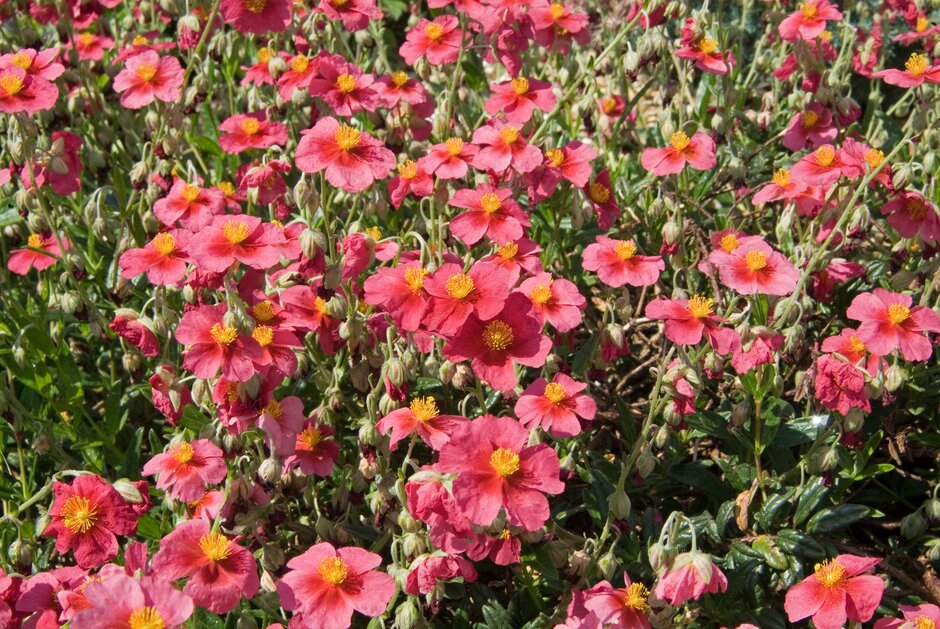
Close-up of vibrant pink Helianthemum flowers against lush foliage
Plants and location
What was planted?
Helianthemum are low-growing or bushy evergreen shrubs, known for their small green or silvery-grey leaves and a profusion of vivid, saucer-shaped flowers. Bloom colours range from crisp white and sunshine yellow to fiery orange and deep purple-red. Some cultivars display striking bicolour effects, with contrasting centres or flecked petals, and there are also semi-double and double-flowered forms to add extra variety and texture.
Throughout the trial, photographs will be taken to document both the overall habit and close-up details of each flower. The RHS Trials team will also record key stages, including leaf emergence and flowering dates, to build a comprehensive picture of each entry’s performance. The team also aims to assess their relevance to today’s market, recent breeding developments, and the accuracy of naming in the trade.
Where was it planted?
Young Helianthemum plants were planted in the open ground in the Trials Garden at RHS Wisley, ready to grow and burst into a carpet of colour perfect for sunny garden spots. Here are some considerations for planting out helianthemums:
- Plant in a full sun position with well-drained soil
- Helianthemums flower from May to July
- All rock roses are low-growing and evergreen, but their habits can vary from ground hugging to more bushy shrubs
- Most rock roses won’t grow above 30cm tall but will spread out to form a low-growing ground cover
- Clipping after flowering keeps the plant looking bushy and could encourage a second flush of flowers in late summer
Judges and criteria
Judges of the trial
The 2024–2026 Helianthemum trial judges include: Ray Drew (Trial Chair and RHS Alpine and Rock Garden Expert Group member), Chris Lane (RHS Woody Expert Group member), Chris Sanders (RHS Woody Expert Group member), Debs Goodenough (Horticultural consultant and RHS Woody Expert Group member), Diane Clement (Vice Chair, RHS Alpine and Rock Garden Expert Group), Jessica Jansdotter (Horticulturist, RHS Wisley), Jim McGregor (Alpine Garden Society and RHS Alpine and Rock Garden Expert Group member), Julie Ritchie (Owner, Hoo House Nursery), Rod White (RHS Woody Expert Group member) and Sally Petitt (Head of Horticulture, Cambridge Botanic Gardens).
Judging criteria
The following factors are all taken into consideration as part of the judging of the trial:
- Floriferousness and length of flowering season
- Flower to foliage balance
- Attractiveness of foliage
- Health and vigour
Delicate white Helianthemum flowers growing low to the ground
Helianthemum plants beginning to establish in April 2025
Cultivation
Planting process
Each trial entry included three plants, arranged in alternating triangles with 60cm spacing to ensure room for growth and visual clarity. The entries were grouped by flower colour, to create a striking, organised display. To suppress weeds naturally, a biodegradable membrane was laid over the beds and topped with gravel. Drip irrigation lines were installed to provide consistent moisture during establishment and during particularly dry periods and were removed after the first year.
Throughout the trial, various pruning techniques and timings are being tested to assess their impact on overall plant performance – helping to shape future recommendations for gardeners and growers.
How we’re managing plant health
Helianthemums are typically resilient and not commonly troubled by pests or diseases, making them low-maintenance plants. However, during periods of wet weather in the autumn, they may be susceptible to downy mildew, which is being monitored.
I’m excited to see the plants carpeting the trial beds, and to discover how drought tolerant they are in our warming climate.

How to grow perennial plants
Explore all the information you need to know to grow and care for perennials in your garden
Discoveries
‘Fore noon’ plants | May 2026
On a hot assessment date, the trials panel noticed that some of the trial entries were already dropping petals by 11.30am. This trait has been a notable feature of some selections, which the judges have called ‘fore noon’ plants. The entries noted to hold their flowers until the end of the day were: Helianthemum ‘New Moon’, Helianthemum ‘Marianne’, Helianthemum ‘Diana’ and Helianthemum ‘Ben Heckla’, as well as all the double-flowered entries that hold their flowers for longer, sometimes longer than a day.
Ripple effect | July 2025
Helianthemum ‘Raspberry Ripple’ typically bursts into bloom with charming bi-colored white and pink flowers. However, by July 2025, the display had shifted – the blooms were now predominantly pink, with no signature ripple pattern, resulting in a more uniform, solid hue.
Common misnaming | May 2024
The Trial judges quickly noted that Helianthemum ‘Fairy’ stood apart from the other entries, with a noticeably different growth habit and flower placement. Upon closer inspection, the plants were identified as Cistus × sahucii – a species often confused in the trade. This mix-up is not uncommon, and the plants have been intentionally left in the trial to highlight the frequent misnaming and raise awareness among visitors.
Suppliers to the trial
List of plants in the trial

Handy tools and information
- Full article - Filter RHS Recommended: AGM plants by colour, height and season
Find a plant online
Filter RHS Recommended: AGM plants by colour, height and season - Full article - Explore advice and helpful tips from our resident experts
Gardening advice
Explore advice and helpful tips from our resident experts - Full article - Check how hardy plants are using the RHS hardiness ratings system
Hardiness ratings
Check how hardy plants are using the RHS hardiness ratings system - Full article - A trusted gardening app packed with expert know‑how
RHS Grow app
A trusted gardening app packed with expert know‑how
Get in touch
For more information on our RHS Plant Trials or to access older trial reports, please get in touch with our team via email at [email protected].
Get involved
The RHS is the UK’s gardening charity, helping people and plants to grow - nurturing a healthier, happier world, one person and one plant at a time.