Getting Started
Popular, tasty and easy to grow, leeks are a veg plot favourite. Sown in spring, they grow slowly and steadily through summer and autumn, providing valuable fresh harvests throughout the colder months. These versatile vegetables can also be harvested earlier, as sweet, tender baby leeks.
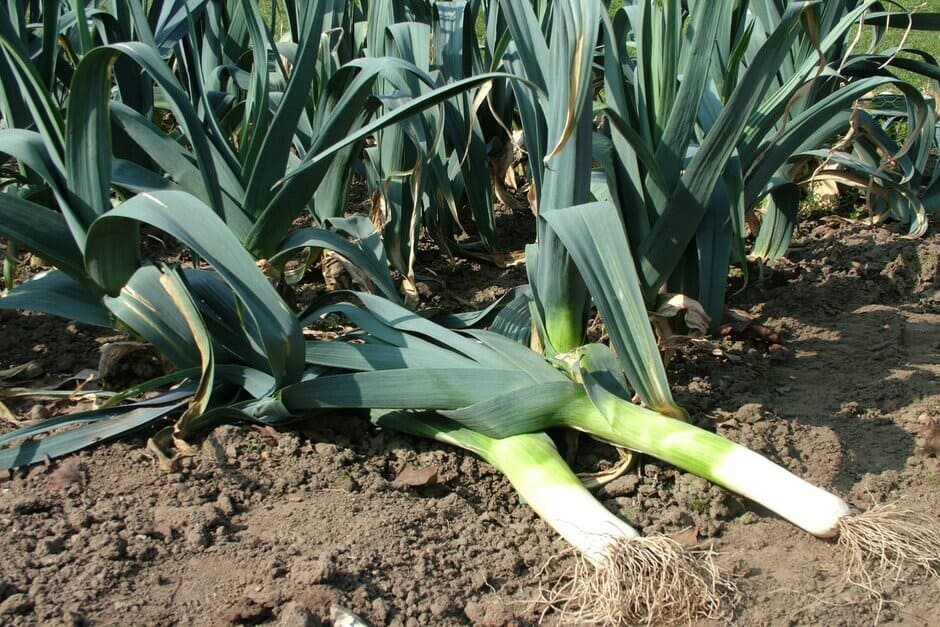
Leeks (Allium porrum) are prized for their delicious mild flavour. They’re primarily a winter crop, reaching maturity after about six months. They have the advantage that they don’t have to be harvested all at once – hardy winter varieties can be left standing in the coldest weather without protection, ready to enjoy whenever you want them.
Jobs to do now
Harvest
Month by Month
Sow
Plant
Harvest


Choosing What To Grow
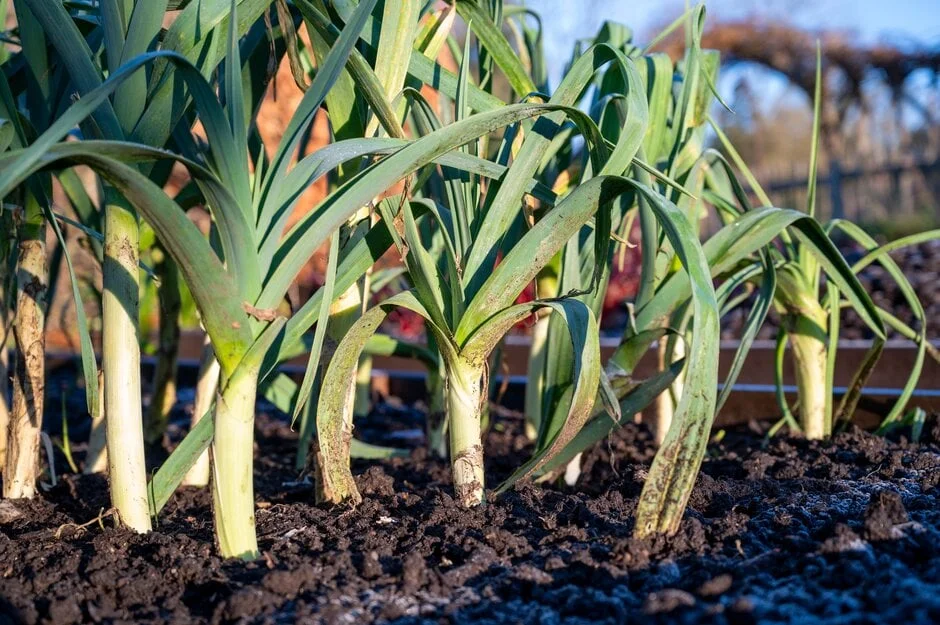
There are many leek varieties to choose from, varying in ultimate size, disease-resistance, hardiness and sowing/harvesting time. Early varieties can be lifted from late summer to autumn, mid-season varieties in winter, and late varieties into the following spring. Some are tall, others short and stout. Some are hardier for winter use and colder locations, others have been bred for summer cropping as salad or baby leeks. There are even a few varieties with blue- or purple-tinted leaves for added ornamental appeal. If you’ve had leek rust on your plot in the past, then select resistant varieties.
For consistent crops of tasty, high-quality leeks, look for varieties with an RHS Recommended: Award of Garden Merit (AGM), which shows they performed well in trials – see our list of AGM fruit and veg (135kB pdf) and our Recommended Varieties, below. For further inspiration, visit the veg plots at the RHS gardens – you’ll find leeks and many other crops, so you can see how they’re grown, compare the varieties and pick up useful tips.
What and where to buy
Leek seeds are widely available in garden centres and from online seed suppliers. Young plants may also be available in spring and early summer, although the choice of varieties will be more limited.
Recommended Varieties

‘Porvite’ (Autumn Giant 2 Group)
Autumn/early winter crop. Large uniform stems. Resistant to bolting.


Preparing The Ground
Choose a sunny spot with free-draining soil, where you haven’t grown leeks or other members of the onion family for at least a few years. Weed the ground thoroughly.
For a good crop of leeks, improve your soil by digging in two bucketfuls of garden compost or well-rotted manure per square metre/yard. Rake the ground to remove lumps and stones.
Alternatively, if you're practicing no-dig gardening, the soil with organic matter ahead of sowing or planting directly into the mulch.
Sowing
Leeks are usually sown straight into the ground in spring, often into a dedicated ‘ ’, then to their final growing site in late spring or summer. This is because sowing leeks at their final spacing would take up a lot of prime growing space in spring, when you could be using it for fast-maturing crops. Transplanting also provides the opportunity to position them deeper in the soil, so they develop a long white base – see Transplanting, below. They can also be sown indoors in late winter, for an earlier crop.
Sowing indoors
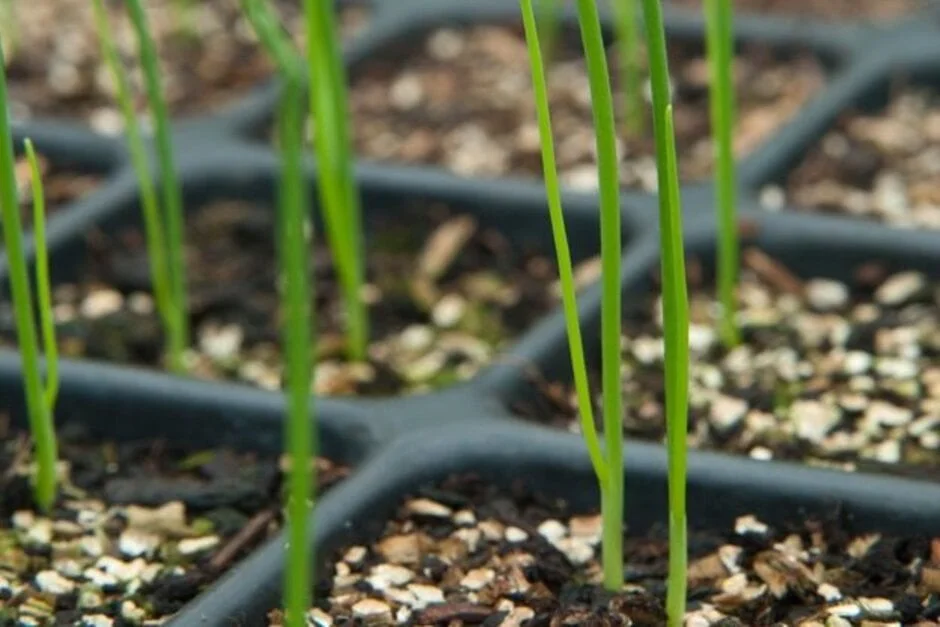
To get a head start and an earlier harvest, you can start leeks off indoors from late winter onwards on a windowsill or in a greenhouse. Fill small pots or modular trays with peat-free , water gently, then sow the seeds thinly, about 1.5cm (¾in) deep.
Keep the warm (above 10°C/50°F) and in good light, and keep the slightly moist. Move into larger pots/ if the roots appear from the drainage holes. Young leeks are usually ready to be planted outdoors after about eight weeks, when 20cm (8in) tall.
Sowing outdoors
The prime sowing months for leeks are March and April, either temporarily in a (for transplanting later – see below) or straight into their final position. You can also sow later-cropping varieties in May and June, for harvesting in winter and spring, as well as fast-growing varieties for harvesting as baby leeks.
Make a shallow about 1.5cm (¾in) deep and water along the base, then sow the seeds thinly along its length. Space any additional rows about 30cm (12in) apart. Cover early sowings with cloches or plastic-free fleece if temperatures drop, as cold spells can cause plants to bolt (flower prematurely).
After about two months, when the are about 20cm (8in) tall, either transplant them to their final position (see below) or thin them out to 15–20cm (6–8in) apart. You can use the plants you remove to make additional rows.
Sowing in a container
Although leeks are best suited to growing in the ground, you could grow baby leeks, or even full-sized leeks, in a large, deep container. Use peat-free multi-purpose and follow the sowing advice above. You could potentially grow four or five mature leeks in a pot about 40cm (16in) wide.
Transplanting
Young leeks grown in a , as well as those raised from seed indoors or bought as young plants, should be to their final growing site when about 20cm (8in) tall and pencil thick. Acclimatise indoor-grown plants to outdoor conditions first by hardening off. Transplant leeks into prepared ground (see above) by following these simple steps:
- Make a row of holes with a large or trowel handle, about 15cm (6in) deep and 5cm (2in) across. Deep planting helps leeks to form the long white base (shank)
- Space the holes 15–20cm (6–8in) apart, depending on the variety, or 10cm (4in) apart for baby leeks. Allow 30cm (1ft) between rows
- Lift the young leeks from their seedbed or remove them from their pots or , then trim their roots with scissors to 2.5cm (1in) long
- Stand one leek in each hole, then fill the holes with water. Called ‘puddling in’, this settles soil around the roots. There’s no need to backfill the holes
You can also transplant young leeks into large pots of peat-free multi-purpose . Baby leeks are the best option, but full-sized leeks may be possible too, if you look after them well. Use the same spacings and planting instructions listed above.
Plant Care
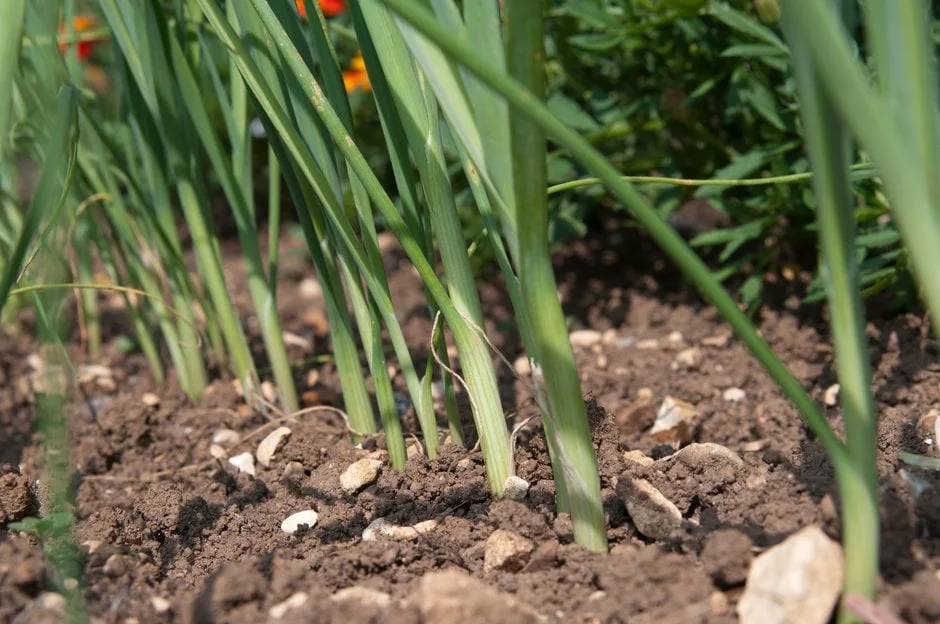
Once leeks are growing strongly in their final position, weed regularly and water during prolonged dry spells. You can also earth them up – piling up soil around them – to create a longer white base. If your leeks start to bolt (flower), remove the stalk as soon as possible, otherwise the leek will become tough and fibrous. Tightly closed flower buds, known as scapes, are delicious lightly cooked.
Watering
Water leek and young plants until they are established and growing strongly. After that, you should only need to water during prolonged dry spells. Try to avoid wetting the foliage when you water, as this can encourage fungal diseases such as leek rust. Leeks growing in containers need regular watering across the season, as the can dry out quickly.
Mulching
Apply a layer of , such as garden compost, around leek plants to hold moisture in the soil. This also helps to deter weed .
Weeding
Weed regularly so young leeks don’t have to compete for light, water and . Leek foliage casts little shade, so weeds grow readily around them. Hoe between rows and hand weed close to individual plants, so you don't risk damaging stems with a hoe.
Earthing up
To help produce the characteristic long white base (shank), earth up your leeks as they grow. This simply means drawing up soil around the leek to exclude light. Do this several times, but try not to let soil get in between the leaves. also helps to keep the plants more stable during winter storms.
Protecting the crop
Leeks are hardy, so don’t need any frost protection. However, leeks can be damaged by several insects (see Common problems, below), so consider covering the plants with insect-proof mesh.
Harvesting
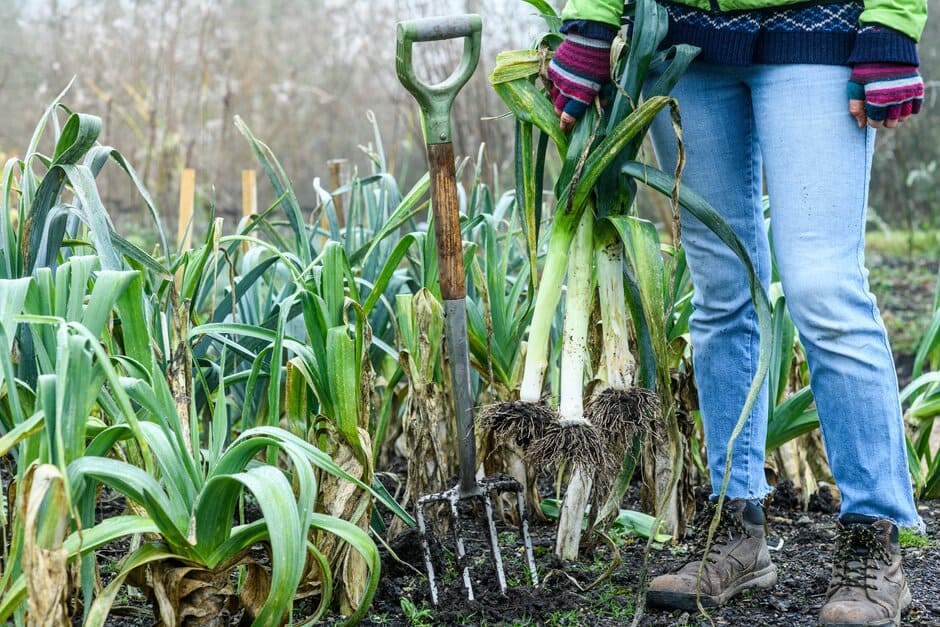
You can harvest leeks at any size – baby leeks take only a couple of months, while full-sized leeks can take six months. Gently lift individual plants using a fork. Start harvesting when they’re still quite small, usually from late summer, to extend the cropping period. If you harvest alternate leeks along the row, the rest can be left to grow larger. Late varieties can remain in the ground through winter and into spring – just harvest them whenever needed. Frost may even make the flavour sweeter.
Problem Solving
Leeks are relatively trouble free, although several fungal diseases and insects can damage them. Flowering ( ) can be caused by low temperatures in spring, so protect early outdoor sowings. Remove any flower stalks as soon as they start to form, as flowering makes the centre of the leek fibrous. See Common problems, below, for full details on tackling these and other issues.
Common Problems

Bolting in vegetables
Bolting is the term applied to vegetable crops when they prematurely run to seed, usually making them unusable. A cold spell or changes in day length...

Allium leaf miner
Allium leaf mining fly was first detected in Britain in 2002, it has become widespread in England and parts of Wales. The larvae bore into the stems a...


