Getting Started
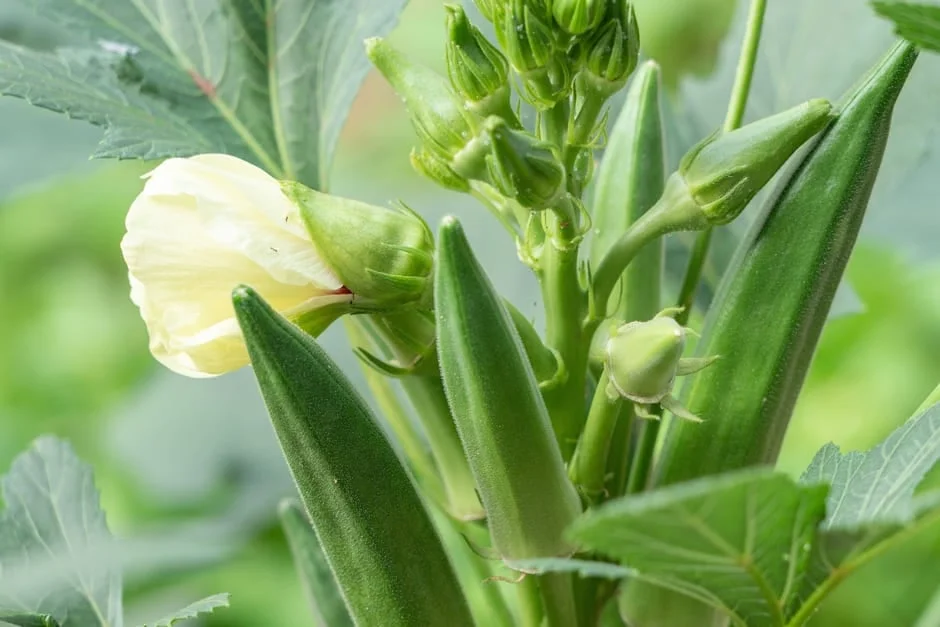
Okra (Abelmoschus esculentus), also known as ladies' fingers or bhindi, is a that originates in East Africa, but is now grown around the world, mainly in tropical and sub-tropical climates. It needs plenty of heat and sun, so in the UK it usually has to be grown in a greenhouse or polytunnel, although plants may also fruit outdoors on a hot, sunny patio during a long summer. Growing up to 120cm (4ft) tall, okra plants have attractive lobed leaves and hibiscus-like flowers that are followed by long, tapering, calcium-rich pods. These are ready to harvest from mid-summer to autumn, when young and tender, and can be cooked in soups, stews and curries.
Jobs to do now
Water as needed
Harvest
Month by Month
Sow
Plant
Harvest


Choosing What To Grow
There are several varieties of okra to choose from, producing plants of various sizes. The pods are usually green, but there are varieties with red, pink or white pods.
What and where to buy
Okra seeds are available from online seed suppliers and larger garden centres. Young plants may occasionally be available in late spring and early summer from similar sources.
Recommended Varieties

Sowing
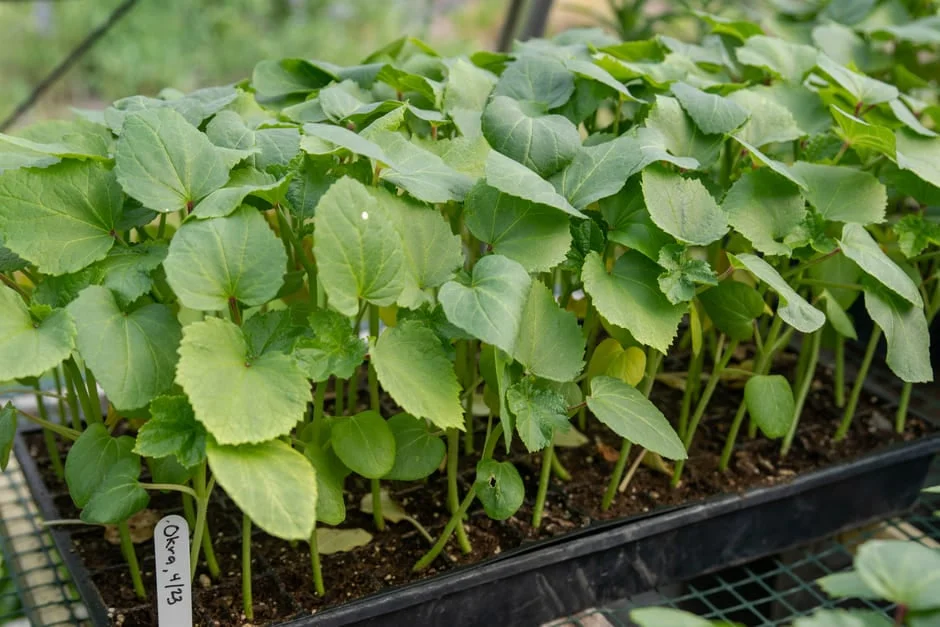
Sow okra seeds indoors in March or April – soak them for two hours in warm water beforehand, then sow individually into small pots or modular trays filled with moist, peat-free . Place in a lidded or cover with a clear polythene bag and keep above 16°C (60°F). An airing cupboard is ideal for germination.
Once appear, remove the covering and place in good light. Keep warm and water regularly. Transfer into larger pots as they grow.
Planting
Once young okra plants are 10–15cm (4–6in) tall, in late May or June, transfer them to their final growing location. In the UK, it’s best to keep okra in a greenhouse, either in large pots, growing bags or a greenhouse border, but in really warm locations you could try planting them outside. Four or five okra plants should produce sufficient harvests for most families.
To plant in a container – choose a pot that’s at least 30cm (1ft) wide and deep, and fill with peat-free multi-purpose . Position one okra plant in the centre, at the same level it was previously growing, firm in and water well. Alternatively, plant two in a standard growing bag.
To plant in a greenhouse border – enrich the soil with garden compost or well-rotted manure, then space plants 30–90cm (1–3ft) apart, depending on the variety (see seed packet or plant label for exact spacing).
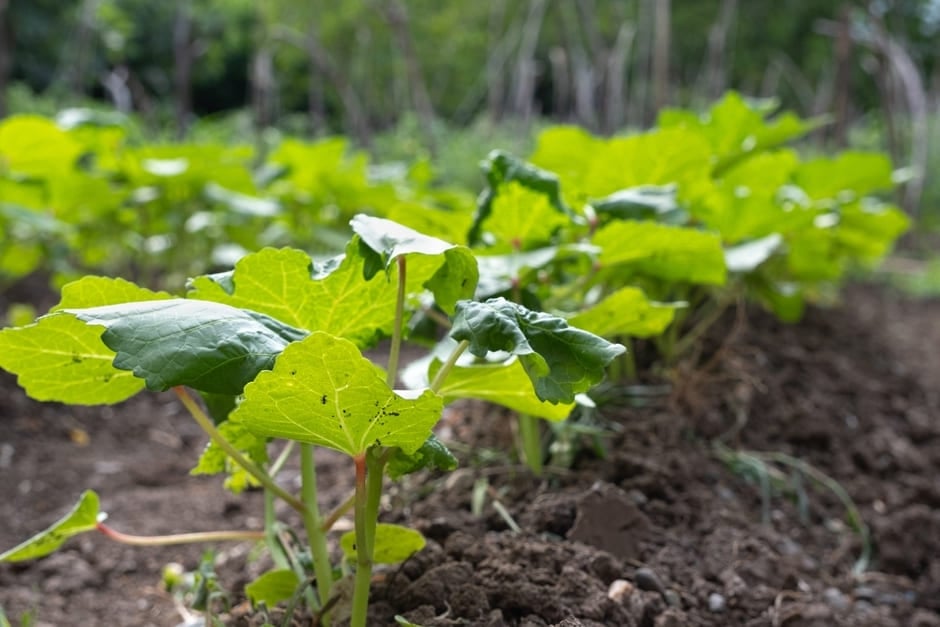
To plant outdoors – in warmer areas, okra can be planted outside in a sunny, sheltered spot, but will need a hot summer to crop successfully. Plant either in large (30cm/12in) containers filled with peat-free multi-purpose compost, or in fertile, well-drained soil enriched with garden compost or well-rotted manure. Warm the soil with cloches for a couple of weeks before planting. Meanwhile, harden off the young okra plants to gradually acclimatise them to outdoor conditions. Plant one per 30cm (12in) pot, or space them 30–90cm (1–3ft) apart in the ground, and water thoroughly. Cover with cloches or plastic-free fleece for several more weeks until growing strongly.
If you're practising no-dig in your garden, mulch the soil with garden compost or well-rotted manure and plant directly into the mulch.
Plant Care
Watering
Okra plants need plenty of sunshine and high temperatures over summer, so a steady supply of moisture is essential, whether they’re in a greenhouse or outside, and especially when in containers.
Check plants twice a day in hot weather, and aim to keep the potting or soil consistently moist, in particular when plants are flowering and fruiting. Use tepid water if possible, ideally from a water butt.
In summer, watering is best done first thing in the morning, before temperatures rise, or in late afternoon/early evening.
Mulching
If you’re growing okra in the ground, apply a thick layer of , such as well-rotted manure or garden compost, around plants once they are growing strongly. This helps to hold moisture in the soil, reduce the need for watering and deter weed germination.
Feeding
Okra plants growing in the ground in enriched soil shouldn't need additional feeding. However, to boost cropping of plants in containers, start feeding once a week when the first flowers appear, using an organic high potassium liquid fertiliser.
Supporting plants
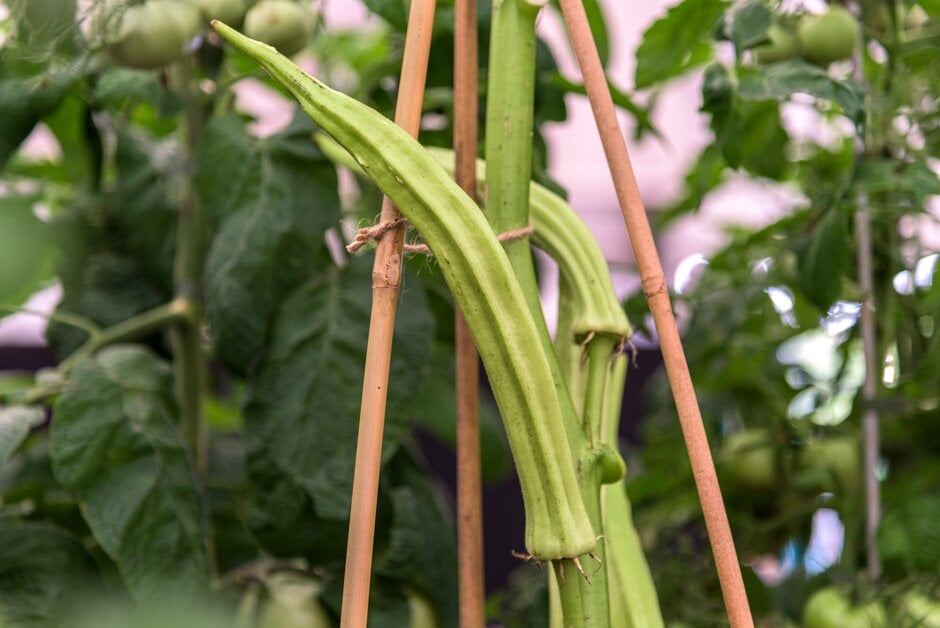
Okra plants can grow to 90–120cm (3–4ft) tall, depending on the variety, so provide canes for support and tie in the stems as they grow.
Pinching out shoot tips
Once okra plants are 60cm (2ft) tall, the shoot tips to encourage side-shoots to form, which should result in more pods. Okra plants are covered in short hairs that may irritate bare skin, so wear gloves and long sleeves when touching and harvesting them.
Harvesting
Okra plants produce pods from mid-summer until temperatures drop in autumn, often up to the first frost. Regular picking encourages more pods to form. Harvest the pods when tender and immature, about 5–10cm (2–4in) long – large mature pods become tough and stringy. Handle them gently as the skin is easily marked.
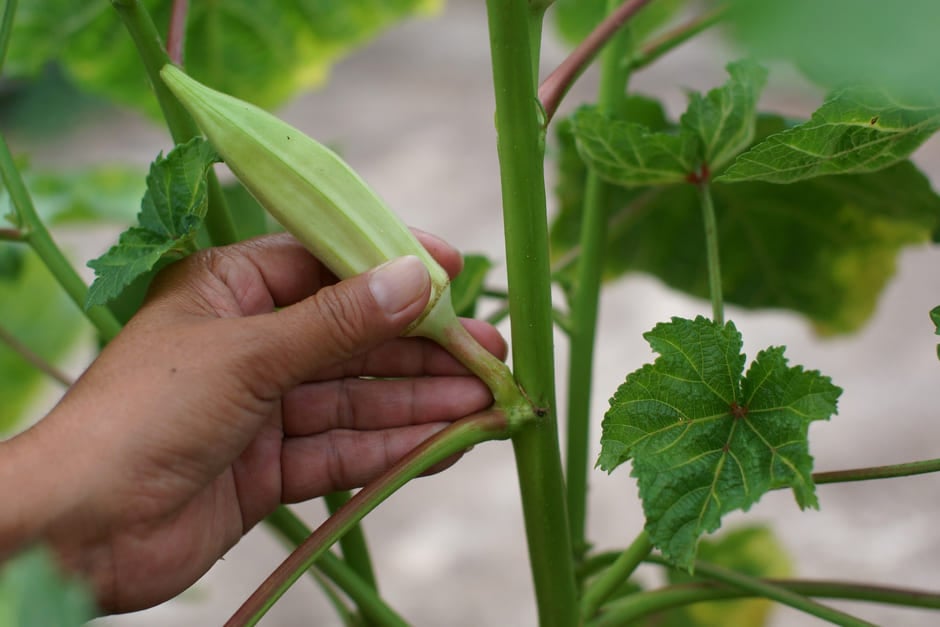
When sliced, the pods produce a sticky liquid during cooking, ideal for thickening stews and curries. They can also be cooked whole in stir-fries, or steamed or sautéed as a side dish.
Problem Solving
Okra needs plenty of heat to crop well, so with plants growing outdoors, even in a warm, sunny spot, expect fewer fruits than on plants growing in a greenhouse. A steady supply of moisture is also essential, especially when plants are flowering and fruiting. Under glass, look out for red spider mites and whitefly, and take action at the first sign – biological controls are available. To deter them, improve air circulation by opening greenhouse doors and vents, and raise by (pouring water on) the floor. For more tips on these and other issues, see Common problems, below.
Common Problems


Glasshouse red spider mite
Glasshouse red spider mite is a common sap-feeding mite that can cause mottled leaves and early leaf loss on a wide range of greenhouse and garden pla...

Glasshouse whitefly
Glasshouse whitefly is a common sap-feeding insect, mainly of house-plants and greenhouse plants. They excrete a sticky substance (honeydew), which al...

